For electric vehicles, efficiency is key. There are many ways to improve efficiency, especially in the powertrain, and one of the key areas is power electronics. Of these components, the main inverter is the most powerful and offers the best opportunity for efficiency improvements. The main inverter is responsible for converting the battery's DC output into an AC input for the electric motor.
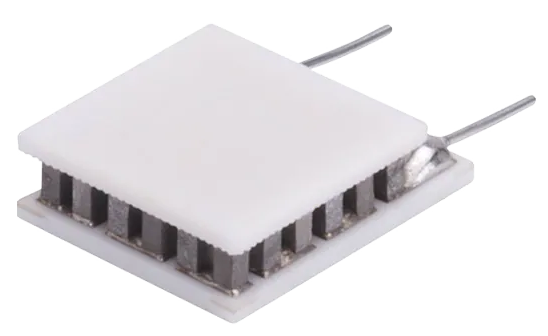
Using state-of-the-art thermoelectric materials, the OptoTEC OTX/HTX from Laird Thermal Systems offers a 10% increase in cooling capacity, greater temperature differential, and higher efficiency than conventional thermoelectric coolers.
Rogers Corporation's Advanced Electronics Solutions (AES) group introduces curamik Endurance substrates, which are direct-bond copper ceramic substrates with enhanced properties. curamik® Endurance substrates provide improved reliability performance compared to material combinations of the same dimensions.
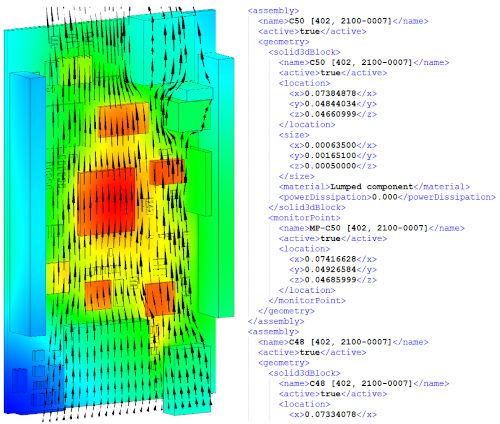
Siemens Digital Industries Software today announced the establishment of JEP181, a neutral XML-based file format from JEDEC, the world leader in developing standards for the microelectronics industry. The JEP181 standard simplifies the exchange of thermal model data between vendors and end users in a single file format called ECXML (Electronics Cooling eXtensible Markup Language).
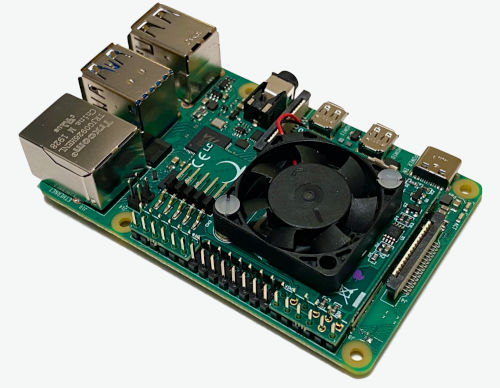
Sfera Labs announces that the Raspberry Pi Model B CPU boards now feature internal active cooling thanks to the Strato Pi Fan. The new fan can be included as an optional extra to improve thermal management on these boards.
Thermal management is a critical issue across a wide range of applications, from electric vehicle battery packs to consumer electronics, where efficient heat dissipation is essential. Numerous types of thermal interface materials (TIMs) play a crucial role in heat transfer from a heat source. This article discusses the main innovations in these materials and the reasons for their importance.
IDTechEx has conducted a cutting-edge market study on thermal interface materials. It offers a detailed analysis of both the materials themselves and a wide range of applications. Innovations in thermal interface materials can be divided into three main categories: high-volume applications, emerging new markets, and new material developments for enhanced performance.
High-volume markets
Nearly all major chemical and materials companies are trying to position themselves to gain some market share within the electric vehicle supply chain; however, there is still a great deal of turbulence as supply chains form, pack designs evolve, and production scales up. There is still no convergence in battery packs, and a great deal of disruptive R&D is reaching the market, which represents both a threat and an opportunity for established suppliers.
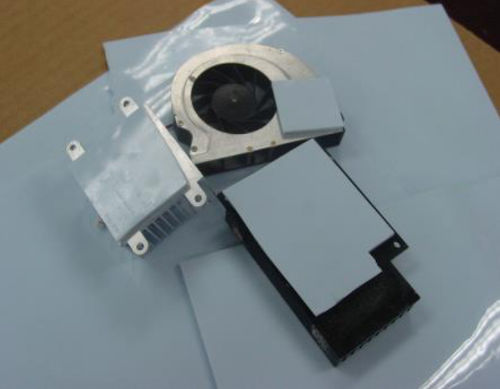
Lithium-ion batteries will be the largest market (by volume) for thermal interface materials (TIMs). TIMs play a crucial role in thermal management, connecting cells or modules to a heat sink or heat spreader, and there is significant market activity in this area. The required thermal conductivity is approximately 3 W/mK, which is relatively easy to achieve with ceramic-filled silicones or equivalent products. Silicones are not popular in the automotive industry, and many competing matrices are vying for market adoption. Instead, innovations here are not at the material level, but rather in achieving high performance at a low price. IDTechEx has been regularly informed that the target price is $10/kg, which is an aggressively low TIM price.
IDTechEx expects that, in response to this demand, the market will shift from void fill pads to void fillers over the next 10 years. Void fillers can be dispensed as a liquid, allowing for faster application rates, easily modifiable distribution patterns, and typically thinner layers. Challenges lie in dispensing the material uniformly and considering the cost of the equipment, as well as its operation, maintenance, and lifespan.
New Emerging Markets: Technological developments are rapidly changing the world, and any major innovation can often lead to new hardware deployments and, therefore, new TIM markets with specific requirements. There are many examples, such as sensors for autonomous vehicles and data centers, but one of the most prominent is the rise of 5G.
Typically, these new markets don't require a drastic improvement in thermal conductivity, but rather an iterative improvement of existing products and formulations. The 5G revolution will bring about a major shift in infrastructure, from base stations to the rapid emergence of small cells. IDTechEx has observed a number of industry-specific product launches from companies like Dow, Laird, and Henkel, generally in the 5-10 W/mK performance range. Innovations are emerging to meet market needs, but more important than any material improvements will be product positioning, relationship building/expansion, and cost as these supply chains develop.
New materials for higher performance: This is the area where most scientific innovation is taking place. Developments here often come in the form of pre-formed pads that aim for very high thermal conductivities, exceeding 20 W/mK, and with unique properties (such as a wide cycling temperature range).
They often have niche applications, such as supercomputers and satellites, before moving into mainstream industry, such as more advanced consumer electronics devices.
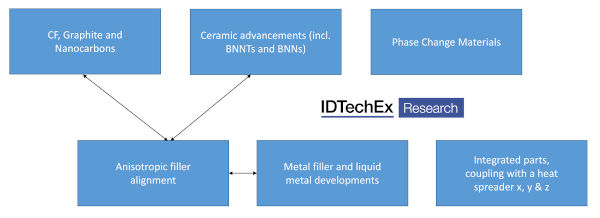
IDTechEx has divided these innovations into six categories , which will be described in turn. These advances range from startups to the R&D divisions of well-established companies. - Carbon Fiber, Graphite, and Nanocarbons: One of the most exciting areas is the use of carbon fiber, graphite, CNTs, and graphene. These materials have enormous thermal conductivity but are also electrical conductors, which brings additional design considerations. There are a number of active companies, from Dexerials, with its commercially established CF pad, to Fujitsu R&D, with some promising CNT announcements, and young companies that are gaining significant traction, such as Carbice.
- Ceramic advances: Ceramics play a fundamental role as a thermally conductive dielectric filler for TIMs. The challenge is to increase performance enough so that designers don't have to resort to carbon or metal alternatives. There are improvements to established products, such as those from Showa Denko, but the most exciting innovation comes from the emergence of boron nitride nanotubes (BNNTs) and nanosheets (BNNSs). They are the isoelectronic counterparts of CNTs and graphene and are beginning to gain commercial traction with companies like BNNT LLC, BNNano, and others.
- Metal fillers and liquid metal developments: Metals are well-known additives and have maintained a consistent market share with clear advantages and disadvantages. Innovations continue to drive this growth, from the use of alternative metals, such as those from Arieca, to liquid metal developments from companies like Indium.
- Anisotropic alignment of the packing: This is related to the three previous examples, but focuses on aligning the packings to improve in-plane conductivity. The goal is to reduce the amount of packing required to achieve the same performance or to increase overall thermal conductivity in the z-plane. There are numerous ways to do this, depending on the packing material, such as flocking processes, early growth mechanisms (as in the VACNT forest example), or advanced processes like the dielectrophoresis process used by CondAlign. It's important to note that any aligned piece is still subject to the contact resistance limitation between the TIM and the substrate.
- Phase-change materials: Once again, this is a well-known class of materials that continues to bring new products to market. There have been some developments in their use for housing battery cells, as well as TIMs (Temperature Imaging Materials). One example is Rogers, which is expanding its HeatSORB product line to meet market demand.
- Heat sink integration: This involves integrating a TIM (z-plane) with a heat sink (xy-plane) into a single product. We can also consider including insulating sheets (e.g., aerogels) if the heat needs to be channeled in a specific direction. IDTechEx has identified a group of companies offering these more integrated products, including early-stage companies like HyMet and SHT Smart High Tech.
RC Microelectrónica, the distributor for Spain and Portugal of Schlegel EMI, distributes the OP-8200 Spec 05, which offers good thermal performance and exceptional mechanical conformability. This material adapts to surface irregularities without excessive pressure.
RC Microelectrónica, distributor for Spain and Portugal of AVX Corporation, presents the new Q-Bridge thermal conductor from ATC, an AVX company. The new Q-Bridge thermal conductor from ATC (American Technical Ceramics) is manufactured with the highest quality materials for optimal and reliable performance, providing an efficient thermal management solution.
Thermal control is a major challenge when operating power modules in demanding and even harsh industrial or automotive environments. Mounted on dedicated heat sinks, heat dissipation is traditionally achieved with a special layer of thermal grease—which, of course, needs to be replaced periodically.
ASSMANN WSW, distributed in Spain and Portugal by RC Microelectrónica, is expanding its range of die-cast heatsinks by introducing SSM (Semi Solid Metal) heatsinks. These are manufactured using a hybrid process that combines the advantages of casting and forging.
Fujitsu Laboratories Ltd. has announced the development of the world's first adhesive film made of carbon nanotubes with extremely high thermal conductivity, up to 100 W/mK (watts per meter per Kelvin) (1) . Carbon nanotubes have high thermal conductivity and represent a promising option for heat dissipation from heat sources, including semiconductor devices.
Same Sky® and its Thermal Management Group have announced the expansion of their thermoelectric generator (TEG) module product line. Harnessing the temperature difference between the hot and cold sides of the module to generate usable energy, the SPG family of generators...
SEKISUI presents TIMLIGHT, a new range of silicone-based thermal gap pads designed to optimize heat dissipation in power electronics applications and facilitate handling on the production line.
Parker Hannifin Corporation's Chomerics Division introduces its CHO-AIR® VITA 48.5 chassis gasket, an advanced airflow seal (AFT) that meets the mechanical and interface requirements of ANSI/VITA 48.5-2026. Designed for embedded computing architectures in applications...
SUNON's new 24V DC XG series fans have been developed for ESS systems, photovoltaic inverters, electric vehicle charging stations and UPS environments, where high thermal load and external influences are the norm.
The ambient operating temperature affects the heat generated by power supplies and end-equipment assemblies within a cabinet, which can cause them to exceed their operating temperature. Cooling the power supplies and subassemblies with equipment fans...
Tark Thermal Solutions announces the launch of the OptoTEC® MSX series of two- and three-stage multistage micro thermoelectric coolers (TECs), designed to deliver a high coefficient of performance (COP) for infrared sensors and X-ray detectors. The OptoTEC® MSX series offers...
Würth Elektronik expands its product range and offers a complete portfolio of heat sinks, divided into three specialized product groups. The WE-HTO heat sinks are designed for THT-TO packages such as TO-220 and TO-247.
Thermocouples have an accuracy of ±1 °C, but you should be aware of the following potential drawbacks when using them to measure temperature: They can pick up electrical noise. They are relative (meaning they need to be calibrated with a "cold junction"). The thermocouple wires or...
Parker Hannifin's Chomerics Division announces the launch of its CHO-THERM™ HV series, a new line of thermal conduction interface pads offering enhanced levels of electrical insulation. This advanced range of materials combines high heat dissipation performance and...
All rights reserved GM2 Publicaciones Técnicas, SL Poema Sinfónico, 27. Esc B. Planta 1 Pta 5 28054 (Madrid - SPAIN)
Convertronic is part of GM2 Technical Publications, a publishing group specializing in technical and professional publications.
The group also includes Conectrónica, a publication specializing in connectivity, communications and telecommunications, and the motorcycling channel Gasogeno98.