

Furthermore, its accuracy limitations make this solution unsuitable for motors with a large number of pole pairs. Its sensitivity to eddy fields also makes it unsuitable for working very close to the motor.
Renesas' inductive position sensing technology allows customers to design the sensor around the motor, enabling them to match the number of sectors to the motor's pole pairs for maximum accuracy. This allows for both off-axis (through-axis and side-axis) and on-axis positioning. Furthermore, it is cost-effective and compact, while offering greater tolerance to harsh environments than existing encoders.
This article presents an evaluation environment for brushless DC (BLDC) motors that utilizes inductive position sensor integrated circuits based on Renesas' inductive position sensing technology. It uses the MCK-RA6T2 evaluation kit (Figure 1), which is readily available online and can be used to immediately assess the advantages of the solution. In addition to presenting the evaluation environment, this article will also describe the characteristics of the MCU and the inductive position sensing sensor implemented in each evaluation kit, as well as the advantages of using an inductive position sensing sensor.
Introducing the MCK-RA6T2 motor control kit
The MCK-RA6T2 is a motor control development kit that allows for easy evaluation of BLDC motor control. The MCU implemented in the kit is the RA6T2, part of the RA family of MCUs specialized in motor control applications. With this kit and the sample code available for download from the Renesas website, users can begin evaluating motor control using the RA6T2 immediately.
Introduction to the IPS2200 Inductive Position Sensor Kit:
The inductive position sensor kit (IPS2200STKIT) is a compact and intuitive evaluation kit that enables quick and easy assessment of the IPS2200, an industrial inductive position sensor from Renesas for high-speed motor switching. This evaluation kit consists primarily of a communication board and an application module. The IPS2200 application module is designed to connect directly to an electric motor and provide four periods of sinusoidal and cosine analog signals per mechanical revolution.

Figure 1: Evaluation environment of the BLDC motor with the inductive position sensor IC
Introducing the RA6T2 MCU Group within the RA Family:
The RA6T2 is the second ASSP product in the RA family and is geared towards motor and inverter control solutions. It combines an Arm Cortex®-M33 core with dedicated hardware accelerators for motor control and high-speed flash memory for real-time performance at 240 MHz.
The A/D converter is a hybrid type that combines successive approximation and ΔΣ types, achieving both a high sampling rate of 6.25 Msps and 16-bit resolution. It also includes a three-lead sample-and-hold function for simultaneously detecting three-phase motor currents. The RA6T2 also integrates programmable gain amplifiers that allow gain adjustments based on the input voltage range, as well as other analog functions. Furthermore, the highly flexible, adjustable PWM timer facilitates the portability of existing algorithms to the RA6T2. In conjunction with other analog functions, it also provides a PWM output cutoff safety function, enabling the MCU to perform emergency detection and shutdown in case of an anomaly. With these features, a single RA6T2 MCU can simultaneously control up to two BLDC motors.
The embedded hardware accelerator includes a trigonometric function unit (TFU) and an infinite impulse response (IIR) filter. The TFU performs high-speed calculations without the need for lookup tables, enabling efficient use of ROM. The IIR filter offers coefficient-tuning methods that facilitate the portability of existing algorithms. The RA6T2 also has other useful peripheral functions in addition to these.
Introducing the IPS2200 Inductive Position Sensor:
The magnet-free IPS2200 is up to 10 times thinner and up to 100 times lighter, with electrical speeds up to 250 krpm compared to traditional resolvers. The sensor's slim and lightweight form factor and complete immunity to spurious fields facilitate motor integration and provide the standard materials needed for customers to fabricate their own replacement resolver, reducing bill of materials costs. Operating in either four or six wires, the IPS2200 delivers speeds up to 10 times faster and very low latency compared to resolver-based or magnetic solutions.
Main features:
- Designed for industrial use
- Wide operating temperature range from -40°C to 125°C
- Interface: Simple or differential sine/cos(θ)
- Power supply: 3.3 V ±10% or 5.0 V ±10%
- Rotation speed: Up to 250,000 rpm (electric)
- Propagation delay: Programmable
- Sine/cos(θ) gain adjustment and offset compensation
- Overvoltage, reverse polarity, and short-circuit protection
- Digital programming interface: I²C or SPI
Introduction to the Motor Control Evaluation Environment
As mentioned in the introduction, this motor evaluation environment (Figure 1) uses the IPS2200STKIT to obtain position information from the inductive position sensor, while the MCK-RA6T2 controls the motor using this position information. Since the evaluation environment is built by combining two ready-to-use kits, users do not need to modify or develop the boards themselves. This significantly reduces the time required to build an evaluation environment. Furthermore, these kits are widely available online through companies in the Renesas distribution network.
Renesas has also published the sample program for motor control using the inductive position sensor. The related application note explaining how to use it with the MCK-RA6T2 can be found on the product page. The sample code is freely available to everyone, so nothing prevents users from starting the motor immediately. To do this, simply flash the sample program obtained from the website onto the RA6T2 MCU. Users interested in details about the motor variables used in the sample program can find this information in the application notes, which can be considered a good reference.
In addition, Renesas provides a unique motor control support tool called Renesas Motor Workbench for a more convenient motor evaluation experience. Renesas Motor Workbench is provided free of charge and can be obtained from the Renesas website.
In general, designing motor control solutions requires significant technical expertise. Consequently, many man-hours and considerable costs are spent on tuning and debugging to adapt the solution to the required purpose. To address this, Renesas Motor Workbench offers the following features, which can reduce the effort required for tuning and debugging (Figure 2):
- Analyzer:
Read/write variables and display waveforms in real time, as well as view control variables such as an oscilloscope/trigger specification, etc.
- Tuner:
Users can simply enter the motor's rated current and pole logarithm and press the Start button to automatically extract specific motor parameters, such as resistance and inductance, as well as control parameters like PI gain.
The extracted parameters can be used to immediately start the motor or to fine-tune the control parameters.
- User-Friendly GUI:
A built-in GUI provides more intuitive motor operation.
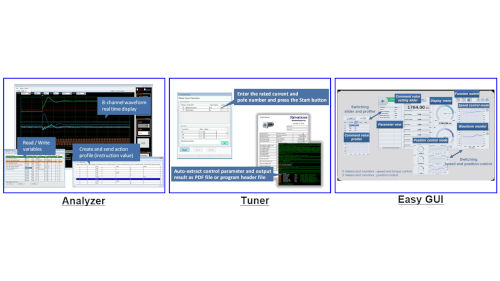
Figure 2: Features of Renesas Motor Workbench
For reference, Figure 3 shows how to change the motor control variables in the example program using the Analyzer function of the Renesas Motor Workbench.
It is a captured image of the position control operation when a position command value is entered. Position, speed, and current information for the q-axis can be represented as a waveform, making it easier to visualize the motor's operating status.

Figure 3: Captured image of the position control operation when a position command value is entered.
Advantages of Motor Control Using Inductive Position Sensors
Among the advantages of using this inductive position sensor, its functionality stands out. The sensing element used in this sensor can be configured with the same number of coil patterns as the pole pairs of the motor being used, making it adaptable to motors with multiple pole pairs. The coil substrate of the inductive position sensor can be mounted at the end or base of the shaft, providing great flexibility in motor design.
Renesas' inductive position sensing technology offers maximum flexibility and can be designed to meet specific customer applications. Renesas encourages this with ready-to-use reference designs, compiled in the Resolver 4.0 catalog. With the Resolver 4.0 catalog, engineers now have access to a wide variety of ready-to-use designs based on the IPS2200 motor switching sensors, each tailored to a specific motor shaft or pole pair configuration. The reference designs include complete schematics, fully wired PCB layouts, and Gerber files, enabling engineers to immediately begin creating working sensing solutions.
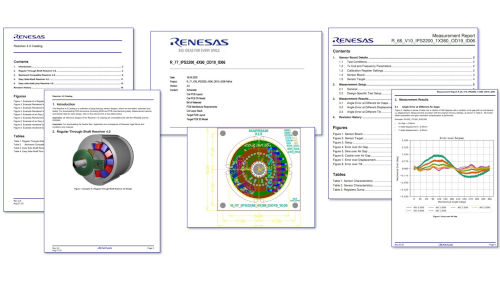
Figure 4: Resolver 4.0 Catalog
Another advantage of this technology is its environmental resistance. Since no magnets are used in the sensor element, it is highly resistant to surrounding magnetic fields while remaining lightweight. Furthermore, the contactless method provides excellent resistance to dust and dirt.
Finally, another advantage is the low cost of the system. In general, it is easier to reduce the overall cost of inductive position sensors compared to optical or magnetic encoders due to the number of elements and components used. The optical encoder sensor is inherently more expensive, while the higher cost of the magnetic encoder is due to the need for magnetic shielding, etc. Figure 5 compares the cost of the three position sensors.

Figure 5: Comparison of the costs of the three position sensors
Conclusion:
Inductive position sensors can optimize position accuracy by designing the coil substrate to match the motor being used. They also offer high environmental resistance and reduced weight for the motor equipment. Furthermore, motor control systems with position sensing capabilities can be developed at a lower cost compared to other position sensors. As a result, the use of this sensor is expanding in applications requiring high-precision position detection in harsh environments, such as industrial motors, robots, and medical equipment. Renesas has prepared a motor control solution based on its high-performance RA6T2 MCU, which specializes in motor control applications, as well as the IPS2200, an inductive sensor IC readily available from online retailers. Sample code for this evaluation environment is available on the RA6T2 product page, allowing users to begin their designs immediately.
Furthermore, the RA6T2 product pages , which can be applied to a wide variety of motor control requirements and devices, include numerous application notes and sample projects for motor control applications. These include IF encoder, sensorless control, BLDC motor control with an inductive position sensor, and many more.
Resources:
- Application Note: RA6T2 Vector Control for Permanent Magnetic Synchronous Motor with Inductive Sensor (renesas.com)
- MCK-RA6T2 Web Page: RTK0EMA270S00020BJ - MCK-RA6T2 Renesas Flexible Motor Control Kit for RA6T2 MCU Group | Renesas
- IPS2200STKIT Web Page: IPS2200STKIT - Evaluation Kit for IPS2200 | Renesas
- Resolver 4.0 Catalog:Resolver 4.0 Catalog (renesas.com)
- RA6T2 MCU Web Page: RA6T2 - 240MHz Arm® Cortex®-M33 TrustZone®, High Real-time Engine for Motor Control | Renesas