

These trends are driving innovation not only in connector design, but also in thermal management, materials, and surface treatments.
The rapid growth of electric vehicles (EVs) has radically changed expectations regarding charging performance. Consumers increasingly expect charging times to be measured in minutes rather than hours, while charging network operators seek higher throughput without compromising safety or reliability. At the same time, engineers developing electrical systems for harsh environments in transportation, defense, mining, and industrial applications face increasing pressure to replace materials affected by evolving environmental regulations, while maintaining proven performance.
Although these challenges may seem unrelated, they share a common engineering goal: to enable greater electrical performance while managing heat, corrosion, durability, and long-term reliability.

Heat Management in High-Power Charging:
One of the most significant barriers to faster EV charging is thermal management. Delivering charging currents approaching 500 A at system voltages up to 1,000 V generates considerable heat in the charging cables and connectors. Excessive temperatures not only reduce efficiency but also limit charging power, accelerate material degradation, and negatively impact user ergonomics.
Conventional air-cooled charging systems struggle to dissipate the heat generated during ultra-fast charging. Increasing the cross-sectional area of the conductors can reduce electrical resistance, but thicker cables are heavier, less flexible, and more difficult for drivers to handle. This presents an engineering dilemma between electrical performance and ease of use.
Liquid cooling offers an effective solution to this challenge. By continuously circulating coolant through the charging cable and connector assembly, heat can be removed directly from the areas where it is generated. This allows for significantly higher rated currents without drastically increasing the cable's size or weight.
Unlike passive cooling methods, liquid cooling maintains more consistent operating temperatures throughout load cycles. Lower operating temperatures reduce thermal stress on conductors, insulating materials, and connector interfaces, while also enabling higher continuous power delivery.
For manufacturers of charging infrastructure, this represents an opportunity to increase the utilization of chargers and reduce charging times without sacrificing reliability.
Selecting the Right Coolant:
While liquid cooling improves thermal performance, selecting the coolant itself raises another engineering consideration: many conventional coolant fluids present challenges such as flammability, electrical conductivity, corrosion, or long-term chemical degradation. In electrical systems carrying hundreds of amps, these characteristics can introduce additional design risks.
Engineering-grade dielectric fluids offer an attractive alternative, combining efficient heat transfer with electrical insulation. Because these fluids are non-conductive, they reduce the risk of electrical failures in the event of a leak in the cooling circuit. Non-flammable formulations further enhance operational safety, while chemically stable fluids can minimize maintenance requirements throughout the system's lifecycle.
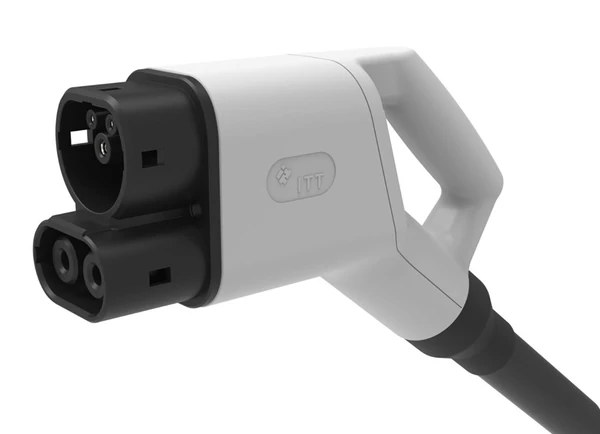
The combination of efficient thermal conductivity and electrical insulation allows engineers greater flexibility when integrating cooling channels directly into charging connectors and cables.
These characteristics have enabled the development of liquid-cooled Combined Charging System (CCS) connectors—such as ITT Cannon's new liquid-cooled high-power DC charging solution—capable of delivering charging currents of up to 500 A at 1,000 V, allowing vehicles to regain significant range in just a few minutes of charging under suitable operating conditions.
Beyond Electrical Performance:
High-power connector design is no longer limited solely to current conduction. Engineers must balance multiple design objectives, including mechanical robustness, weather sealing, ease of handling, ease of manufacturing, and ease of maintenance. Charging connectors are exposed to thousands of mating cycles, harsh outdoor weather conditions, mechanical stress, and continuous thermal cycling.
Therefore, liquid-cooled architectures require careful integration of hydraulic and electrical systems. Cooling channels, seals, hose connections, and connector geometry must be optimized to ensure reliable coolant circulation while maintaining electrical insulation and protection against the ingress of external elements. Furthermore, maintenance considerations also become a key design factor. Cooling systems must be easy to maintain and minimize downtime for charging infrastructure operators.
As charging networks continue to expand into public, commercial and heavy vehicle applications, these multidisciplinary engineering requirements are becoming increasingly important.
Reliability in adverse environmental conditions
The challenges associated with high-power charging are reflected in another area of connector engineering: interconnections for adverse environments.
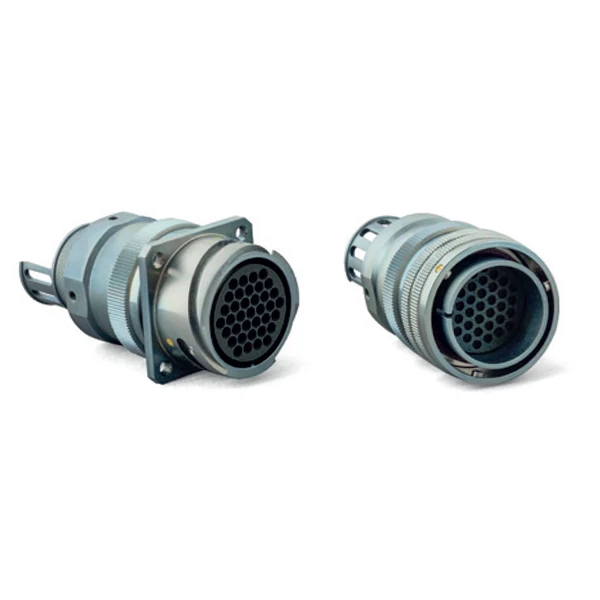
Connectors used in the defense, rail, mining, construction machinery, aerospace, and industrial automation sectors must continue to function despite exposure to vibration, humidity, salt spray, chemicals, and extreme temperatures. Under these conditions, corrosion protection is just as important as electrical performance.
Aluminum remains the preferred material for connector housings in many applications, offering an excellent combination of lightness, mechanical strength, availability, and cost. However, aluminum naturally forms corrosion products that can compromise both structural integrity and electrical performance if not properly protected.
For decades, protective metallic coatings have solved this problem. Among them, cadmium plating has become the standard for connectors intended for harsh environments due to its unique combination of corrosion resistance, electrical conductivity, lubricity, and wear resistance.
Its low coefficient of friction reduces wear during repeated coupling of connectors, while its excellent resistance to salt spray has made it an especially valuable resource in military and other demanding applications where a long service life is essential.
However, the future of traditional cadmium plating is increasingly influenced not by technical limitations, but by environmental legislation.

Regulatory changes drive innovation in materials.
Environmental legislation has become an increasingly important factor in connector design. While the RoHS directive restricted hazardous substances in finished products, the European Union's REACH (Registration, Evaluation, Authorisation and Restriction of Chemicals) regulation also addresses chemicals used during manufacturing.
One of the most significant changes for connector manufacturers has been the restriction on hexavalent chromium (chromium VI), traditionally used in cadmium plating. Although cadmium continues to offer excellent corrosion resistance, conductivity, and durability, evolving regulations are accelerating the development and adoption of more sustainable alternatives.
Since there is currently no direct substitute that matches cadmium in all performance categories, design engineers are increasingly evaluating connector requirements based on application needs, rather than relying on traditional materials.
Balancing performance and sustainability:
Cadmium has long been considered the gold standard for connectors in harsh environments, combining corrosion resistance, electrical conductivity, and excellent wear resistance. Therefore, its replacement requires careful evaluation of technical priorities.
Among the primary alternatives used by ITT Cannon, zinc-nickel coatings provide an excellent balance of corrosion resistance, conductivity, and durability, while meeting current environmental requirements. Zinc-cobalt coatings offer high conductivity and are available in non-reflective finishes for demanding industrial and defense applications.
When electromagnetic shielding is not required, organic protective coatings, such as epoxy-urethane varnishes, provide effective corrosion protection for outdoor equipment. Engineers can also choose stainless steel or marine bronze enclosures, although the increased weight and cost limit their use to specialized applications.

A system-level design approach
Thus, whether designing ultra-fast charging systems or interconnects for harsh environments, the performance of connectors increasingly depends on a system-level engineering approach.
Higher load currents simultaneously influence conductor size, cooling requirements, insulation, and connector geometry. Similarly, the choice of coating affects corrosion resistance, contact reliability, mating forces, and service life. Optimizing one parameter without considering the others can reduce overall system performance.
Consequently, the development of connectors now requires close collaboration between electrical, mechanical, thermal and materials engineers, supported by simulations and environmental qualification tests.
Looking ahead,
future interconnections will need to offer higher power density, improved thermal management, long-term reliability, and compliance with increasingly stringent environmental standards.
Liquid-cooled charging systems demonstrate how advanced thermal management enables higher charging performance without compromising ease of use. At the same time, the transition to environmentally friendly coating technologies shows how materials innovation can maintain reliability while meeting regulatory requirements.
For design engineers, connector selection has become a strategic design decision, going beyond simply choosing a component. Considering thermal performance, materials, corrosion protection, and regulatory compliance together enables the creation of more robust and future-proof systems. With a wide range of products from recognized and trusted connector manufacturers, such as ITT Cannon, Powell Electronics can quickly and easily supply design engineers with the necessary connector products and provide design integration support if needed.
Author: By Gary Evans, European Director of Powell Electronics