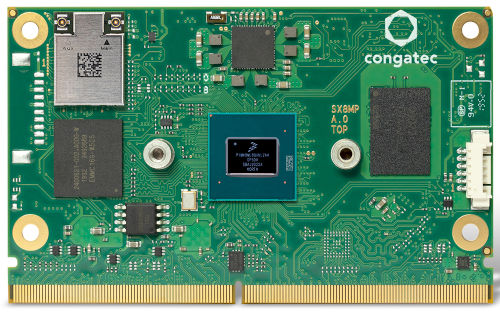
Key technical features of the Arm Cortex-A53-based quad-core processor platform include an integrated neural processing unit (NPU) for AI computing power and an image signal processor (ISP) for real-time parallel processing of high-resolution images and video streams from the two integrated MIPI-CSI camera interfaces. The ecosystem for this new SMARC module—including application-ready 3.5-inch motherboards, Basler camera support, and the AI software stack—enables rapid product launch and proof of concept deployment. Vertical markets for these credit card-sized, low-power vision and AI modules span a wide range of sectors, from smart agriculture and industrial manufacturing to retail, transportation, and smart cities and buildings.
With its various specialized processing units, the new SMARC module based on the congatec i.MX 8M Plus processor enables embedded vision and AI applications with impressive responsiveness and extremely low power consumption.
Advantages include:
• The NPU adds 2.3 TOPS of dedicated AI computing power to the four powerful cores of the Arm Cortex-A53 multipurpose processor.
• The integrated ISP processes high-definition video streams at up to 3x 60 frames per second for video enhancement.
• The high-quality DSP enables local speech recognition without requiring a cloud connection.
• The Cortex-M7, which can also be used as a failover unit, provides real-time control along with an Ethernet port for time-synchronized networking.
• In addition to an encryption module (CAAM) for hardware-accelerated ECC and RSA encryption, Arm TrustZone also integrates the Resource Domain Controller (RDC) for isolated execution of critical software, and High Assurance Boot secure mode to prevent the execution of unauthorized software during boot.
The new SMARC 2.1 modules for vision and AI applications incorporate four quad-core NXP i.MX 8M Plus processors based on Arm Cortex-A53 architectures for industrial (0°C to +60°C) and extended (-40°C to +85°C) temperature ranges, as well as inline ECC for up to 6 GB of LPDDR4 memory. The modules can control up to three independent displays and provide hardware-accelerated video decoding and encoding, including H.265, so that high-resolution camera streams supplied by two integrated MIPI-CSI interfaces can be sent directly to the network. For data storage, engineers will find up to 128 eMMCs onboard, which can also operate in secure pSLC mode. Peripheral interfaces include 1x PCIe Gen 3, 2x USB 3.0, 3x USB 2.0, 4x UART, as well as 2x CAN FD and 14x GPIO. For real-time networking, the module offers 1 Gbit with TSN support, in addition to conventional Gigabit Ethernet. An optional M.2 WiFi and Bluetooth LE card soldered to the module adds wireless connectivity. The feature set is completed with two I2S ports for audio. Supported operating systems include Linux, Yocto 2.0, and Android.