Among its improvements are increased memory capacity, a faster processor, and, for the first time, ready-to-use sound and touch capabilities. This updated pocket computer also offers future potential for artificial intelligence and machine learning in classrooms, paving the way for children to experiment with some of the world's most transformative technologies.
Farnell has manufactured and delivered more than five million devices since 2016, helping the foundation reach approximately 25 million children in over 60 countries who have acquired digital creativity and computer skills. The micro:bit has been adopted by educational institutions worldwide in science, technology, engineering, and mathematics (STEM) learning programs.
The Micro:bit Educational Foundation works with teachers and the micro:bit enthusiast community to develop a selection of upgrades to ensure the updated micro:bit meets current and future needs. One of the most requested improvements is the addition of a built-in speaker and microphone, allowing children to explore their creativity with sound and music. In keeping with the Micro:bit Educational Foundation's commitment to keeping the device as affordable and accessible as possible, this feature-rich micro:bit upgrade is priced the same as the original version.
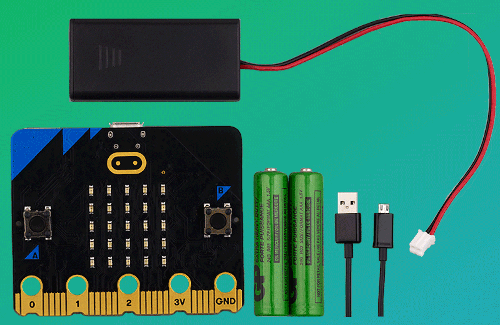
The updated version of the micro:bit is packed with improved features and new technologies, such as:
• Computing Power: The main Nordic nRF52833 microprocessor runs at 64 MHz with 512 KB of flash storage (twice that of the original micro:bit), and an eightfold increase in RAM to 128 KB. The micro:bit also includes a discrete regulator that can supply up to 200 mA of current to external accessories.
• Audio Components: A MEMS sensor microphone and 9 mm magnetic speaker are paired with a recording LED that indicates when the microphone is on, allowing teachers to work with students on privacy and the impact of listening devices.
• Programming: Official micro:bit publishers support both versions of the micro:bit simultaneously with a single download using a new universal hexadecimal file type. In each application, if features present in both versions of the micro:bit are used, users will not have to select the device.
• Touch Capabilities: The device incorporates a touch-sensitive logo that allows users to tackle new and exciting tasks or expand their previous projects with the micro:bit.
• Ease of use: an integrated standby/off mode means the board can be switched off with the batteries connected.
The Micro:bit Educational Foundation offers various resources for educators at micro:bit.org, such as "micro:bit classroom" which allows you to save progress and start again from the same point in the next class, monitor student progress in the classroom, and download the code in Word to present evidence of student progress, making programming classes easier to manage and more productive.
 Gareth Stockdale, CEO of the Micro:bit Educational Foundation, said: “The micro:bit aims to help children develop their creative potential and learn to shape the world around them. Learning to program and use computers can improve their opportunities in the 21st century. We have worked closely with our thriving community to make it even easier to leverage the device both inside and outside the classroom. Hands-on experience and experimentation with the micro:bit are crucial in helping children better understand important technologies from an early stage of their development, and we want to do this in the most fun, accessible, and affordable way possible. Our partnership with Farnell has been essential to the project’s success, and we thank them for their continued support in helping more young people around the world.”.
Lee Turner, Global Head of Semiconductors and SBCs at Farnell, stated: “We are very proud of this long-standing partnership between Farnell and the Micro:bit Educational Foundation, which has made a significant difference in the education of children around the world. As the exclusive manufacturer of the micro:bit, Farnell has worked closely with the Micro:bit Educational Foundation on the design, development process, and supply chain management to ensure the board's viability. We also continue to work with leading educational institutions to support the introduction of the micro:bit into classrooms through tailored national programs. The micro:bit upgrade is a major step forward and allows students to learn about an even wider range of technologies that help prepare them for careers in a digital economy.”.
Farnell has worked with various governments and educational institutions to support the strategic deployment of STEM learning solutions in the classroom. They stock numerous educational devices that can be supplied in varying quantities, from single classes to schools. Farnell also supports the supply and combination of equipment for large-scale programs similar to Norway's Super:bit program.
Furthermore, Farnell offers a range of resources to help educators and parents support children in their STEM learning. The STEM Academy provides a wealth of content and support for those who want to get started with the micro:bit. This dedicated online section is designed for those who wish to explore learning concepts and design projects in the classroom within the electronic and digital space. The element14 community, with its "The Learning Circuit" , offers educational videos that show viewers different ways to learn and explore with the micro:bit. These short videos teach users how to incorporate the micro:bit into their designs and give instructions and tips for bringing projects to life.
The micro:bit and a wide variety of accessories are available from Farnell in Europe.