Two Standard Solutions for Two Industrial Realities.
After studying numerous real-world application cases, Monolitic has developed two Proof-of-Concept (PoC) configurations that address the main challenges facing companies today:
1. Smart Transportation: BC95 NB-IoT PoC.
This solution enables the monitoring of specific climate variables, such as ambient humidity and temperature, inside land transport fleets. It also facilitates the real-time location of multiple vehicles to ensure the quality of delivery services for sensitive goods.
The BC95 NB-IoT PoC is based on an Arduino Uno board and an AkorIoT shield that includes the Quectel BC95 NB-IoT communication module, the Quectel L76 geolocation module, and sensors for temperature, humidity, and atmospheric pressure.
2. Agrotechnology: BG96 NB-IoT PoC
for Monitoring Atmospheric Conditions to Optimize Crop and Plantation Production.
This solution is designed for managing large natural areas by collecting temperature and humidity data from various sectors to provide a detailed understanding of overall atmospheric conditions.
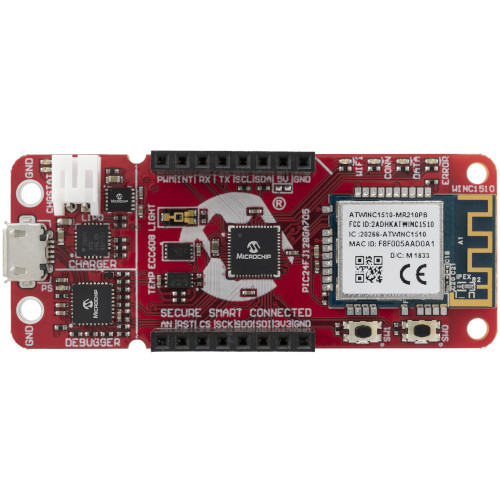
The BG96 NB-IoT PoC is based on the Nucleo STM32 with an ultra-low-power 32-bit ARM L152RE processor, a Mikroe adapter shield, an NB-IoT communication board with the Quectel BG96 module, and a board with the HDC1010 temperature and humidity sensor.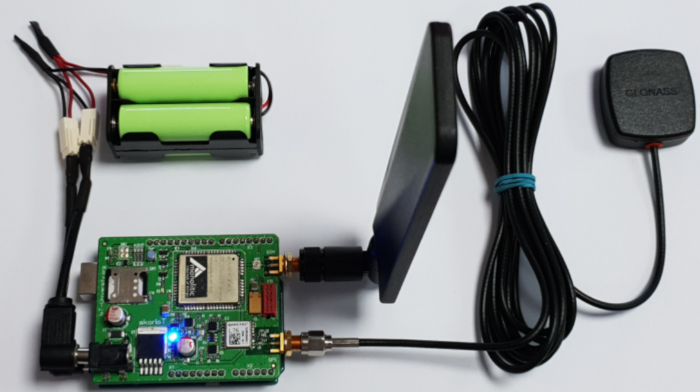 All these PoC solutions encapsulate the information obtained from the various sensor signals or software in JSON format, which is then transmitted via UDP protocol over the Narrow Band IoT cellular network every 5 seconds.
Because each application has specific needs, these platforms are customized for Proof of Concept testing. To do this, the client must define the type of structure they need for their application.
1. Choose the type of connectivity (NB-IoT, WiFi, Bluetooth, 2G/3G/4G, etc.)
2. The type of board (Arduino Uno, Nucleus STM32, Raspberry Pi, etc.)
3. The integrated sensors
4. Configure the accessories (external, M12 cable gland, DIN rail support)
5. And finally, protect the assembly with a custom 3D-printed chassis for field testing.
The two standard examples mentioned have been included in Telefónica's Demonstration Center in Madrid as examples of digital transformation tools for businesses.
Monolitic's Proofs of Concept (PoCs) can be visited as part of an interactive journey that the space offers, allowing visitors to choose and guide their own route, discovering the keys to the digital age in a simple and intuitive way.