

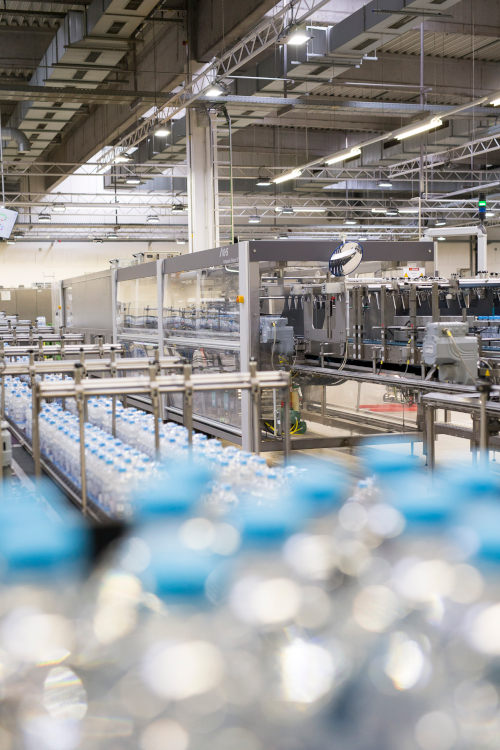
As a leading systems provider, KHS understands the importance of these complex processes to the company's success. Therefore, the Dortmund-based machine and equipment manufacturer is driving numerous research and development projects, focusing particularly on digital networks and line optimization.
 For KHS, a key objective within the company's strategy is to increase equipment efficiency and reduce resource consumption, such as materials and energy. "For us, what matters most is the added value for the customer when deciding whether to implement an idea," explains Dr.-Ing. Matthias Schopp, Head of Engineering Systems at KHS. The Dortmund-based systems supplier prioritizes close relationships with its customers, built on close collaboration. "These create the optimal conditions for approaching new technologies with an open mind and realistic expectations," says Schopp. "This is demonstrated, for example, in the area of funded projects. There, it's possible to test new technologies in a kind of 'protected environment.' This is undoubtedly a platform that allows our developers, in cooperation with external experts, to test new ideas with implementation risks.".
Networking and cooperation with research institutes and universities.
KHS considers networking and cooperation with external research institutes and universities a key driver of progress. For example, KHS is currently supporting a research consortium project involving scientists from the Technical University of Dortmund, Ruhr University Bochum, and the Fraunhofer Institute for Material Flow and Logistics (IML) for additive manufacturing in maintenance logistics. In this process, also known as 3D printing, components are produced according to the layering principle. Among other things, this manufacturing method allows for the production of complex component structures that cannot be manufactured using conventional methods, thus facilitating machine production in the future. Furthermore, the 3D printing process accelerates the supply of spare parts, as it is significantly faster compared to conventional production.
However, the main focus of the selected projects is currently networking, digitalization, and process optimization. "The main objective of our research activities is to make our equipment and machines even more efficient and resource-saving, so that our customers also benefit from the projects in the future," explains Schopp.
Faster Filling Processes Thanks to Self-Optimizing Equipment: 
A research project recently and successfully completed by KHS and its partners is called DnSPro1.Behind this abbreviation lies the development of a filling system equipped with various sensors and intelligent control. "The results of this project can form the basis for future filling machines, where the machine can be optimally adjusted to a new product by automatically modifying the filling parameters, replacing manual setup processes," explains Schopp, highlighting the advantages of the self-optimizing filling equipment. At the heart of the development is the use of machine learning to achieve optimal adaptation to the bottle shape, making the filling process faster and more efficient.
The project arose from the cooperation of five industrial companies with the Ostwestfalen-Lippe University of Applied Sciences and the Ruhr University Bochum. "In this project, cooperation and interdisciplinary development have been exemplary and will be an important contribution to future product development," says Schopp.
optimizationmakes a significant contribution to sustainability.
At KHS, efficiency is a top priority in new product development. Key aspects of this include, among other things, saving materials, resources, and energy, as well as optimizing equipment and machinery. KHS continuously works to design its equipment even more efficiently. Even small components are considered important. "New functionalities in individual modules are gradually transforming our machines and equipment. We always strive to ensure that all components are as efficient as possible and work together seamlessly," explains Schopp.
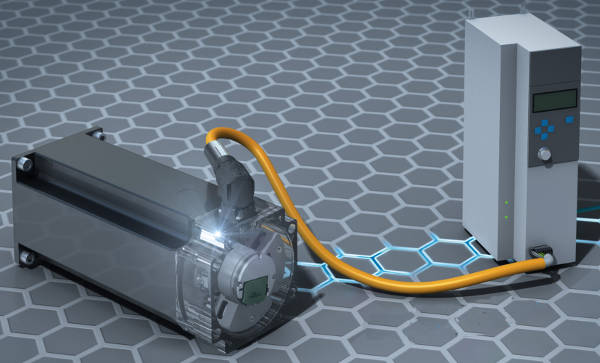
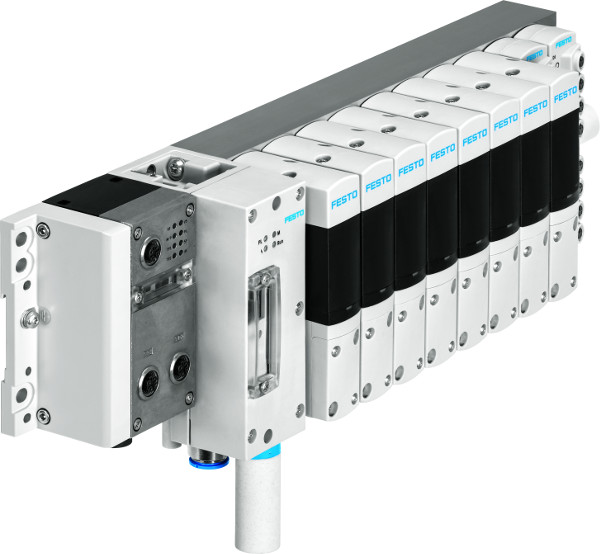
KHS also expects to gain new momentum from the EnAP 2 research project . This project will develop energy-saving concepts and equipment optimization procedures for manual, pneumatic, and electric handling systems. Funded by the Federal Ministry for Economic Affairs and Energy, the project will not only help conserve energy and resources but also enable the beverage industry to keep its total operating costs as low as possible.
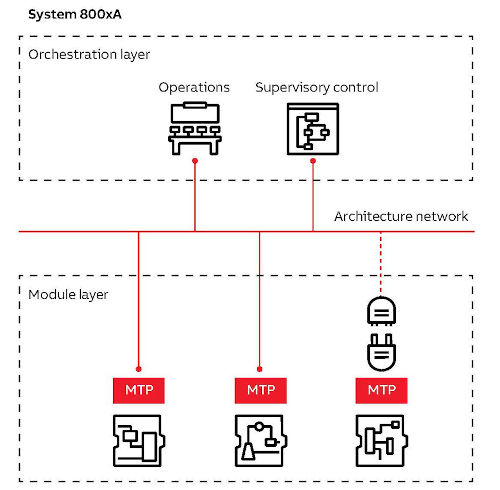
Digital technologies provide relief to the operator.
Another important future theme for KHS is human-machine cooperation. "Our goal should be to make it easier for people to use increasingly complex technology due to growing market demands. With the help of artificial intelligence, we want to design automatic learning and optimization systems," says Schopp.
As part of the CyProAssist project, KHS is investigating important fundamentals in this field. The goal is to develop a production assistance system that supports people in the optimal operation of equipment. "We want to help the machine operator avoid incorrect operation or eliminate fault conditions as quickly as possible to enable high equipment availability," explains Schopp.
 Badische Staatsbrauerei Brewery Benefits from KHS Digital Technology.
The collaboration between KHS and Badische Staatsbrauerei Rothaus demonstrates that the use of digital technologies in the beverage industry is not a futuristic dream. The Dortmund-based systems supplier equipped its long-standing customer with an expanded Innofill Glass DRS glass bottle filler featuring numerous digital functions, including a camera-guided, high-pressure liquid injection control called OPTICAM. This system produces a fine jet of water that displaces residual oxygen from the filled bottle and is therefore crucial for the beer's quality and shelf life. With this new development, KHS enables continuous monitoring and regulation of the foam head without operator intervention. This allows Rothaus to reduce beer losses due to excessive foaming while also identifying and rejecting bottles with insufficient foam.
The new DIAS (Diagnostic Assistance System) also has a beneficial effect on the filling process. Sensors on each filling valve provide comprehensive monitoring and visualization of the filling process. This allows for immediate detection of deviations from nominal values. Particularly noteworthy is the control of the evacuation and CO2 purging processesto achieve low oxygen absorption. Bottle breakage is detected in all cases, and damaged bottles are automatically ejected. Sensor data can be accessed at any time and used for statistical analysis of results, enabling the proactive identification and elimination of potential sources of error. In practice, this not only leads to faster repairs and reduced operator workload but also serves as a foundation for maintenance.
KHS believes that cooperation with partners in research and industry holds great promise for the future.
For over 150 years, KHS has been developing trendsetting machines and equipment, thus exerting a lasting influence on the beverage industry. Cooperation with industry and research partners is a key aspect of KHS's recipe for success. Successfully completed projects like DnSPro offer real added value to KHS and its customers, demonstrating the success of intensive cooperation. "Overall, we can conclude that our current funded projects are in the right research fields and deliver directly tangible results. In addition to these direct results, we also see the positive impact of the projects on our employees' knowledge: we all learn from them," summarizes Schopp.
Grades:
[1]DnSPro = Decentralized cooperation sensor-based subsystems for production facilities with Industry 4.0, funded by the Federal Ministry of Education and Research (BMBF).
[2]EnAP = User-oriented utilization of efficient drive technology in production. The research project of the Institute for System Dynamics at the University of Stuttgart is being carried out in close collaboration with partners from the Institute of Fluid Technology at the University of Dresden, Festo AG & Co. KG, Xenon Automation, and KHS GmbH. It is funded by the Federal Ministry for Economic Affairs and Energy, as well as by Festo, Xenon, and KHS.
Author: Dr. Eng. Matthias Schopp:Dr. Eng. Matthias Schopp, Head of Engineering Systems at KHS, believes that cooperation and exchange with universities and research institutes contribute to the creation and improvement of innovative products.