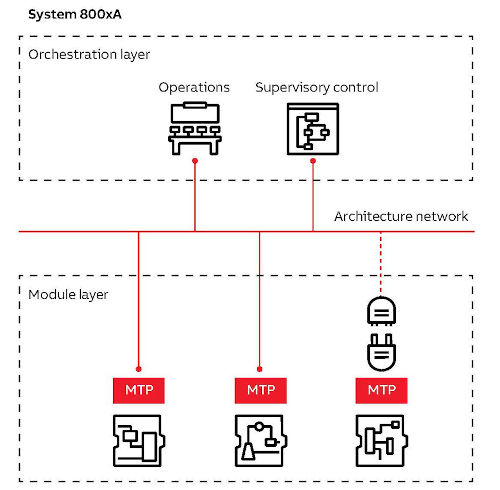
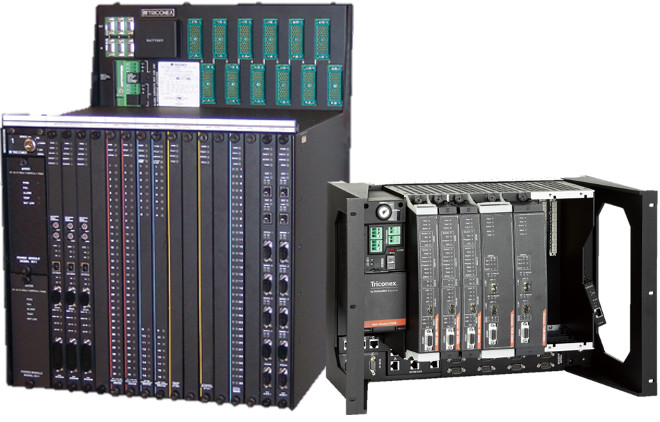
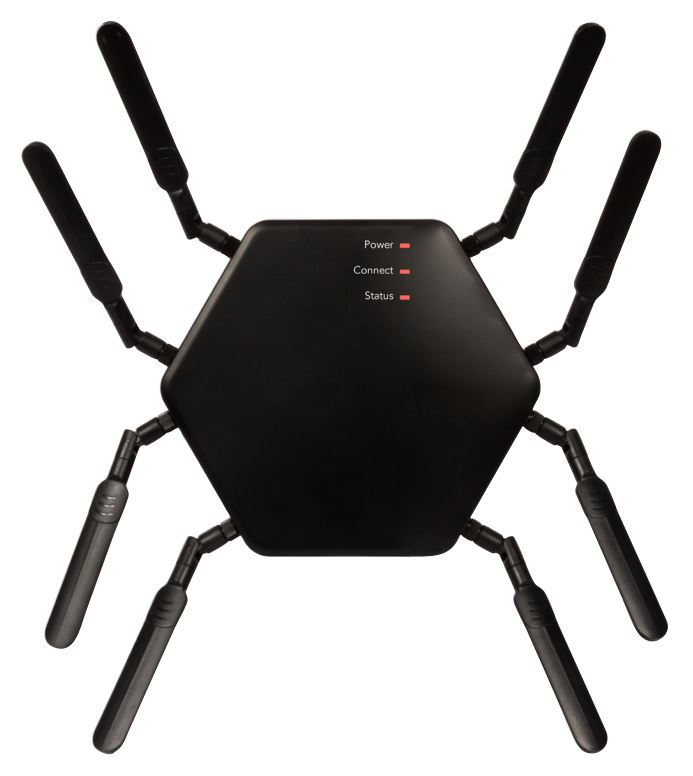
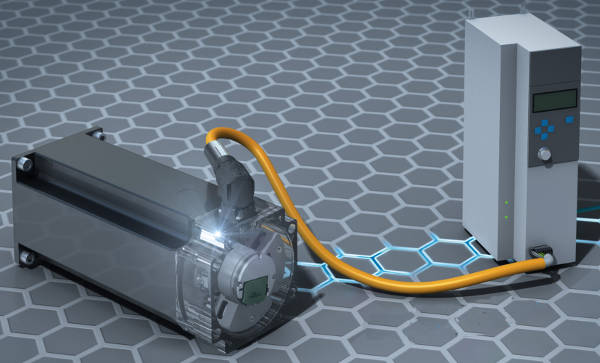
The digital factory, whose operations are driven by data, represents a system of component elements working in harmony to optimize operational efficiency across the entire production plant. In a way, it could be compared to the human body. Sensors act as the eyes and ears, allowing a central controller, or brain, to be aware of its surroundings. Actuators act as the muscles, making necessary adjustments. The factory's connectivity network can be likened to the nervous system deployed throughout the body, while the skin represents the crucial cybersecurity technology for protecting the data.
Advantages of the Digital Factory
Before exploring the components of the digital factory, let's first outline its advantages. The advantages of the digital factory center around enabling greater productivity, which is transforming the manufacturing landscape. New insights from the digital factory ecosystem help make real-time decisions. This translates into improved product quality and increased overall operational efficiency, culminating in more sustainable production processes. Given that the industrial sector consumes approximately 50% of the world's total energy,¹ for manufacturers aiming for net-zero emissions, the connected digital factory is at the heart of this transformation. In addition to sustainability benefits, digital factories provide the flexibility and real-time configurability to respond quickly to changes in consumer demand. For example, in the healthcare sector, there is a growing demand for personalized medical devices, such as 3D-printed joint implants tailored to each patient's anatomy. As factory designs become more modular and production cells become smaller and more adaptable, workflows can be programmed and modified in real time, increasing manufacturing speed and supporting the viability of competitive offshoring efforts in Europe and North America.

Figure 1. The anatomy of the digital factory.
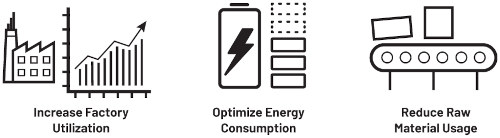
Figure 2. Benefits of the digital factory.
Data: The Soul of the Digital Factory.
Both real-time and non-real-time data from multiple sources across the factory must be analyzed quickly and reliably at the Intelligent Edge (where the data originates) and aggregated centrally to reveal a holistic picture of the entire factory operation. The operational insights derived from this data are essential to unlocking the factory's full operational efficiency potential.
Sensors: The Eyes and Ears of the Digital Factory.
More sensors and more sensing modes, such as temperature, pressure, flow, proximity, and vibration, need to be deployed to acquire the necessary data. Precision measurement and sensing technology is required to continuously detect, measure, and interpret factory assets. IO-Link® technology enables sensors to become intelligent. A pressure sensor decides locally whether the pressure exceeds the required threshold and therefore only needs to provide the controller with a single Boolean bit variable (yes or no), representing a data bit instead of a full digital value representing the actual pressure measurement. Localized decision-making saves communication and processing time, enabling efficient distributed control.
Actuators: The Muscle of the Digital Factory.
Actuators, often the unsung heroes of the digital factory, act as the muscle, essential for getting the job done. These actuators are used to control valves, pistons, and other mechanical devices. This allows for precise control of fluid flow, ensuring the correct amount of material is delivered to each part of the process.
Both sensors and actuators must be tolerant of the conditions found in their application space. Harsh industrial environments include high temperatures and exposure to electromagnetic interference (EMF) emissions, as well as transient power supply voltage spikes and mechanical vibrations. For these edge sensing and actuation systems, power supply is another key consideration. Power supply performance requirements increase as sensors and actuators become smaller, while the accuracy and quality of signal acquisition increase. This demands highly efficient, low-noise power management solutions with a small footprint—critical in designs that are often space-constrained. Without the appropriate power supply technology for the specific detection requirements, the advantages of real-time configurability in the digital factory cannot be realized.
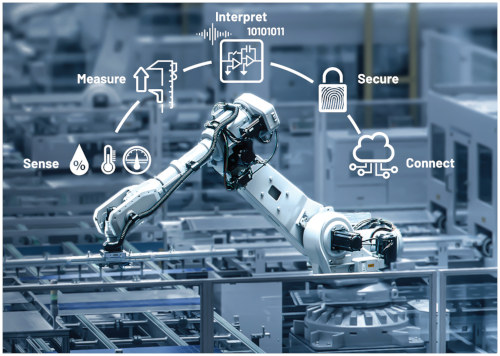
Figure 3. Building blocks of the modern digital factory.
Peripheral and Central Intelligence: The Brain of the Digital Factory.
Because the digital factory requires peripheral devices to have higher levels of functionality and intelligence, more calculations and analysis must be performed within the device itself to enable localized decision-making. To enable such peripheral autonomy, local artificial intelligence (AI)/machine learning (ML) engines, low-power accelerators, and increased memory and processing power are required. Sensor fusion is another type of peripheral intelligence in which data from multiple different types of sensors can be combined simultaneously to reveal a more accurate measurement—something that would be impossible using individual sensors. With new high-precision, high-bandwidth ADCs, a single front-end sensor can be used to monitor multiple sensor elements, saving space and energy. AI microcontroller technology allows neural networks to run with ultra-low power consumption, while low-power transmitters offer improved diagnostic capabilities even in remote processing plants, which are often an extension of the smart factory.
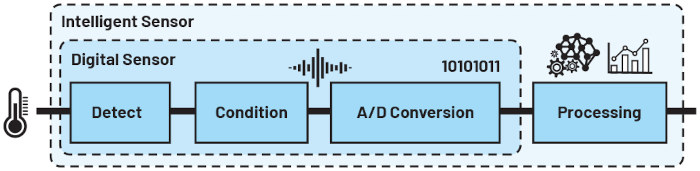
Figure 4. Enabling peripheral autonomy with smart sensors.
Connectivity: The Nervous System of the Digital Factory
) that will dramatically change the process automation industry by significantly improving plant operating efficiency through seamless Ethernet connectivity to field devices (sensors and actuators).

Figure 5. IT/OT convergence within the digital factory.
In today's factories, an information technology (IT) network is deployed at the office/enterprise level. The IT network traditionally handles issues such as data storage, data analytics, and business applications. While important, these are not usually as critical as data exchange on the production floor. The network that manages the production lines on the factory floor is called the operational technology (OT) control network. Within that control network, there may be multiple different production cells or machines that often have limited ability to communicate with each other. The concept of a converged IT/OT network within the digital factory changes all of this. It offers a unified factory network where all devices, machines, and robots are connected and interconnected, speaking the same language. Every IP-addressable device can communicate in real-time or near real-time and be configured independently of other devices on the network. The key technologies that make such a converged digital factory network possible are Industrial Ethernet, Time-Sensitive Networking (TSN), Ethernet-APL (Advanced Physical Layer), and IO-Link. With all devices now speaking the same Layer 2 language, it's possible to control both the IT and OT portions of the network with the same network management and control system, while still respecting the time-sensitive traffic of the operational network. The high volume of traffic, both urgent and non-urgent, necessitates network upgrades to increase bandwidth and ensure latency-free data delivery, which is critical for high product quality and operational efficiency on the manufacturing floor. The convergence of OT and IT makes scalability opportunities virtually limitless.
Cybersecurity: The Skin That Protects Trusted Digital Data in the Factory.
With increasing interconnectivity comes the need for greater data security, as smart factory environments expose people, technology, processes, and intellectual property to cyber threats. This is driving the need for features such as secure boot, secure software updates, secure transmission authentication, and hardware root of trust. A critical aspect of securing a network is the authentication of each new device that attempts to connect to the network. This involves verifying that the device is authentic before authorizing any network transactions with it. Similar to device authentication, secure boot is essential, as it ensures that field equipment runs only software from a trusted source using public-key cryptography to verify the firmware's digital signature.
What technology solutions are currently available?
Analog Devices has always been valued for its innovative precision technology used to accurately sense, measure, and control devices throughout the factory. Combining this with a broad portfolio of industrial connectivity and power solutions, and additional digital capabilities, including AI expertise, ADI has the technology and domain expertise to realize advanced digital factory capabilities.
Low-bandwidth, multi-channel sigma-delta ADCs, such as the AD4130 family, integrate all analog front-end circuitry for easy interconnection with multiple sensor types. This enables sensor fusion with advanced diagnostics to support localized fault detection and rapid decision-making. The
MAC-PHY ADIN1110 and accompanying ADIN1100 PHY enable a seamless transition to connected field devices, bringing Ethernet-APL to the process edge over 1.7 km of single-pair Ethernet cable.
- Regarding cybersecurity, turnkey hardware-based solutions allow customers to easily integrate data security into their products. The DS28S60 and MAXQ1065 are secure, ultra-low-power integrated circuits (ICs) that enable public-key cryptography even in the most power- and computationally limited designs.
MAX78000 AI microcontroller enables neural networks to run with ultra-low power consumption, providing actionable AI insights at the edge.
The path to widespread digital factory deployment:
Industry surveys suggest that 85% of companies have accelerated digital transformation in their manufacturing plants over the past two to three years.3 However, full-scale digital factory implementations are not yet the norm. The World Economic Forum’s global network of leading manufacturers is demonstrating how digitization strategies and digitally infused operations deliver benefits beyond productivity gains to create a foundation for sustainable and profitable growth. These manufacturers are leveraging productivity gains by freeing up capacity through the deployment of innovative technologies. These technologies accelerate efficiency and, in turn, produce environmentally friendly results. This translates into a double benefit of increased productivity with greater sustainability—in other words, effective eco-efficiency.
Conclusion: Make Your Digital Factory a Reality.
As digital transformation continues to accelerate, factories face both opportunities and challenges. New technologies are key to increasing efficiency, but their implementation can be complex and requires careful execution. Leveraging partners with deep industry expertise is paramount to improving operations and unlocking these efficiencies. This collaboration lies at the heart of the more robust and adaptable digital factories of tomorrow.
References
1 «Industrial Sector Energy Consumption». U.S. Energy Information Administration, 2016.
2 Maurice O'Brien and Volker Goller. "Enabling Seamless Ethernet to the Field with 10BASE-T1L-connectivity". Analog Devices, Inc.
3 Janet Foutty. «How Digital Transformation and A Challenging Environment Are Building Agility and ResilienceDeloitte Insights, April 2021.
About the authors:
Tracey Johnson is a senior marketing manager at Analog Devices, where she leads a digital marketing team focused on the industrial automation market. In 2003, Tracey graduated with a degree in Electronic Engineering from the University of Limerick, Ireland. She joined ADI as a design evaluation engineer and has since held roles in applications and marketing.
Margaret Naughton is a marketing engineer at Analog Devices, where she works as part of a digital marketing team focused on the industrial automation market. Since joining ADI in 2007 as a software developer, Margaret has held roles in CAD, engineering enablement, and marketing. She holds a degree in computer engineering and a master's degree from the University of Limerick.