
Global manufacturers are relying more than ever on high-speed automation to meet today's productivity challenges. However, increasing output while maintaining quality is becoming increasingly difficult with conventional automation. Increasing the speed of a process like coating or dispensing can compromise accuracy and repeatability, requiring complex adjustments to achieve the desired end-of-line quality. Typically, only a small number of trained and experienced technicians are capable of setting up and maintaining these processes, which can slow the introduction of new products and leave assembly lines vulnerable to disruptions.
High-Productivity, Precision Coating:
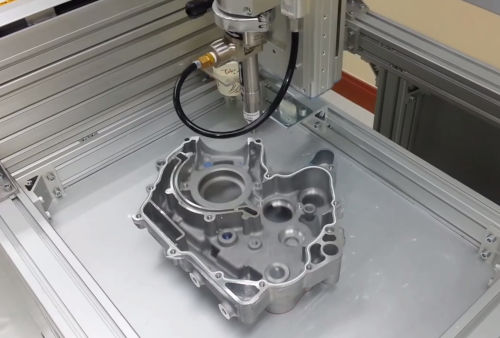
Yamaha Robotics' experience working with customers in various industries, including automotive, electronics, and medical, offers valuable insights. Applying sealant along the mating edges of cast metal parts or plastic components, such as covers and housings, prior to assembly is a common requirement often addressed using conventional drives to coordinate linear motion and sealant dispensing.
To deposit a continuous stream of sealant, the motion control system must precisely follow a predetermined path along straight edges and at corners. Typically, the speed must be reduced at corners to accurately trace the desired location. Conversely, it is desirable to increase the speed when moving along straight edges to reduce the overall time required to complete the process.
To ensure a consistent volume of sealant is deposited at all points, the dispensing mechanism must be controlled to throttle the sealant flow at low-speed corners and increase the flow when the unit moves faster. This is difficult to achieve, forcing companies to rely on a small number of personnel with the necessary technical expertise. If the setup is poor, inconsistencies such as excessive sealant volume at corners can occur, ultimately leading to more rejected units at the end of the line. On the other hand, establishing a slow and constant driving speed and dispensing rate can simplify process control, at the cost of longer handling time and lower overall throughput.
Typically, manufacturers want to achieve both high quality and high speed without relying on specialized skills. This requires a solution that can automatically adjust the sealant dispensing rate as the excursion speed changes, allowing the desired material volume to be applied at the maximum possible speed appropriate for any position.
Robot Automation:
Several industries are now adopting robotic automation to increase productivity and ensure future-proof flexibility. Yamaha Robotics has further engineered its RCX series of robot controllers and associated graphical programming tools for ease of use, helping users maximize the benefits of this technology.
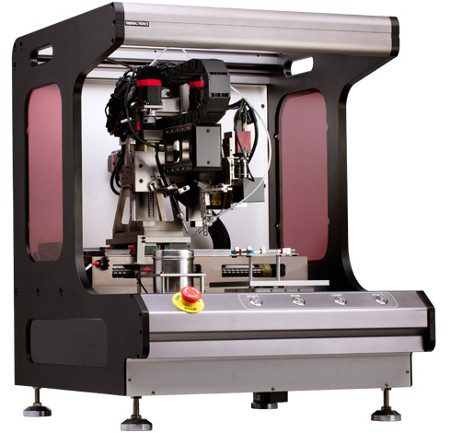
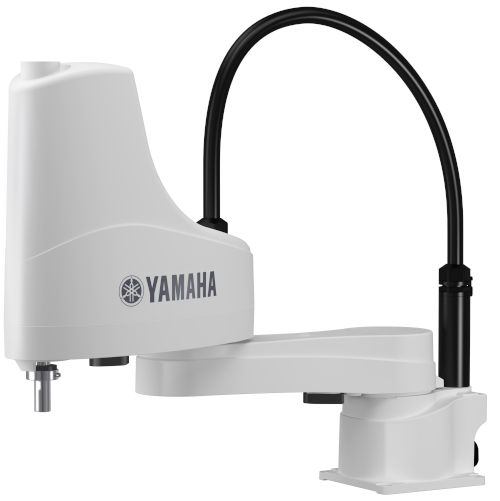
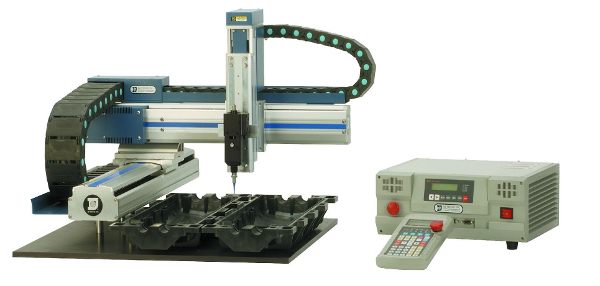
The Yamaha RCX340 controller supports enhanced motion capabilities and simplifies robot dispenser setup. Specifically, the dispensing control function can be linked to the servo control, allowing the RCX340 to control the dispensing speed in conjunction with the motion speed to ensure high accuracy, high speed, and stable coating thickness. This "servo-controlled dispensing" (Figure 1) is applicable to Yamaha SCARA robots and Cartesian robots.
Furthermore, the controller allows for easy linking of multiple robots for simultaneous control and supports an expanded instruction set, including dedicated vision instructions that simplify programming and help minimize system startup time. The RCX STUDIO 2020 programming environment contains debugging functions that support multitasking and provides features to accelerate program entry and enable rapid configuration.
Furthermore, leveraging communication interfaces commonly used in industrial automation allows for easy integration into an existing factory environment. In addition to RS-232C and Ethernet ports, the RCX340 supports popular fieldbuses such as CC-Link, EtherNet/IP™, DeviceNet™, PROFIBUS, PROFINET, and EtherCAT. Connections to general-purpose servo amplifiers or third-party vision systems are also easily implemented, simplifying the introduction of robotic technology into legacy manufacturing processes.
High-speed coating in practice:
Yamaha Robotics recently helped an automotive customer accelerate the precision application of liquid sealants to aluminum castings using the RCX340 controller and Yamaha robots. This manufacturer had been unable to increase production by increasing the drive speed of its existing automatic dispensing system. Simply increasing the speed had compromised sealant dispensing control, resulting in larger quantities of sealant being applied to positions where the drive speed was slower. This had forced the company to operate the equipment at a constant speed, resulting in slower handling times.
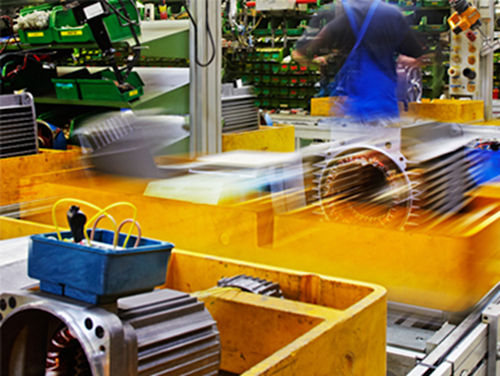 Figure 2. Manufacturers in the automotive sector need to combine high productivity with extremely high quality.
Seeking a faster solution that was also easy to set up without requiring specialized technicians, the project team leader contacted Yamaha to inquire whether robotic technology could be a viable alternative. After seeing Yamaha's demonstration of servo-linked dispensing, he quickly installed a test system at the factory to explore its potential.
"It was clear that production speed increased, and our analysis showed that the coating quality was also perfect," he says, adding, "We also consulted Yamaha about the dispensing process, which we had previously configured using our own in-house expertise. This additional experience helped us calculate the optimal settings extremely quickly, significantly reducing the workload for our own engineers.".
Confident in achieving the desired speed increase as well as consistent quality, the project team proceeded to final verification and subsequently introduced the process to the assembly line. As soon as they completed their work, they began exploring opportunities to use Yamaha's robots to improve other processes in the factory.
Conclusion:
Manufacturers in the automotive and other sectors need to adopt advanced automation to reduce cycle times and maintain quality, while also striving to increase productivity. Robots can meet these requirements when combined with the latest motion control techniques and user-friendly tools to aid in programming and setup. Ease of use is essential to help users quickly introduce new processes into their factory environment.


 Asparagus picking-1-w.jpg)