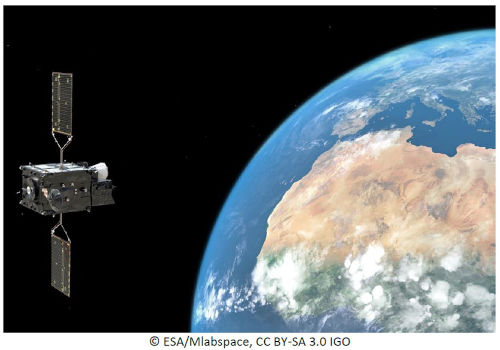
The new generation of satellites will provide ten times more data to EUMETSAT (European Organisation for the Exploitation of Meteorological Satellites) than the previous generation. In turn, weather forecasting agencies across Europe and Africa will be able to improve the accuracy and timeliness of extreme weather alerts to save lives and limit economic damage.
The geostationary Earth orbit satellites are being designed and built by Thales Alenia Space under a development contract awarded by the European Space Agency. Saft's VES16 batteries were selected to provide continuous power for periods of up to 72 minutes per day when the Earth eclipses the sun, halting power generation from the photovoltaic solar panels.
“Continuous power is essential to support a constant and uninterrupted flow of weather forecast data from the new satellites,” said Flavio Murolo, Meteosat Satellite Operations Manager. “Having supplied batteries for the first and second generation satellites, Saft technology has a proven track record of over 45 years of superior performance, reliability, and long life for EUMETSAT.”
Manufactured in France, the batteries will power two types of satellites over a 20-year mission, corresponding to the lifespan of the different satellites. Four imaging satellites will gather visual data on the formation of weather systems and lightning, while two sounding satellites will monitor water vapor and trace gases in the atmosphere. The satellites will also relay data from emergency beacons for people at sea.
The battery power will also support the satellites' three-axis stabilization systems. This ensures that the sensors maintain a constant view of Earth.
Saft has been building batteries for space use since the 1960s. The company began manufacturing batteries for weather satellites in the 1970s, starting with the first generation of Meteosat satellites, operated by EUMETSAT. For more than 40 years, every European weather forecast has been powered by a Saft battery.