To support development, NVIDIA will provide AI infrastructure, simulation libraries, models, frameworks, and blueprints, while Siemens will contribute hundreds of industrial AI experts and top-of-the-line hardware and software.
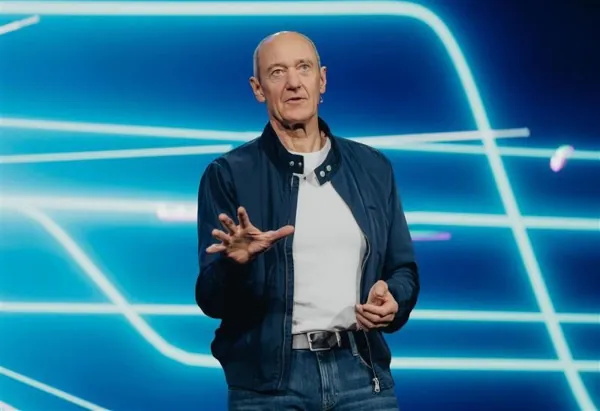
“Together, we are building the operating system for industrial AI, redefining how the physical world is designed, built, and managed, to scale AI and create real-world impact,” said Roland Busch, president and CEO of Siemens AG. “By combining NVIDIA’s leadership in accelerated computing and AI platforms with Siemens’ leading hardware, software, industrial AI, and data, we are empowering customers to develop products faster with the most comprehensive digital twins, adapt production in real time, and accelerate technologies—from chips to AI factories.” “Generative AI and accelerated computing have sparked a new industrial revolution, transforming digital twins from passive simulations into active intelligence of the physical world,” said Jensen Huang, founder and CEO of NVIDIA.
“Our partnership with Siemens merges world-leading industrial software with NVIDIA’s comprehensive AI platform to bridge the gap between ideas and reality, enabling industries to simulate complex systems in software and then seamlessly automate and operate them in the physical world.” Accelerating the Entire Industrial Lifecycle: Siemens and NVIDIA will collaborate to create AI-accelerated industrial solutions across the entire product and production lifecycle, enabling faster innovation, continuous optimization, and more resilient and sustainable manufacturing. The companies aim to build the world’s first fully AI-powered adaptive manufacturing plants, starting in 2026 with Siemens’ electronics factory in Erlangen, Germany, as the first prototype.
By using an “AI brain” powered by software-defined industrial operations and automation software, combined with NVIDIA Omniverse libraries and NVIDIA AI infrastructure, factories can continuously analyze their digital twins, virtually test improvements, and translate validated insights into operational changes on the production floor. This results in faster, more reliable decision-making, from design to implementation, increasing productivity and reducing commissioning time and risk. Companies aim to extend these capabilities to key vertical sectors, and several customers, including Foxconn, HD Hyundai, KION Group, and PepsiCo, are already evaluating some of them.
With the expanded collaboration, Siemens will complete GPU acceleration across its entire simulation portfolio and extend support for NVIDIA CUDA-X libraries and AI physics models, enabling customers to run larger, more accurate simulations faster. Building on this foundation, the companies will advance toward generative simulation using NVIDIA PhysicsNeMo and open models to deliver autonomous digital twins that enable real-time engineering design and autonomous optimization. Advances in electronic design automation for accelerated computing: By applying the operational logic of industrial AI to semiconductors and AI factories, Siemens and NVIDIA will accelerate the engines of the AI revolution. Starting with semiconductor design and building on NVIDIA's extensive use of Siemens tools, Siemens will integrate NVIDIA CUDA-X libraries, PhysicsNeMo, and GPU acceleration across its entire EDA portfolio, focusing on process verification, design, and optimization, with the goal of increasing the speed of key workflows by 2–10 times.
The partnership will also add AI-assisted capabilities, such as design guidance, debugging support, and circuit optimization, to boost engineering productivity while meeting stringent manufacturability requirements. Together, these capabilities will power native AI engines for design, verification, manufacturability, and digital twin approaches to shorten design cycles, improve performance, and deliver more reliable results. Siemens and NVIDIA will also jointly develop a repeatable blueprint for next-generation AI factories, accelerating the industrial AI revolution and providing a high-performance foundation for their AI-accelerated industrial portfolios.
This plan will balance the demands of next-generation high-density computing in terms of power, cooling, and automation, while ensuring that technologies are well-positioned in both speed and efficiency, optimizing the entire lifecycle from planning and design to deployment and operations. The combined effort unites NVIDIA’s AI platform roadmap, its AI infrastructure expertise, its partner ecosystem, and the accelerated power of simulation based on the NVIDIA Omniverse library with Siemens’ strengths in energy infrastructure, electrification, network integration, automation, and digital twins. Together, the companies aim to accelerate deployment, increase energy efficiency, and improve the resilience of AI infrastructure at industrial scale worldwide. Optimizing operations through shared innovation: Siemens and NVIDIA intend to accelerate their respective operations and portfolios by deploying technologies on their own systems before scaling them across all sectors. NVIDIA will evaluate Siemens' offerings to streamline and optimize its own operations and offerings, and Siemens will evaluate its own workloads and collaborate with NVIDIA to accelerate them and integrate AI into Siemens' customer portfolio. By accelerating each other and improving their own systems, Siemens and NVIDIA are creating concrete proof of value and scalability for customers.