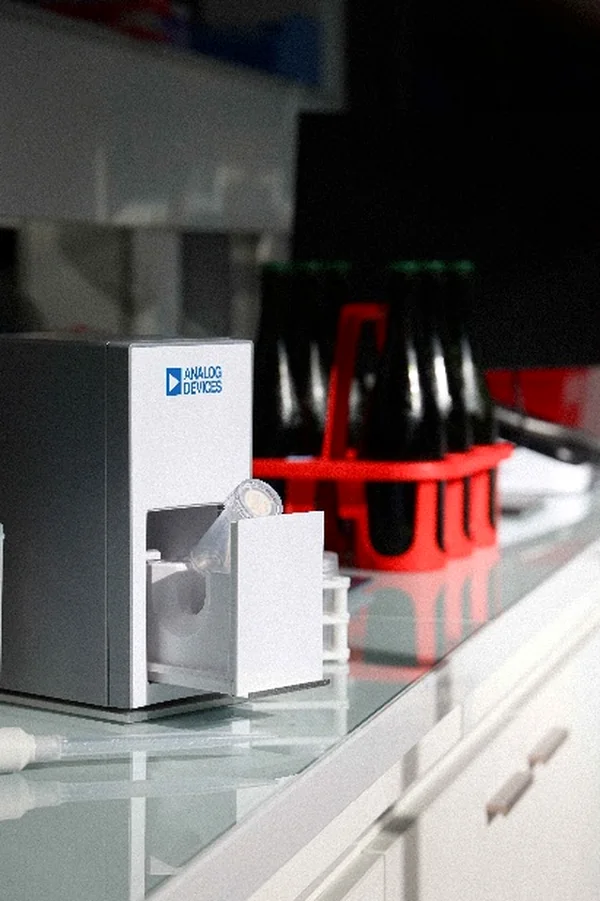
The project, announced on October 15, 2026, is based on a technology whose initial developments come from research conducted at the Massachusetts Institute of Technology (MIT) and which Analog Devices continues to refine.
The solution allows for the analysis of volatile chemical signals emitted by vines, must, and wine to obtain early information about biological processes and potential quality risks.
Early detection of the Fresh Mushroom Aroma defect: The first result of the collaboration focuses on detecting the risk of the defect known as Fresh Mushroom Aroma (FMA), associated with a fresh mushroom aroma in wine. Researchers at the Robert-Jean de Vogüé Research Center of Moët Hennessy have developed a library of samples and associated data to train machine learning algorithms capable of recognizing the chemical signatures related to this defect.
According to the participating organizations, the technology has made it possible, for the first time, to identify samples with a high risk of developing FMA at an early stage, before the defect could be detected using standard procedures. This result opens the possibility of intervening earlier in the winemaking process and improving the monitoring of risks that can affect wine quality.
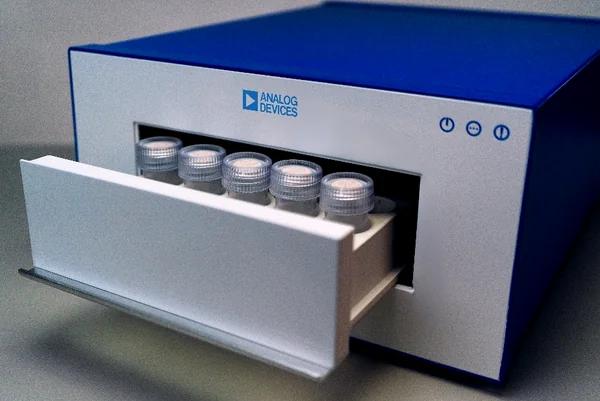
Chemical Sensors and Machine Learning to Analyze Complex Signals:
Analog Devices' technology platform combines chemical detection systems with machine learning and artificial intelligence algorithms. It works by analyzing a wide range of chemical information and identifying the most relevant signals to recognize patterns related to biological processes and quality alterations. Instead of simply searching for predefined conditions, the system uses machine learning from complex chemical data to identify relationships that might go unnoticed with other methods. This capability is designed to provide researchers, winegrowers, and winemakers with additional information about the condition of grapes and wine.
Future Applications in Vine Diseases and Soil Assessment
Beyond the detection of FMA, the three organizations are investigating other applications of the technology in viticulture and winemaking. Among the possibilities being studied are the early detection of vine diseases, soil assessment, and the identification of other defects that can affect production. The project also includes the analysis of risks related to climate change and certain associated phenomena, such as wildfires. These applications are still in the research phase.
The aim of the collaboration is to provide decision-making support tools, without replacing the experience and knowledge of the professionals responsible for grape cultivation and winemaking.
A collaboration between semiconductors, viticulture, and research:
The project brings together the capabilities of three organizations with different specializations. Analog Devices, through its ADI Health Solutions unit, contributes the sensor platform and machine learning for chemical signature analysis. Moët Hennessy contributes its expertise in viticulture and winemaking, as well as the data and samples collected by its research center. UC Davis, for its part, contributes its scientific knowledge in viticulture and enology.
Manuel Reman, member of the Moët Hennessy Executive Committee and head of R&D, highlights that the technology allows the interpretation of chemical signals from grapes and wine to anticipate quality risks before they become visible.
Max Shulaker, head of ADI Health Solutions, points out that the result obtained with FMA constitutes the first advance of a platform with potentially broader applications in the study of living systems.
Ben Montpetit, from UC Davis, emphasizes the importance of combining new technological tools with the training of professionals capable of interpreting data and using it in their decisions.
Potential Expansion to Other Industrial Applications
In addition to initial applications in the wine industry, Analog Devices plans to expand the availability of this technology to future industrial applications. Moët Hennessy and UC Davis are also exploring how the development of shared reference libraries could benefit the entire grape and wine industry. The collaboration will continue to explore the use of chemical signatures and machine learning to gain insights into biological processes, detect risks early, and support decision-making by industry professionals.