

The header figure shows a typical ring structure of a synchronous (electron) accelerator. The inner ring is a booster ring, and the outer ring is a storage ring from which several experimental stations branch out.
Synchrotron Applications:
The high brightness and broad spectrum of longer wavelengths of the light source (far infrared to X-rays) generated by the synchrotron can be widely used for experiments in the fields of physics, chemistry, materials science, chemical engineering, biology, medicine, geology, archaeology, environmental protection, energy, electronics, microelectromechanical systems (MEMS), nanoscale devices, and more. It is an indispensable tool for cutting-edge scientific research, biomedical technology, and industrial applications in the 21st century. It has contributed to the study of lithium materials, leading to the development of a long-lasting battery that is essential for the current global electric vehicle market. Furthermore, it further enhances the understanding of nanotechnology research, a key element in semiconductor materials and the development of relevant biomedical products.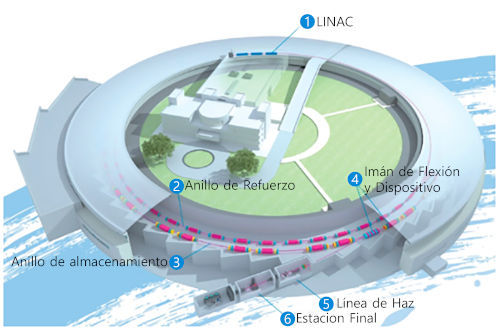
Figure 2 illustrates the TPS synchrotron, and its main components include the Linear Accelerator (LINAC), Booster Ring, and Storage Ring. The source produces the particles, which are accelerated to high speed in the LINAC before being injected into the booster ring for further acceleration. The particle beams then enter the storage ring, which maintains their speed. If the particle beams are deflected to near-light speeds, some of the energy is emitted as synchrotron radiation in the form of electromagnetic waves. Depending on the requirements, the super-bright beams are redirected to the beamline for the experiment or application at the end station. The RF amplifier system compensates for the power loss of the particle beams in the storage ring due to synchrotron radiation emission. This system amplifies a signal received in the ring and feeds it back to the opposite side of the ring at a specific phase angle. The feedback circuit helps reduce size and optimize power distribution. The MEAN WELL system's power solution is installed and used as the DC power supply for the RF amplifier system in the storage ring.
The project plan utilizes several sets of 96kW high-power power supply systems, as shown in Figure 3. The power system output drives the solid-state RF power amplifier clusters shown in Figure 4, which generate high-frequency energy to propel electrons traveling at near the speed of light, as shown in Figure 5. The maximum DC output power of the entire system is up to 800kW!
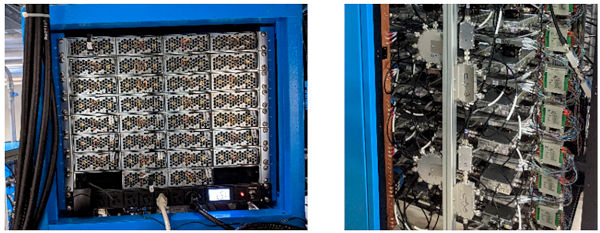 Fig 3. 96kW high-performance power system Fig 4. RF amplifier groups
To match the RF power required by the storage ring and achieve optimal energy efficiency, the power system's output voltage must be adjustable between 42VDC and 54VDC within the modulation range for each operating point at a specific RF power level to achieve the best results. The DRP-3200 series, equipped with CANbus digital communication protocol, can meet the requirement for precise voltage trimming.
Furthermore, the bus voltage of each power system assembly must be adjusted synchronously during experiments, provided they are not connected in parallel. To accomplish this, external controllers are implemented for remote control. Another challenge is that the output power accuracy is limited to +/- 1% after trimming. To address this, the power supply, with its fully digital design and communication protocol, allows for remote control and monitoring of the system via Ethernet.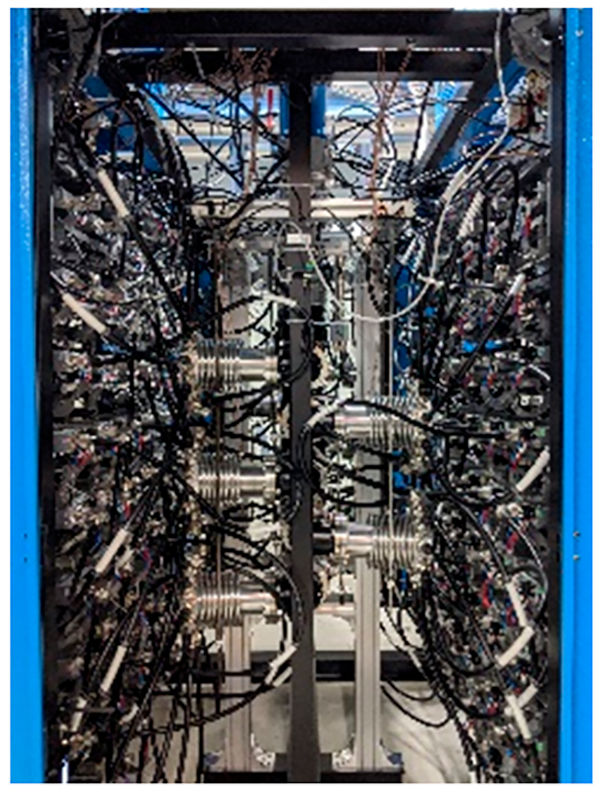
Another important factor in selecting the DRP-3200-48 is the extremely high efficiency of these devices, which aligns with international trends in energy conservation and environmental protection. A 0.5% increase in the efficiency of each power supply in an 800kW system will yield substantial economic results and benefits in the long term.
System Components
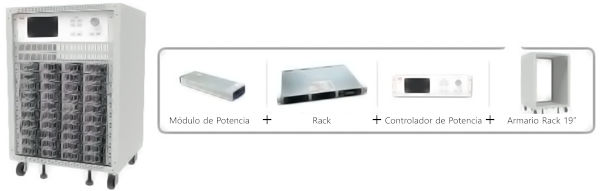 MEAN WELL includes the DRP-3200 series as a fully digital power module, the DHP-1UT-A 1U power rack, the CMU2 power controller, and a standard 19-inch rack enclosure. Total power output is up to 128kW.
Solution benefits
1. Integrated solution: Supports digital communication so that key power system parameters can be remotely controlled and monitored via the controller for simple power management work.
2. Easy maintenance: supports hot-swap function, so the module can be installed and replaced quickly.
3. Power scalability: scales from 12.8kW to 128kW. High-power solutions suitable for different industries and applications where parameter configuration requires it.