
At this point, we might easily wonder what a power supply has to do with PCR, but behind the scenes, the power supply industry and the latest digital power technologies have greatly contributed to making the PCR process efficient and accurate. Before revealing how, let's go back in time to the beginning of it all
Reading Inside the Double Helix:
We have all learned in school about the human hereditary material known as deoxyribonucleic acid, or DNA, which contains all the genetic information and instructions necessary for organisms to develop, grow, survive, and reproduce. Originally discovered in 1866 by Gregor Mendel, known as the "Father of Genetics," it took many years for scientists to figure out how to decipher the secret code of DNA and how it could best be used for the good of humanity.
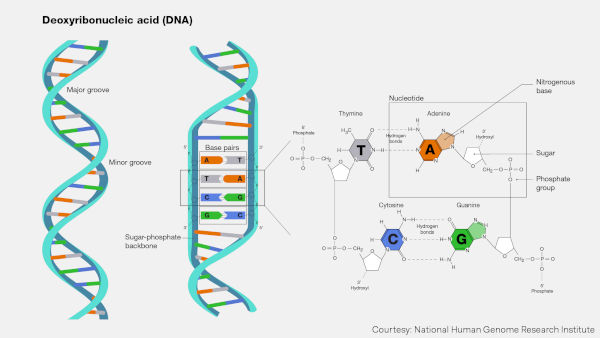 Figure 01: Double helix structure of DNA (Courtesy of the National Human Genome Research Institute)
In 1953, a cornerstone was reached when James Dewey Watson and Francis Harry Compton Crick published their findings on the double helix structure of DNA, which twists to form the typical ladder-like structure we all see in many representative forms (Figure 1). Their work was rewarded in 1962 with the Nobel Prize in Medicine, which they shared with Maurice Hugh Frederick Wilkins for their discoveries concerning the molecular structure of nucleic acids and their importance in the transfer of information in living matter.
The composition of DNA is like the individual letters of the alphabet. When combined in a specific order, they form words, sentences, and stories. Reading the book and understanding its contents required intensive research, and it wasn't until March 2022 that scientists finally created the first complete map of the human genome, composed of more than 3 billion base pairs. It's difficult to visualize what this represents, but translated into something more tangible, it would be the equivalent of a million-page book: plenty of reading before bed.
Completing the human genome has been made possible by a large number of technological innovations. For example, the Oxford Nanopore DNA sequencing method, which can sequence up to one million DNA letters at a time, albeit with some errors, and the PacBio HiFi DNA sequencing method, which can read 20,000 letters with 99.9% accuracy. These are remarkable achievements, but both would not have been possible without the discoveries of pioneering inventors.
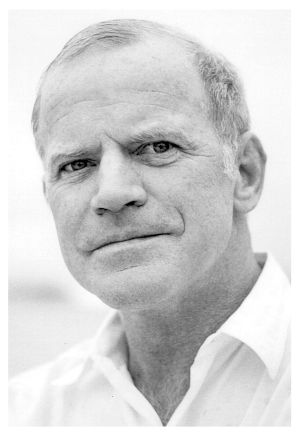
Figure 02 Dr. Kary Banks Mullis
Understanding DNA has been a very important area of research and a developing toolbox for deciphering it; it is every biochemist's dream, and it is worth mentioning Kary Banks Mullis who in 1983 invented PCR, which has helped to boost research and the speed of in-depth understanding of DNA (Figure 02).
The DNA copying machine is born
. Urban legend or reality? It is said that in 1983, while driving from the Bay Area to his cabin in Mendocino, Dr. Kary Banks Mullis, like a bolt of lightning from the Californian sky, envisioned a way to locate a specific segment of DNA and synthesize a vast number of copies. At that time, Mullis worked for the company Cetus and focused on turning his vision into a process.
After many ups and downs, in 1987 Mullis submitted an article to the journal Nature, "Methods in Enzymology," which sparked the development of PCR. In 1993, he received the Nobel Prize in Chemistry for his invention of the polymerase chain reaction (PCR). The process, which Mullis conceptualized in 1983, is considered one of the monumental scientific techniques of the 20th century.

Figure 03: Process and cycles of the PRC (Courtesy of the National Institute of Human Genome Research)
What is PCR and how does it work?
The polymerase chain reaction (abbreviated PCR) is a laboratory technique for rapidly producing (amplifying) millions or billions of copies of a specific DNA segment, which can then be studied in greater detail. PCR involves using short synthetic DNA fragments called primers to select a segment of the genome to be amplified, and then multiple rounds of DNA synthesis to amplify that segment (Figure 03). This uses a specific process that requires samples to be placed in tubes and exposed to very precise thermocycling—and this is where food meets DNA!
This process includes several steps, but three are the most critical (Denaturation, Annealing, Extension) and are repeated multiple times to make copies of the DNA segments (Figure 4). Without going into too much detail, we can summarize the three critical steps below:
First step - Denaturation
The preparation contained in the tube is heated to at least 94°C. The heat breaks the hydrogen bonds of the original DNA sample and separates the DNA into single strands.
Second step – Annealing:
The temperature is reduced to approximately 5°C below the melting temperature of the primers, between 50 and 60°C, allowing the DNA primers and the DNA polymerase enzyme to bind to the individual DNA strands that were separated by the heat. At this point, the nucleotides (A, T, C, G) from the added mixing solution will pair with the separated individual DNA strands resulting from the heating process.
Third step – Extension.
Next, the temperature is increased to 72°C to begin the extension process. Once the segments are joined, they form a new complementary DNA strand. A new, duplicated, double-stranded DNA molecule has been formed from each of the single strands of the original sample molecule. Once the sequence is complete, the temperature is increased to begin a new cycle.
Steps one through three are repeated 30 to 40 times, automatically repeating the heating and cooling cycles of the process. This duplicates the DNA sequence each time the heating/cooling cycle is performed. At the end of the process, millions of copies of the original sample are obtained.
Fourth step – Final extension and storage.
A final extension step is required to allow all PCR products to synthesize correctly, typically at 72°C for 10 min. Finally, the temperature should be reduced to 4°C to store the PCR product until analysis.
Depending on the final goal, time, or level of accuracy required, variations of this process are often used, for example, quantitative real-time PCR (qPCR), reverse transcription PCR (RT-PCR), quantitative reverse transcription PCR (RT-qPCR), digital PCR (dPRC), digital droplet PCR (ddPCR), and microfluidic PCR.
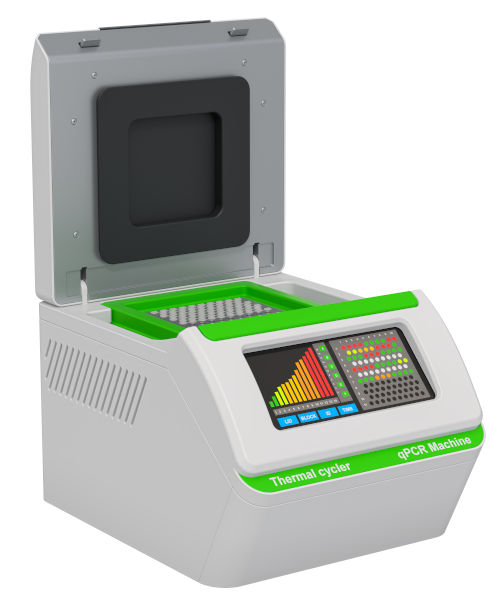
Figure 05: Typical laboratory PCR equipment (PRBX/ Natatravel/Shutterstock)
Power Supplies for Efficient PCR:
Many medical applications require thermal control, such as neonatal incubators, blood warming for hemolysis, and laboratory incubation chambers. Most of these applications require precise thermal regulation, and most medical power supplies with output voltage control are suitable. However, PCR equipment (Figure 5), with its specific thermal cycles requiring high precision and repetitive sequences, demands a dedicated power solution. These systems often adopt a modular approach, with the power train and control integrated into the PCR thermal control loop.
As shown in Figure 4, the thermal cycles are quite short, requiring the heating element to adjust its temperature between +95°C high, +50°C low, +72°C plateau, and back to +95°C after four minutes. This cycle is repeated between 30 and 40 times, with a very high level of accuracy.
There are different methods for generating and controlling temperature in thermocyclers, but many use Peltier elements. While the primary application of the Peltier effect is cooling, it can also be used for heating or temperature control. It could also be combined with another heating element and then, through controlled hysteresis, used to cool the thermal chamber.

Figure06: Conventional power supply with digital control and monitoring via digital input, e.g., PMBus (PRBX)
Manufacturers of PCR thermocyclers have developed highly complex algorithms to precisely adjust and control the temperature level. With the introduction of digital power and energy control and management, it has become easier to interconnect the thermocycler's CPU with the switching stage and control the voltage and current via a digital interface, such as PMBus, to power the heating/cooling elements (Figure 06).
In some cases, the PWM signal is generated by the thermocycler controller and injected into the power supply switching stage to strictly control the parameters without additional steps (Figure 07).
Since the power stage is highly integrated into the thermal control loop, it often becomes part of it, and power designers have to work closely with programmers to deliver the most optimized response time to a specific demand, which is very interesting and, in fact, quite different from the more conventional ways of working when designing power solutions.
In conclusion:
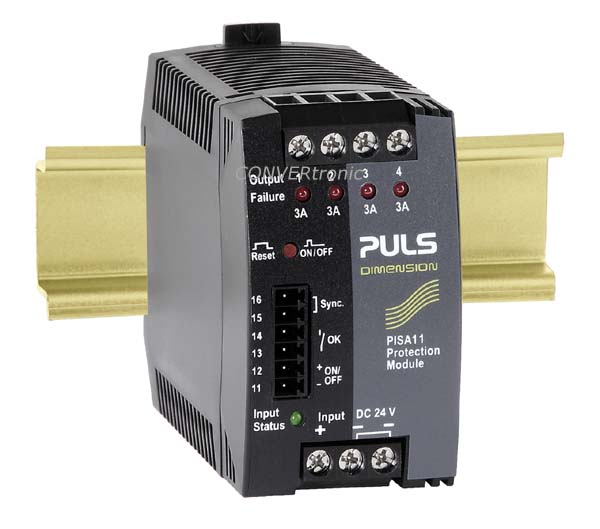
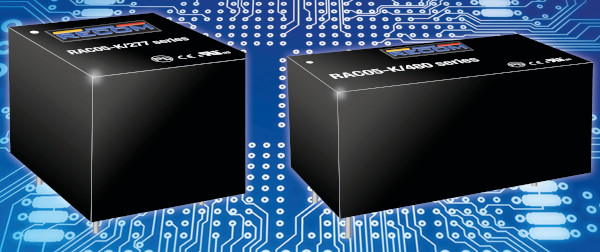
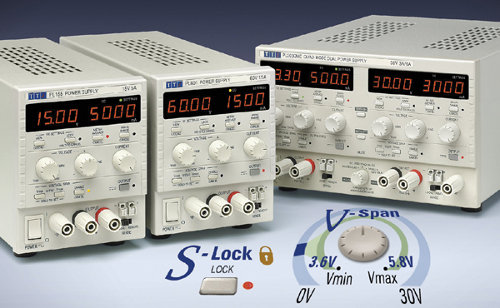
From its discovery by Dr. Kary Banks Mullis in 1983 to its widespread application in detecting the presence of the SARS-CoV-2 virus in billions of samples, PCR technology has played a crucial role in medical research and public health. It has also been a very interesting field for power electronics engineers to design power supply solutions (Figure 8) in close collaboration with the medical industry to develop highly specific power supplies with a high level of programmability and system integration.
Who said the world of power supplies is boring?
-----------------------------------
References:
Powerbox (PRBX):
https://www.prbx.com/
Dr. Kary Banks Mullis
https://www.karymullis.com/
The complete sequence of the human genome
https://www.science.org/doi/10.1126/science.abj6987
National Human Genome Research Institute
https://www.genome.gov/
For more information
, visit www.prbx.com.
Contact Patrick Le Fèvre, Marketing and Communications Director,
at +46 (0)158 703 00.
Reference: PRBX-A-051-ES
About the author:
Patrick Le Fèvre, Marketing and Communications Director at Powerbox, is a marketing expert and qualified engineer with 40 years of experience in power electronics. He has been a pioneer in the commercialization of new technologies such as digital energy and in technical initiatives to reduce energy consumption. Le Fèvre has written and presented numerous white papers and articles at leading international power electronics conferences. These have been published over 450 times in media outlets worldwide. He also participates in various environmental forums, sharing his experience and knowledge on clean energy.
Patrick Le Fèvre,
Marketing and Communications Director, Powerbox