Effective monitoring involves not only detecting incidents as they occur, but also adding a key element: prevention. Advanced processing of data related to consumption, temperature, and electrical parameters, among others, allows for the identification of patterns that indicate abnormal operation. This speeds up the response time of maintenance personnel, preventing breakdowns or performance losses and the resulting consequences for uptime, costs, and even reputation and safety.
The case of UPS systems
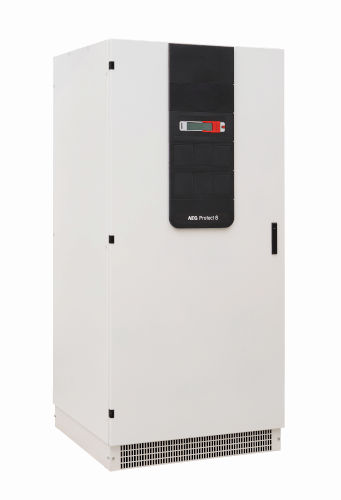
: For years, uninterruptible power supply (UPS) systems have incorporated monitoring, remote management, and incident alert functions to verify the health of this critical equipment that guarantees a continuous and high-quality power supply. The latest innovation is the application of predictive maintenance principles using cutting-edge technologies.
A modern UPS communicates its key parameters as data that is properly processed and analyzed using tools including artificial intelligence (AI). The advanced analysis provided by AI allows for the identification of abnormal UPS behavior, such as decreased battery charging capacity, which in turn reduces the equipment's runtime, voltage fluctuations, or other disturbances that could cause failures in sensitive electronic components and abnormal temperature increases that shorten its lifespan.
The goal of this high-level monitoring is to generate preventative alerts that anticipate breakdowns. It is, therefore, a proactive approach that does not rely on traditional inspections scheduled at fixed intervals but rather anticipates potential problems through advanced modeling. A typical example is the optimization of battery replacement cycles.
The cloud also plays a crucial role in this advanced monitoring and next-generation predictive maintenance. Sending data via telemetry to the cloud provides 24/7 visibility for the maintenance team, which is especially valuable when monitoring a large number of units distributed across multiple locations.
Advanced and predictive maintenance using AI is also perfectly suited to modular and scalable UPS systems, adapting to the potential expansion of the electrical protection infrastructure provided by these devices. Therefore, reliability and management are guaranteed and facilitated at all times, even with significant modifications.
All these advantages are especially valuable in critical infrastructures, which, in addition to those more common until a few years ago, such as hospitals, transportation, and power plants, now include data centers, which have become the backbone of daily operations for businesses, public administrations, organizations, and consumers.
Article provided by SALICRU