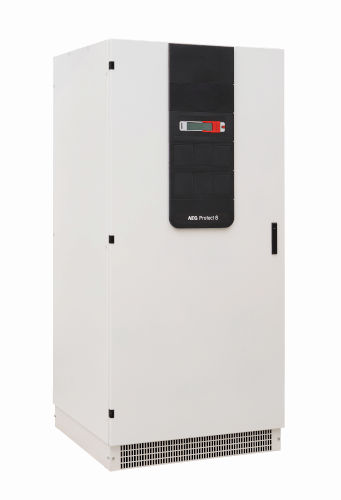
Uninterruptible Power Supply (UPS) systems are energy redundancy devices that store power in a battery to which electronic devices are connected. They act as a firewall between the direct mains power supply and the equipment, with ranges available to protect everything from a computer to a football stadium.
They are known by their Spanish acronym, SAI, or English, UPS (Uninterruptible Power Supply). During a power outage or surge, they provide uninterrupted power by converting the direct current from their battery into alternating current with the same characteristics as the mains supply. Spanish companies like Salicru have been manufacturing these devices for 60 years. They have supplied devices to large infrastructures, such as airports, hospitals, data centers, and even, more recently, the new Spotify Camp Nou for FC Barcelona.
A UPS (Uninterruptible Power Supply) “is the first line of defense for connected devices, as it provides a safe, uninterrupted, and high-quality power supply during a power outage, in addition to correcting the fluctuations caused by power grid disturbances,” explains Ramon Falguera, Chief Corporate Officer of the company. Electronic components are increasingly offering more features in a smaller size, and as a result, they are also more sensitive to electrical loads. Therefore, it is advisable to ensure a stable power supply to prevent damage or breakage.

“Depending on the situation, it will maintain power capacity until the power supply is restored, for example, with a generator,” Falguera points out. In the event of power grid incidents, the operating time or autonomy for which connected loads can continue to be powered depends on the UPS's power rating, the type and number of batteries, and the number of devices connected to it. The more devices connected, the shorter the battery life. The autonomy ranges from minutes to hours, depending on the specific needs of each installation, and the most critical devices are prioritized according to each criterion.
Disturbances, major enemies.
When we talk about electrical disturbances, we are referring to unusual events in the electrical system that affect the quality of the energy we receive. Imagine the electrical grid as a highway along which electricity travels. Under normal conditions, this road allows energy traffic to flow in a stable and safe manner; however, sometimes there are circumstances that disrupt this normal flow: collisions, traffic jams, construction work. These disturbances are caused by various factors and result in voltage fluctuations, which can damage equipment directly connected to the power supply. Conversely, there are also system overloads: when there is too much demand for electricity, the system can experience voltage drops, which affect the capacity of microcomponents, or blackouts, power outages.
The highest quality electricity supply would be one that ensures permanent availability and a pure alternating current waveform, but many factors, from weather conditions to human error, can prevent this.
Uninterrupted Life
One of the drawbacks of the technological advances we experience today is the increasing dependence on the proper functioning of the computer and electronic systems that surround us and are now part of our daily lives. Consequently, it is essential that all these systems have an adequate power supply. And even more importantly, that this power supply is uninterrupted.
Uninterruptible Power Supply (UPS) systems prevent these situations from occurring and affecting both our daily well-being and the competitiveness of our professional work. They provide sufficient power to prevent system failures caused by power outages and improve the quality of the mains voltage, thus preventing the electrical, electronic, and computer equipment connected to them from experiencing a shortened lifespan.