With the BA8290xYxx-C series, ROHM offers operational amplifiers approved for the automotive sector, which are characterized by outstanding interference immunity.
The latest automotive systems achieve lower fuel consumption and greater safety through the use of control units and sensors that regulate and optimize temperature, acceleration, and power. However, increasing digitalization and higher electronic density in automotive systems also exacerbate electromagnetic compatibility issues, as each additional component represents a potential source of interference. This poses considerable problems for sensors and other small signaling devices. Since it is extremely difficult to identify individual noise sources during development, noise assessment must be performed after installation. If noise suppression has not been carefully considered in the design, extensive modifications will be necessary if application testing proves unsatisfactory (resulting in high costs and longer development times).
In response, ROHM has developed the world's first operational amplifiers that virtually eliminate noise effects in automotive sensor applications. The company achieves this through vertically integrated production using analog design technologies and bipolar processes.
The first operational amplifiers that do not need any noise suppression measures
ROHM combines its proven analog technologies in the BA8290xYxx-C series: connection design (new circuitry for noise suppression), component layout design (based on proven analog market experience), and bipolar processes. With this approach, ROHM not only reduces the number of components required for noise suppression (three RC filters for input, output, and power supply) but also addresses the noise challenges inherent in developing electronic systems for the automotive industry. Simultaneously, design effort is reduced, and reliability is increased. ROHM also plans to offer operational amplifiers with high noise suppression for the industrial market.
Compatibility with global requirements in the automotive sector
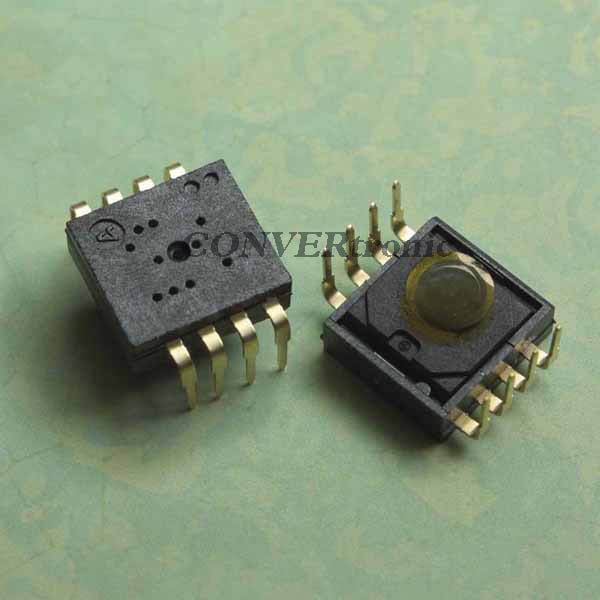
The BA8290xYxx-C series is approved for automotive applications according to AEC-Q100 standards. It features low current consumption of 0.5 mA (BA82904YF-C/BA82904YFVM-C) or 0.7 mA (BA82902YF-C/BA82902YFVM-C). The ICs are available in four versions with two or four operational amplifiers and a supply voltage range of 3.0 V to 36 V. Their input offset voltage is typically ±2 mV or a maximum of ±6 mV, and the input voltage range is between VEE and VCC-1.5 V. The operating temperature range is from -40 °C to +125 °C. The available package versions are SOP8 (BA82904YF), MSOP8 (BA82904YFVM-C), SOP14 (BA82902YF-C), and SSOP-B14 (BA82902YFVM-C). The pin-compatible packages allow for easy replacement of existing standard products.
Other applications
• Inverters for EVs/HVs
• Control units
• Automatic transmissions
• Electric power steering
• Vehicle lamps
• Vehicle air conditioning systems
• EV chargers
• Vehicle navigation systems
• Combination switches
…and other electronic systems and circuits for the automotive industry that are affected by noise.