Effective monitoring and control are essential for the efficient and reliable operation of electrical subsystems. Semiconductor suppliers like Microchip offer a wide range of hardware and software, embedded development tools, and high-efficiency silicon carbide (SiC)-based power solutions to facilitate innovation in EV and EVH systems.
Automotive subsystem designers are constantly striving to develop innovative solutions that extend EV range and reduce charging time. In pursuing these goals, they have pushed silicon-based technologies close to their physical limits in terms of size, weight, and energy efficiency and are transitioning to SiC solutions to meet these challenges. Compared to silicon, SiC devices offer lower connection resistance, faster switching speeds, and the ability to withstand higher voltages and currents at higher junction temperatures. Another key advantage of SiC is its smaller size, which enables higher power density—critical in many key EV applications. Not surprisingly, the automotive market for widebandgap (WBG) SiC power semiconductors is projected to grow thirteenfold from its current valuation of $1 billion by 2030, according to Omdia (SiC power semiconductors by application, 2022 Mid Case report).
The trend toward higher voltages, such as 800 V, in electric vehicles is driving new designs for traction inverters, DC-DC converters, on-board chargers, and compressors for heat pumps and fuel cells. High-voltage SiC MOSFETs and high-performance diodes are ideally suited for electric vehicles, especially in commercial and off-road applications where availability is critical.
The existing 400 V charging infrastructure for conventional vehicles will also need to accommodate the new 800 V vehicle designs. The increasing need for high voltages is driving the development of in-car DC-DC boost modules to bridge voltage rails.
SiC technology can also act as a switching element in a solid-state circuit breaker, or electronic fuse, to protect the vehicle's electrical components and diagnose faults before they become serious failures. Downtime for repairs and costs can be reduced thanks to improved diagnostic and configuration options compared to mechanical solutions.
At the same time, there is a demand for fast-charging DC infrastructure to quickly recharge vehicles. This is especially important for commercial applications, from trucks and buses to mining and construction equipment that need to be operational for as long as possible.
Solid-State Circuit Breakers:
Using SiC for a solid-state circuit breaker offers several advantages compared to traditional circuit protection solutions. The technology can switch rapidly using a software-configurable trip profile, for example via a LIN interface, to interrupt a circuit in microseconds—100 to 500 times faster than traditional mechanical methods thanks to its high-voltage solid-state design.
The E-Fuse is resettable, eliminating the need to replace physical fuses and providing a reliable long-term solution if a circuit is frequently interrupted. The potential risks of electrical arcing when switching high-voltage DC currents with mechanical contacts are eliminated by using a solid-state E-Fuse solution.
The Microchip E-Fusetechnology demonstrator with 700 V and 1200 V mSiC™ MOSFET switches combines current sensing, amplifiers, a LIN interface, and an 8-bit PIC™ microcontroller with core-independent peripherals to deliver a complete, highly integrated solution. All components are available with AEC automotive rating. This design implements a time-current characteristic (TCC) curve that helps designers transition from traditional fuses or contactors and features a short-circuit withstand time of up to 10 µs with a current rating of up to 30 A.
Fast Charging:
Electric, commercial, and off-road vehicles require fast charging capabilities. While a car can be parked overnight to charge, buses or construction equipment need to operate efficiently around the clock. These vehicles are switching to 800V or even 1,000V battery packs to provide the power levels required for larger vehicles with heavy loads.
These on-board charger designs need higher power levels, where SiC technology offers an optimal solution. Devices with nominal voltages of 1,200V and even 1,700V offer developers greater design flexibility. This can translate into higher peak vehicle performance, less redundancy, and simpler component manufacturing.
The higher efficiency of SiC compared to silicon IGBTs also means smaller heat sinks are needed, reducing vehicle weight.
A technology demonstrator of a 30 kW isolated DC-DC charger is available, based on 1200V avalanche-rated mSiC MOSFETs and dual 1200V mSiC diodes. The design features a maximum efficiency exceeding 98%, an input voltage of 650–750 V, and an output voltage of 150–600 V at a maximum current of 50–60 A at a switching frequency of 140 kHz. The printed circuit board design has been optimized for safety, mechanical and current stress resistance, and noise immunity.

Figure 2 30 kW SiC DC-DC Converter
Furthermore, a 30 kW three-phase PFC (power factor correction) reference design in Vienna topology based on SiC devices is available. PFCs are typically required for AC-to-DC conversion and to maintain the phase shift of the AC input current within well-defined limits relative to the AC input voltage, ensuring a near-unity power factor and low total harmonic distortion (THD).
In the future, it will be necessary to feed energy back into the vehicle's battery. This bidirectional charging capability can be demonstrated with another 11 kW SiC-based PFC design in a totem-pole configuration.
Both the DC-DC conversion and the PFC can be combined modularly.
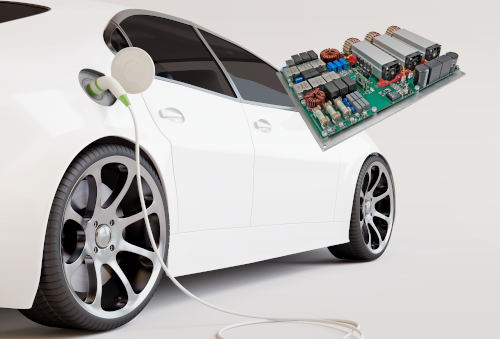
Figure 3 Reference design PFC Vienna 30 kW
 Building blocks for infrastructure chargers up to 150 kW:
Silicon carbide is also key for charging infrastructure. The same advantages of higher voltages and currents, coupled with greater efficiency for smaller cooling elements, lead to smaller charger designs. While charger size isn't as critical for commercial and off-road vehicles stored overnight, it is for the increasingly popular bidirectional home DC chargers.
Similarly, Level 3 public DC fast chargers bypass the vehicle's on-board charger (OBC) to charge the battery directly through the EV's battery management system (BMS). Bypassing the OBC allows for much faster charging speeds, with charger output ranging from 50 to 350 kW.
The use of a modular design approach means that a PFC front-end is used for AC-DC conversion, often starting from higher AC voltages such as 480 V, with a series of isolated DC-DC converter modules in parallel to supply power to the vehicle.
This design approach allows for the development of a range of chargers from basic modules to meet the diverse needs of a vehicle operator. As vehicle requirements evolve, demanding higher power for faster charging, the charging infrastructure can be adapted using SiC devices. This approach is being used for fast-charging systems up to 150 kW and for even higher-performance systems.
The use of digital power management and a combination of SiC MOSFETs and diodes enables designs that offer high efficiency and system integration, high power density, advanced digital control loops, and greater flexibility in various power topologies for DC fast-charging applications. They can be combined with analog devices, power management, wireless and wired connectivity, energy measurement, memory, security, and human-machine interface (HMI) to complete an L3 DC fast charging design.
Conclusion:
Widebandgap (WBG) solutions like SiC are fundamental to electric mobility, enabling higher levels of efficiency, density, and reliability in power conversion.
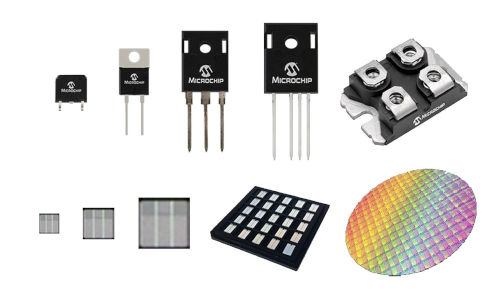
Microchip can help designers adopt silicon carbide easily, quickly, and confidently with its mSiC™ power products and solutions.
This range includes chip-based, discrete, and module-based SiCs from 700 V to 3.3 kV.
In addition, the global portfolio includes MPUs, MCUs, Wi-Fi®/Bluetooth® and measurement chips, and a touchscreen graphical user interface for applications within charging stacks. On the vehicle side, it includes automotive digital signal controllers, on-board network components, and controllers, among others.
The comprehensive solution also includes software packages for enhanced power control algorithms in motor and switched modes, as well as automotive software stacks and diagnostic libraries for functional safety.
Author: Andreas von Hofen, marketing manager of Microchip Technology's Automotive Products Group