Meanwhile, the transition from concept sketch to market-ready product today takes place against a backdrop of technical hurdles, increasingly tight budgets, and ever-shrinking deadlines. To overcome these challenges, the industry must adapt its prototyping approaches. As
such, the development kit (DevKit) has emerged as the most valuable tool in new product development. DevKits, once considered a "learning tool" for engineers, are now seen by many as the backbone of professional original equipment manufacturers' (OEM) strategies. In fact, according to a recent Farnell survey, 44% of OEMs now use development kits in their design workflows. Even more striking is that nearly 84% of OEMs themselves use the DevKit software they provide in their final products.
Modern Product Development Challenges
“Today, customers face the huge challenge of choosing and selecting the right products from manufacturers because technology evolves so rapidly, and it’s difficult for them to keep up. Development kits are very important. They’re what our manufacturers invest in to bring their latest technology to market.” – Dan Ford.
Today, engineers face a perfect storm of design challenges. As industrial and consumer demands for smarter devices increase, so does the underlying complexity of the hardware. Designing a custom printed circuit board (PCB) from scratch involves addressing technical obstacles such as signal integrity issues and power management failures, while also tackling component sourcing challenges.
In addition, a major problem in product design is circular dependency, where software development depends on available hardware, while hardware design depends on defined software requirements. This leaves little room for the rapid iteration needed to outpace the competition in fast-moving sectors such as AI, IoT, and industrial automation. Development kits help mitigate these factors, as they allow engineers to validate designs, software stacks, and system architectures at an early stage, before committing to a custom PCB.
The Role of a Development Kit:
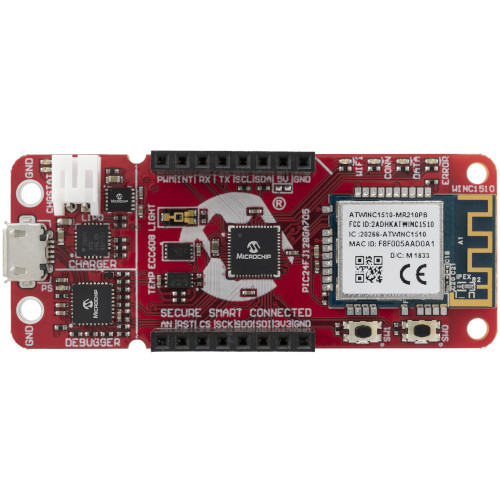
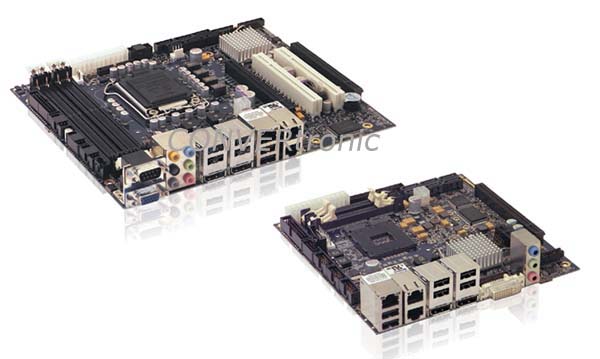
A development kit essentially bridges the gap between an idea and a finished product. It consists of a pre-assembled board that includes a central processing unit (MCU, MPU, or FPGA) along with a set of compatible peripherals, such as sensors, communication modules, and power interfaces. Its primary purpose is to provide a stable, pre-validated environment in which engineers can experiment with code and hardware configurations without the immediate need for custom manufacturing.
When choosing the right platform for their needs, engineers should prioritize platforms that support modular expansion, standardized interfaces, and comprehensive documentation. Leveraging sample code, reference designs, and application notes can significantly shorten learning curves and accelerate validation.
Why are development kits important?
For both individual engineers and large companies, adopting development kits offers several key advantages:
1. Rapid prototyping and proof of concept.
The most immediate benefit of a DevKit is that it allows an engineer to have a working prototype within hours of receiving the hardware. This "plug-and-play" capability enables teams to validate a proof of concept (PoC) with stakeholders or investors very early in the development cycle, thus ensuring the project's viability before significant capital is committed.
2. Reduced design complexity and risk.
Development kits allow designers to skip the initial hardware testing and troubleshooting. With optimized traces and components, engineers can focus on ensuring their product truly meets the needs of an application, rather than worrying about basic power or signal issues.
3. Access to pre-validated ecosystems.
Modern development kits include tested SDKs, drivers, and middleware, ensuring seamless integration with embedded hardware and allowing engineers to focus on building their applications rather than troubleshooting compatibility issues. This significantly reduces barriers to entry for complex technologies such as Bluetooth Low Energy (BLE), Wi-Fi 6, and Edge AI.
Common Challenges Engineers Still Face:
Not all development kits are created equal. Choosing the wrong one can lead to vendor lock-in or limit scalability. To avoid these pitfalls, engineers should evaluate kits using five key criteria:
1. Application Requirements:
The target use case is the first filter. An IoT sensor node requires low power consumption and specific connectivity (such as LoRaWAN or NB-IoT), while an industrial AI vision system requires high-performance processing units (NPUs) and high-speed camera interfaces.
2. Hardware Specifications:
Engineers should look beyond the CPU and consider:
• Connectivity: Does it support the necessary wireless protocols?
• Memory: Is there enough Flash and RAM for the planned software stack?
• Expansion: Does it have standard connectors (such as Arduino Uno or mikroBUS™) for adding shields or clicks?
3. Software Ecosystem:
Powerful hardware is meaningless without good software. Is the kit supported by a robust IDE? Are there libraries available for the sensors? A kit with a massive community (like Raspberry Pi or STM32) often provides faster troubleshooting through forums and open-source repositories than a specialized, proprietary board.
4. Compatibility Fosters Scalability:
A common mistake is selecting a DevKit that cannot evolve due to a lack of interoperability. High-quality kits are designed with a specific migration path in mind, providing a seamless transition from the evaluation board to the final, custom-designed PCB. It is crucial to choose a kit that supports evolution throughout the development lifecycle, which is the cornerstone of enabling designs and relevant software to move smoothly, for example, from evaluation hardware to a production-ready custom PCB.
Another common mistake is selecting a development kit based solely on a processor without also considering long-term availability, software support, or migration options. It can also be easy to underestimate the importance of community resources, as their absence can lead to slower problem-solving and longer development cycles. It's best to take a holistic view from the outset to enable teams to avoid rework and delays.
5. Budget and Availability
While a DevKit is less expensive than a custom build, the long-term cost of components must be considered. Furthermore, in an era of supply chain volatility, it's vital to ensure that components are available for mass production.
How Distributors Support the Design Process:
Distributors eliminate uncertainty for customers by designing and ensuring that their selections are suitable for future applications and product development. Farnell is one of the few distributors that covers a wide range of suppliers, and our ability to consolidate DevKits from multiple manufacturers allows us to provide the right tool for virtually any need, including product materials and design details that would otherwise be difficult to find. This enables our customers to get to market much faster and is a key differentiator for gaining and maintaining market share.
The growing range of kits supports innovation across all applications but also creates challenges in efficiently guiding customers toward the right solution. This is where distributors like Farnell provide value as comprehensive technical partners in the design process. Leveraging their expertise can help effectively narrow down the range of options and ensure that the most suitable solution is chosen.
Expert guidance and a wide range of options:
Trusted distributors offer kits from leading manufacturers such as Analog Devices, Renesas, Nordic Semiconductor, and NXP, among others, allowing engineers to compare architectures side-by-side. Their support teams help avoid common mistakes, such as over-specifying processors or choosing components that have reached the end of their useful life.
DevKit HQ: A Centralized Resource
As development kits become central to modern design workflows, engineers increasingly need a single platform that brings together a wide range of options, trusted vendors, and practical guidance to reduce risk and accelerate design decisions.
Recognizing the need for a more streamlined selection process, Farnell recently launched DevKit HQ. This online resource serves as a single destination for discovering and comparing risk-reduction ideas and problem-solving solutions.
DevKit HQ provides:
• A comprehensive platform for evaluating, prototyping, and developing, enabling engineers to quickly compare development kits by application, technology, and vendor family in one place.
• Reduced design time and cost by prioritizing development kits with standard interfaces, facilitating integration and migration to custom designs.
• Detailed documentation for one-click access to datasheets, application notes, and reference designs, saving time typically wasted searching for information and guidance.
• Overviews of applications, specially selected sections for AI, IoT, sensors, motor control and energy management to help engineers find relevant tools and use them productively quickly.
Design with confidence from the start.
DevKits have evolved from a simple evaluation tool to a strategic asset that determines the likelihood of success for modern electronic products. By providing pre-validated hardware and software building blocks, these kits allow engineers to avoid frustration and disappointment and focus on delivering something extraordinary.
However, the power of a DevKit is only realized through informed selection. By carefully weighing application needs and ecosystem support, and leveraging the vast technical resources available through partners like Farnell, designers can substantially reduce risk and accelerate innovation.
Farnell ensures that DevKits are not just tools for experimentation, but also foundations for scalable, successful products, thanks to its support throughout the entire design process, from early access via DevKit HQ to prototyping, sampling, and evaluation, and then full support with design and volume production. In an increasingly competitive market, choosing the right DevKit (and the right platform to support that choice) is a crucial step towards faster development, lower risk, and better results.

Author: By Daniel Ford, Vice President of Sales and Service, EMEA – Farnell Global