
This motion sensor is a K-band bistatic Doppler transceiver module. It is housed in a metal enclosure and incorporates a resonator oscillator (CRO), which provides stable operation by improving its forward signal reception capability and reducing its blind spot. The Microwave 4 Click detects the frequency shift between a transmitted signal and a received signal reflected by a moving object within the transceiver's field of view. Nebojsa Matic, Managing Director of MIKROE, comments on the Emissions Radiated Power (EIRP) : "The Microwave 4 Click is one of nearly 100 Click motion sensors, and one of more than 500 Click sensors we offer. Our goal is to provide a very broad range of complementary peripheral boards so that embedded systems design engineers have the widest possible variety of options." The Click boards allow design engineers to easily change peripherals, reducing development time by months. The mikroBUS ™ socket standard allows you to instantly connect any Click board to the microcontroller or microprocessor on a motherboard. Many leading microcontroller companies, such as Microchip, NXP, Infineon, Dialog, STM, Analog Devices, Renesas, and Toshiba, already include the mikroBUS socket on their development boards.
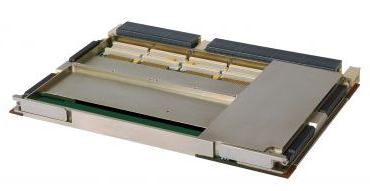
SYSGO and Kontron launch BSP for PikeOS on the VX3060
SYSGO, a provider of real-time operating systems and hypervisors for security- and safety-critical embedded applications, and Kontron, a global provider of IoT and embedded systems (ECT) technology, have announced the availability of a board support package (BSP)...