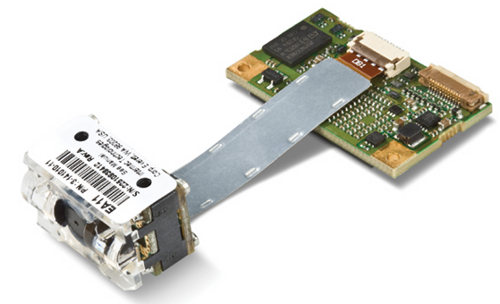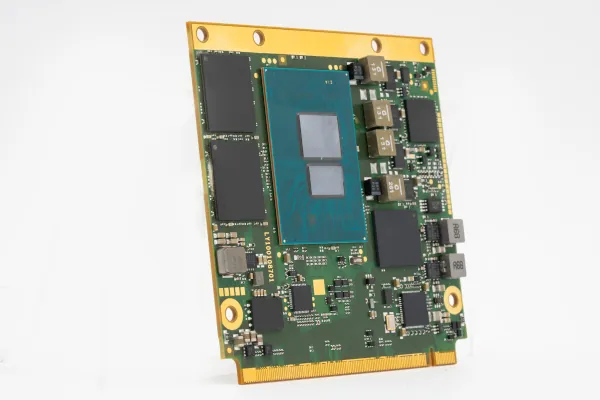
The new TRIA Q7 modules, which incorporate Intel's innovative "Amston Lake" and "Alder Lake N" platforms, have been designed to make Q7-based designs viable, thus ensuring the component's continuity well into the next decade.
“We are proud to extend the lifespan of this well-known COM standard,” said Markus Mahl, Senior Product Manager at Tria Technologies. “System architects, design engineers, and developers can significantly increase system performance without changing their existing Q7-based designs. As a result, their systems can support upgrades, specification changes, and evolving requirements without a complete redesign, saving time and costs while ensuring long-term reliability.”.
The TRIA Q7-ASL module integrates Atom® x7000RE/C Series processors, delivering robust and efficient performance. The TRIA Q7-ALN module also supports Intel's Atom® x7000E, Core™ i3, and N Series processors, thus meeting the requirements of a wide range of applications. Both modules integrate up to eight cores and Intel® UHD Graphics based on the Xe architecture to provide broad application compatibility.
Each new module can connect to up to three independent 4K displays for advanced visual solutions and supports up to 32GB of high-speed LPDDR5 memory. The comprehensive interface package includes USB 3.1, PCIe Gen3, and eMMC 5.1 in a cost-effective, low-power Q7 2.1 form factor module. Additionally, the TRIA Q7-ALN and TRIA Q7-ASL offer Intel® i226-based Gigabit Ethernet with bandwidth up to 2.5GbE.
The new Q7 modules, available with dual-, quad-, and eight-core SoCs, are ideal for a wide range of applications, including point-of-sale terminals, digital signage controllers, and HMI solutions in medical equipment, transportation systems, IoT, and industrial automation. The Q7-ASL module is also ideal for products in systems exposed to harsher environmental conditions, as it is designed for a wide temperature range of -40°C to
+85°C and for continuous (24/7) operation.
Tria also provides a Q7 2.1 development platform that facilitates evaluation and design with both modules. A ready-to-use Starter Kit is also available, making it as easy as possible for designers to integrate the modules into their systems.
Tria's Q7 range of modules can be used as a plug-and-play solution together with carrier or custom cards, depending on the application characteristics.