For industries such as manufacturing, healthcare, aerospace, and telecommunications, which rely on these legacy systems, the question of how to modernize without completely overhauling their infrastructure has become critical.
Replacing obsolete equipment may seem like the obvious solution, but it is rarely practical. The cost and operational disruptions of a large-scale overhaul are often prohibitive. Instead, the industrial sector should focus on adaptable solutions that allow legacy systems to evolve alongside modern technology. This article explores how it is possible to bridge the gap between legacy systems and Industry 4.0 and why this is essential for achieving the highest levels of efficiency, safety, and sustainability in industrial automation.
The challenge of legacy systems in a connected world:
Legacy systems operate independently by design, lacking the connectivity and intelligence required for modern industrial automation. Their design prioritized reliability and durability over the data-driven, networked operations that define today's smart factories.
The biggest challenge is integrating these systems into a connected ecosystem without compromising their original functionality and reliability. Industries must find ways to implement new technologies within existing infrastructure to enable features such as data collection, real-time processing, and intelligent decision-making. The key to overcoming this challenge is adapting technologies that are versatile, programmable, and designed to work with both legacy systems and cutting-edge innovations.
Modernizing Industrial Environments:
Given the increasing prevalence of automation in industrial environments, modernizing legacy equipment is essential. However, modernization doesn't have to mean replacement; instead, the focus should be on adapting existing systems with adaptable solutions.
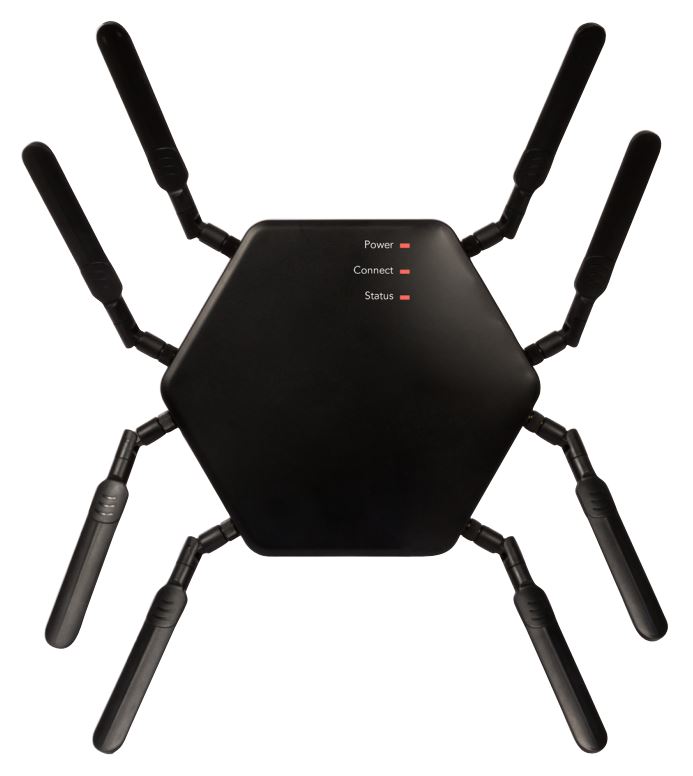
For example, integrating communication modules, such as the Ezurio SONA™ MT320 Wi-Fi 6 and Bluetooth® 5.4 modules (Figure 1), into legacy equipment enables interaction with a multitude of modern sensors and actuators. Similarly, peripheral devices can be deployed to manage complex data processing tasks, extending the functionality of legacy systems so they can participate in automated workflows. By enabling legacy systems to collect and process data in real time, companies can optimize workflows, reduce downtime, and improve productivity. Automation also minimizes human error, further increasing operational efficiency.

Figure 1: Ezurio SONA MT320 Wi-Fi 6 and Bluetooth 5.4 modules (source: Mouser Electronics).
This approach minimizes costs and disruptions while maximizing the value of existing investments. Furthermore, it allows companies to gradually transition to smarter operations, scaling their modernization efforts to align with their resources and strategic priorities.
Adaptation Through Versatile Components:
The industrial sector's shift toward interconnected operations has increased the demand for versatile components that eliminate barriers between legacy and new systems. One solution is to use microcontrollers (MCUs)—such as the MCX A Series microcontrollers from NXP Semiconductors—with robust general-purpose input/output (GPIO) capabilities. These programmable components enable seamless communication between legacy systems and modern sensors, actuators, and other devices.
Wireless sensors and communication modules also play a critical role in adapting legacy systems. These modules enable connectivity between legacy equipment and modern Industrial Internet of Things (IIoT) platforms by providing both wired and wireless connectivity. Furthermore, sensors provide the necessary data inputs for intelligent operations, capturing data such as temperature, pressure, vibration, and proximity.
Edge computing further enhances the adaptability of legacy systems. By processing and analyzing data locally, edge devices—such as the MAX78000 AI MCU with the neural network accelerator from Analog Devices Inc.—reduce latency, increase efficiency, and boost decision-making capabilities. This localized processing potential is especially important for legacy systems, allowing them to operate more autonomously without overburdening centralized systems. Furthermore, modern sensors and edge computing devices can detect anomalies and predict failures before they occur, reducing the risk of accidents and ensuring a safer working environment.
The Role of Flexible Design Platforms
In industrial automation, innovation is not just about adapting legacy systems, but also about designing new solutions that can be seamlessly integrated into existing infrastructure. Flexible design platforms are fundamental to this process, offering the versatility needed to adapt to a multitude of applications and configurations.
These platforms enable design engineers to develop systems that are compatible with existing equipment and scalable to meet future needs. By emphasizing interoperability and modularity, flexible design platforms reduce the risk of obsolescence and ensure the return on current investments for years to come.
For example, programmable logic controllers (PLCs) designed with modular architectures, such as Arduino's Opta® microprogrammable logic controllers (Figure 2), can be upgraded and expanded to support new functionalities without requiring a complete system overhaul. Similarly, software-defined systems can adapt to changing requirements through upgrades and reconfigurations, providing long-term flexibility and value. Refurbishing legacy systems reduces the environmental impact of manufacturing by minimizing the need for new equipment. Furthermore, real-time data processing allows companies to identify energy-saving opportunities and reduce waste.

Figure 2: Arduino Opta microprogrammable logic controllers (source: Mouser Electronics).
Next Steps: Toward a Smarter Future
. The transition to smarter, more connected operations is inevitable. However, this future doesn't necessarily mean abandoning the past. Industries can modernize by adopting versatile components, retrofitting existing infrastructure, and incorporating flexible design platforms without the high costs and disruptions associated with complete replacements. This approach ensures that legacy systems can continue to contribute to the efficiency, safety, and sustainability of industrial processes, thereby driving the smart revolution.
The success of the industrial sector in the age of intelligence depends on its ability to adapt, which begins by removing barriers between traditional systems and today's innovations.
By Mark Patrick, Director of Technical Content EMEA, Mouser Electronics
Mouser Electronics
Authorized Distributor