Waste takes many forms that reduce overall efficiency. The smart factory combats these, for example, by assisting with time-consuming tasks to expedite customer order processing or by collaborating on machine programming and configuration to accelerate new product introductions (NPI) and ensure optimal utilization. The smart factory also works to anticipate problems such as equipment failures or depleted component feeders, thereby ensuring continuous and efficient production and the highest possible output at the end of the line.
Viewed in this way, the smart factory defines a production facility equipped with advanced tools that provide intuitive support to planners and production teams to ensure that each shift can achieve optimal productivity. Of course, much of the smart factory's added value is associated with software-based tools that help plan and optimize, as well as manage processes and respond in real time to problems that arise during production.
Data Creation:
The new generation of smart factory tools helps accelerate laborious and time-consuming processes such as component data creation. One example is Yamaha's YSUP-PG visual data editor, which helps by displaying component data and graphical images simultaneously to simplify processes such as creating and editing component identities. This eliminates the need for programmers to switch between screens and memorize information each time, a common inconvenience.
Furthermore, benchtop proofing helps ensure that components are correctly oriented relative to the layout area well before board manufacturing begins. Leveraging advanced 3D rendering on high-performance graphics processors, the finished assembly can be visualized much more accurately (Figure 1). This can highlight any issues that need addressing in a way that previous programming environments simply could not. In the past, inaccuracies in component data could go unnoticed until the first boards arrived for inspection or testing. Additionally, production teams, such as component assemblers, can support data creation by automatically generating component pick data.

Figure 1. 3D graphics can show details such as the relative heights of adjacent components, helping to identify any problems with the data.
Optimized Production Planning:
Smart factory tools offer enhanced features to optimize production efficiency and equipment utilization. Planners have long sought to consolidate the production of assemblies that can use the same solder type and reflow profile, to minimize printer and oven settings changes. Waiting for reflow zone temperatures to stabilize between product changes can be time-consuming and lead to extended line downtime.
Identifying products that can be built together to improve efficiency and minimize setup and changeover time is challenging, requiring human planners to consider numerous parameters simultaneously. The YSUP-PG Line Optimizer tool applies an algorithm that minimizes production losses due to setup work and can be adapted to the varying capacities of different equipment models on the line. Furthermore, the YSUP-PG production planner features a grouping function that assigns products to groups based on shared components and equipment configurations, while also considering their production schedules and transport and shipping plans. The operator can manage the grouping process and select priorities, relying on the tool to perform the numerical calculations. Compared to manual grouping, automation improves critical indicators such as the number of required group changeovers and the number of carts and feeders needed by 25%. Moreover, automation has saved over 80% of the time previously spent on data preparation.
Another area that can be improved with automation is the management of material expiration dates. Materials with a finite shelf life on the production line, such as solder paste and moisture-sensitive components, can easily exceed their maximum exposure if expiration dates are monitored manually. Smart factory tools shift the responsibility to the machines on the line, enabling them to identify and reject expired components to ensure that all assemblies are built according to specified standards.
Production Analysis:
While production is underway, the smart factory provides real-time assistance by actively monitoring progress and ensuring that materials are retrieved from inventory and directed to the correct locations at the right times. It guarantees that production can run continuously without interruptions and alerts operators to any issues requiring attention.
Leveraging cutting-edge data analytics provides the foundation for tools that eliminate guesswork from defect analysis. Taking the YSUP package as another example, this tool recently updated its main dashboard user interface with the introduction of component collection analysis (Figure 2), which automatically identifies the root causes of any detected defect. It tracks errors by printhead, feeder, and nozzle, and then checks the status of other components assigned to the same feeder and nozzle to determine whether the problem is caused by the equipment or the component itself. The tool can do this in near real-time, saving production supervisors the work of troubleshooting, reducing the overhead of trial-and-error troubleshooting, and helping to quickly restore peak productivity. Ultimately, this enables all work shifts to deliver consistently high production throughput and end-of-line output, and significantly reduces downtime.
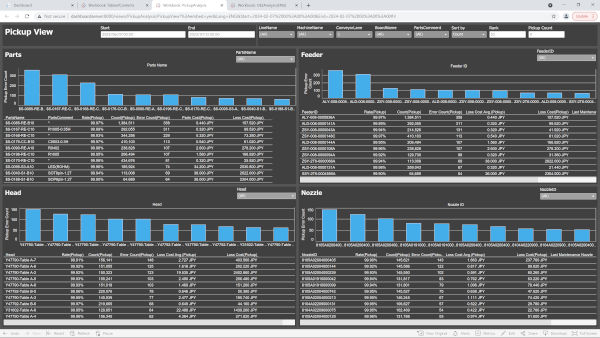
Figure 2. The analysis control panel helps to quickly resolve the causes of collection errors.
However, the control panel's pickup error analysis goes beyond highlighting causes and remedies; it also identifies frequently occurring errors and calculates the costs of component losses to help prioritize corrective actions. Maintenance teams also benefit from extensive information on feeder and nozzle issues, pickup performance, and trends, helping them remotely pinpoint the root causes of errors and predict optimal repair or recalibration times.
Smarter through connectivity.
There would be no smart factory without coordination between manufacturing activities and the enterprise software that drives high-level business operations. Data collection from factory equipment allows analytical applications in the IT domain to improve business planning and drive continuous improvement. Modern APIs such as JSON and REST enable IT and operational domains to communicate and share data. Yamaha's YSUP-LINK connectivity suite for smart factories supports these APIs and is also fully certified to the open standard IPC-CFX for machine-to-enterprise and enterprise-to-machine communications.
Conclusion:
The principles driving the transition to smart factories aim to automate traditionally laborious and complex tasks. Powerful software tools utilizing the latest data analytics techniques are the primary drivers of this change, which can increase productivity by reducing time to market for new products, improving manufacturing efficiency and equipment utilization, and helping to avoid or minimize the impact of errors. Now that the smart factory has arrived, the stage is set for future generations of software tools to further accelerate progress.