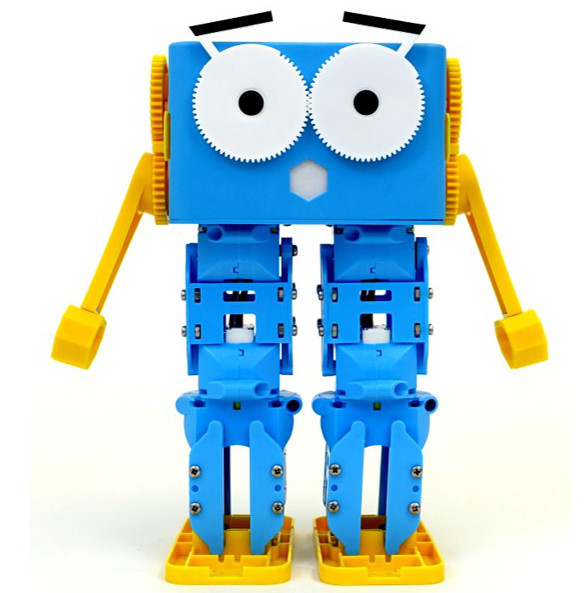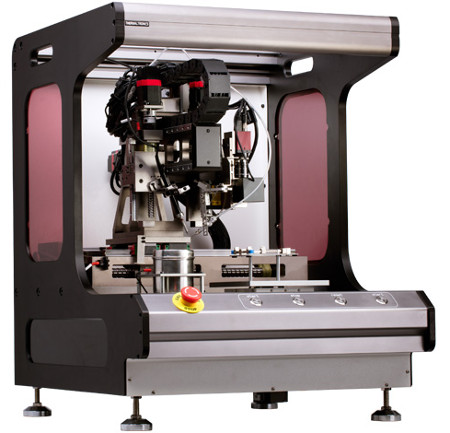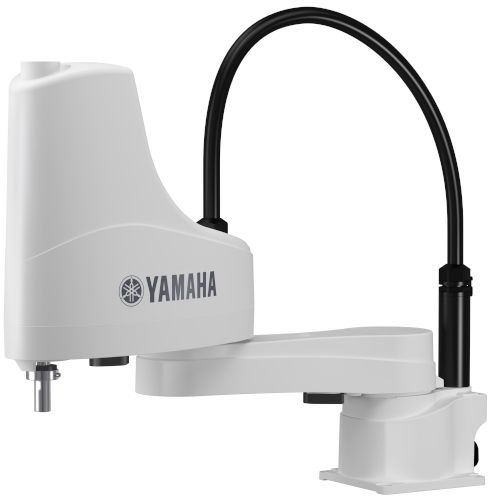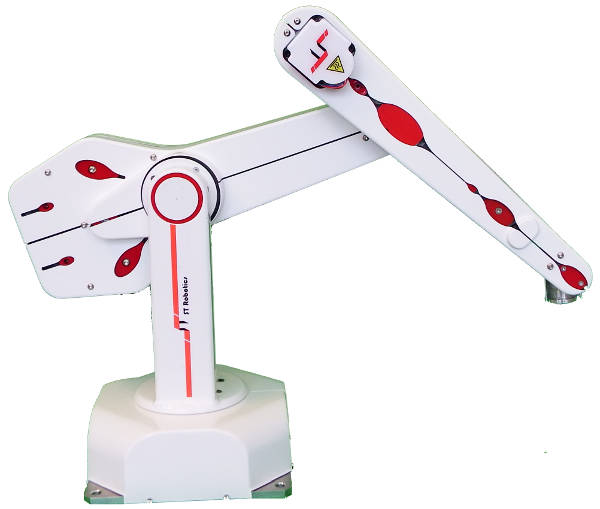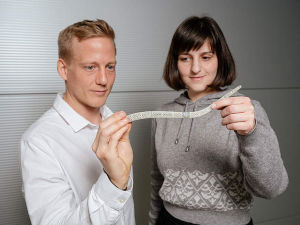
Today's industrial robots are powerful, fast, and highly precise, but they are also heavy and potentially deadly. Anyone working with these machines must be careful, as being struck by an industrial robot's arm can have painful consequences. If we want people to work side-by-side and hand-in-hand with robots, these robots will have to be, quite literally, softer. The research team led by Professor Stefan Seelecke, a specialist in intelligent materials systems at Saarland University, is developing a robotic arm that incorporates no heavy metal parts.
The researchers in Saarbrücken drew inspiration from nature, specifically the elephant's trunk. “An elephant’s trunk is an evolutionary success story that has had millions of years to adapt and prove its worth in practice,” explains Stefan Seelecke. The slender, trunk-shaped robotic arm the research team is developing can swing, oscillate, and bend in all directions. Unlike the heavy, articulated metal arms used in today’s industrial robots, the new robotic arm isn’t attached to a bulky joint that only allows movement in certain directions. And just as an elephant’s trunk has no bones, the robotic trunk has no rigid metal frame. Its flexibility and maneuverability come from the clever way its artificial muscles interact with each other.
“Using smart material systems, we can create flexible, soft robotic tools that are much lighter and more flexible than the devices used today. They don’t need motors or hydraulic or pneumatic systems; a little electrical energy is all they require. This makes our technology sustainable, cost-effective, and quiet,” says Stefan Seelecke. His research group at Saarland University and the Saarbrücken Center for Mechatronics and Automation Technology (ZeMA) is developing various types of artificial muscles for use in smart robotic trunks and tentacles. To design these systems, the engineers use smart polymers and shape-memory alloys. The team is presenting a new prototype robotic trunk at this year’s Hannover Fair. They will demonstrate the capabilities of a 30-centimeter-long proboscis whose “muscles” and “nerves” are made of nickel-titanium wire bundles. “The technology we develop is scalable and can be used in large robotic arms for industrial applications,” explains Seelecke.
Artificial muscles made from nickel-titanium wires can contract like those of living organisms. When commanded, they can shorten (muscle contraction) and lengthen again (muscle relaxation). Nickel-titanium's ability to behave this way is due to the alloy's unusual property of shape memory; that is, the material can "remember" its original shape and return to it after being deformed. If a nickel-titanium wire is heated, for example with an electric current, it shortens. When the current is cut off, the wire cools and returns to its original length. The reason for this behavior lies in the alloy's crystalline structure. “Heating the alloy induces phase transitions in the solid state,” explains Professor Paul Motzki, who researches with Stefan Seelecke and is an interinstitutional professor in the field of smart materials systems for innovative production at Saarland University and ZeMA. Unlike liquid water, for example, which changes state and becomes gaseous when heated, nickel-titanium remains in a solid state, but its crystalline structure undergoes a transformation.
Engineers are building the robotic trunk from a large number of artificial muscle filaments. Just as human muscle tissue is made up of bundles of muscle fibers, the artificial muscle filaments are composed of bundles of ultrathin, shape-memory wires. These ultrathin wire bundles provide a large surface area through which they can transfer heat, meaning they cool down and relax more quickly after contraction. They are also strong. The wires have the highest energy density of any known drive mechanism and can generate considerable pulling force. “This allows us to build powerful drive technologies in very small spaces, something that would otherwise be impossible,” explains Motzki. By threading bundles of wire through a series of thin, round plastic discs, the wire bundles maintain the spacing between the discs, thus creating segments of the trunk-like structure. By joining several of these segments, the researchers can build a complete trunk, with the discs becoming progressively smaller toward the trunk’s tapered end.
By applying electrical currents, the research team can flex the trunk’s muscles. By shortening the artificial muscle strands on one side of a muscle segment, the trunk bends outward at the desired angle at that point. By controlling the activation of each of the wire bundles, the artificial muscles can flex and extend to create fluid sequences of movement. Without the need for additional sensors, the researchers can quickly and precisely control the trunk’s position and make it execute almost any sequence of movements. No additional sensors are needed because the artificial muscles themselves have sensory properties, allowing them to also act as a kind of sensory system. internal nervous system. Every deformation of the wires causes a change in electrical resistance, allowing us to assign a precise resistance value to any specific wire deformation. With these resistance values, we know exactly how a given bundle of wires deforms, which essentially gives the system sensory properties,” explains doctoral candidate Yannik Goergen, who developed the artificial trunk as part of his doctoral research project. To train the bionic trunk, engineers use these values to model and program movement sequences, which in turn involves developing intelligent algorithms for this purpose. They can also equip the tip of the trunk with additional functions, such as a gripping tool or a camera system. The trunk could also be fitted with a hose capable of precisely dispensing or pumping fluids.




 Asparagus picking-1-w.jpg)