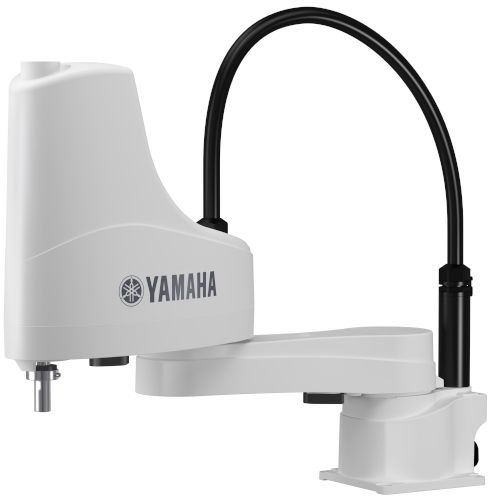
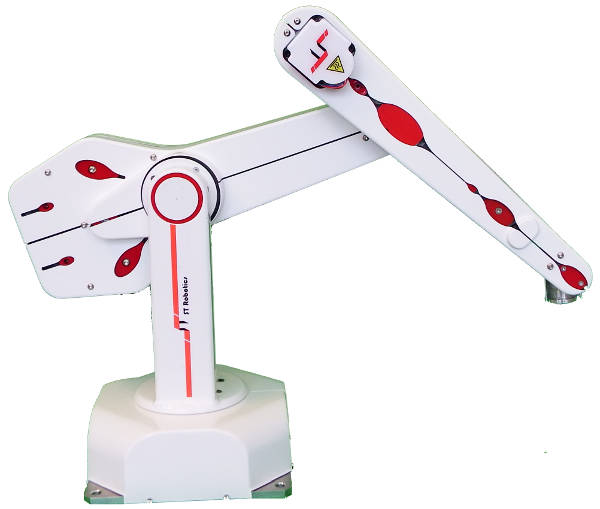
From the very beginning...
In more modern times, robotics has been a valuable source of inspiration for countless writers and filmmakers. It was the novelist and playwright Karel Čapek who first used the term "robot" in his 1921 work "Rossumovi Univerzální Roboti," which means "forced labor" in his native Czech. Six years later, the celebrated silent film "Metropolis" by German director Fritz Lang was the first to feature a robot (in the form of a female android named Maria). In the mid-1940s, the visionary science fiction writer Isaac Asimov established the Laws of Robotics, which state that a robot may never harm a human being. This is something that has been completely ignored in a number of Hollywood films since then, including Yul Brynner's gun-toting android character in "Westworld", Rutger Hauer's menacing replicant in "Blade Runner", and Arnold Schwarzenegger's cyborg assassin in "Terminator".
...to reality.
Over time, the popularity of robotics in fiction has been matched (and possibly surpassed) by reality, with a growing number of real-world applications. The form these robots take is also changing. They are no longer just bulky objects deployed on factory production lines (and kept isolated from humans). Now they are designed to interact with us and assist us in the tasks we perform. In recent years, this has led to the emergence of collaborative robots, or "cobots," in certain work environments, as well as autonomous guided vehicles (AGVs) for deliveries and material handling.
Design Speed with a Modular Development Platform:
The servos incorporated into a robot or AGV are of vital importance, as they initiate the unit's movements. These are driven by electric motors, either stepper or brushless DC (BLDC). An efficient motor control algorithm is needed to manage these motors, enabling high levels of energy efficiency (to increase the robot/AGV's independence and ensure it is not limited by the need for frequent battery recharging). The algorithm must maximize power delivery to the motors and minimize losses from unwanted heat generation. Precise control of the numerous motors involved (covering robotic movement on different axes, etc.) will require acquiring accurate positioning data for each motor rotor. Engineers, who often face challenges such as tight deadlines, limited resources, and, in many cases, limited experience, want to avoid having to do much of this work from scratch. What they need is the support of a flexible and modular development platform.
To alleviate the pressure on engineering teams and give them the edge they need in developing motor systems for their robot/AGV projects, Toshiba offers a highly flexible and easy-to-use solution. Its innovative servo drive reference model encompasses all the essential elements of robotics-oriented motor control: the controller, power supply, feedback loop, and more. The microcontroller at the heart of this reference model features an Arm® Cortex® processing core capable of operating at 160 MHz.
Toshiba has prepared an article on robotic servo drives, which includes details of its reference model.




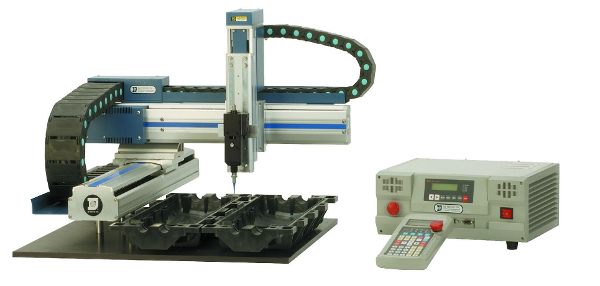
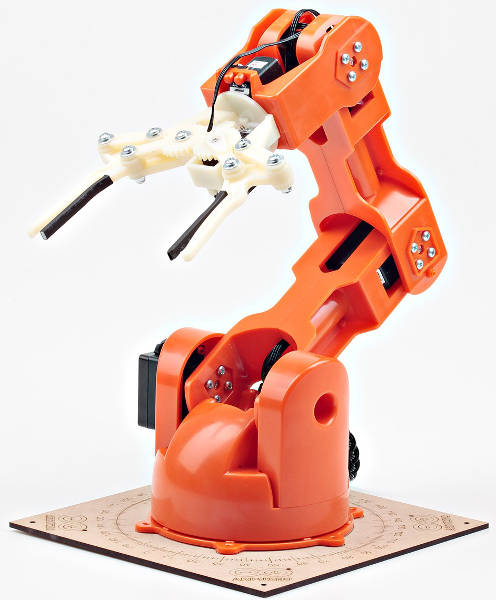
 Asparagus picking-1-w.jpg)