Among the main new products presented is the LUNA2000-241-2S1 battery, one of Huawei's main new products for the C&I segment, with a proposal that combines more capacity, more energy density and a clear evolution of its storage offering for industrial and commercial environments.
With a capacity of 241 kWh, this new iteration of the cabinet-type solution expands the company's product range and reinforces its commitment to backup, microgrid, and behind-the-meter energy management applications. Beyond capacity, one of the highlights of this new battery is its focus on efficiency and operational performance. The improved cell density, along with advancements in cooling and optimization, aims to offer a more competitive solution for projects where total cost of ownership is a critical factor.
Added to this is the strong commitment to safety and operational reliability, a key aspect in this type of installation and one of Huawei's hallmarks. In this regard, the battery incorporates a dual cooling system, using both air and liquid, designed to promote more robust and stable operation in energy-intensive applications, reduce energy consumption, and extend the equipment's lifespan.
Furthermore, the battery is built on a C2C Dual-link Safety architecture, with electrical and thermal protection from the cell to the application, detection of more than 13 types of faults, multi-level protection against overcurrents and short circuits, rapid shutdown in 5 ms, and specific measures such as a pack-level oxygen barrier, directed gas exhaust, explosion-proof top venting, and a fire spray system.
New inverters adapted to market needs.

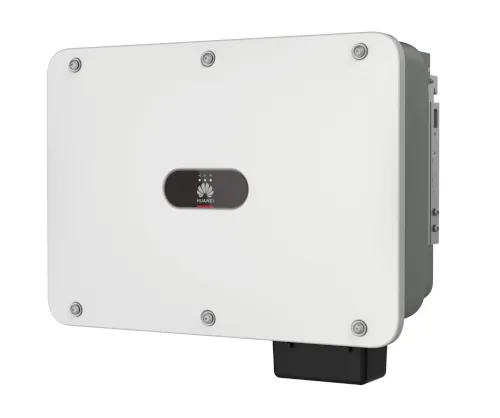
In the SUN2000-30/40/50K-MC0 inverter range, Huawei is introducing a new generation designed to accommodate higher-power modules and larger string configurations, thanks to the addition of two new 33A MPPTs. This evolution enhances the design flexibility of installations and improves their ability to meet new market demands, while maintaining a strong focus on safety and advanced system monitoring. Key features include arc flash detection, safety shutdown in case of overheating, and a suite of functions designed to protect the installation from electrical and operational issues.
The new generation of the SUN2000 and SUN5000-150K-MG0 series takes innovation a step further by integrating optimizers, which not only improves installation performance but also enhances its diagnostic and protection capabilities. Key advantages include the detection of module and panel faults, even without optimizers in certain cases; the identification of insulation problems such as water damage, backsheet damage, or exposed wires; protection against reverse current, internal and external short circuits, and ground faults; and compliance with rapid shutdown regulations. Furthermore, an additional layer of safety against overheating and electrical anomalies makes these new solutions a more robust, intelligent, and robust option, better suited to increasingly demanding environments.
Regarding all these advancements, Gavin Zhao, General Manager of Huawei Digital Power Spain, noted that “we are seeing a very clear evolution in the market towards smarter, more integrated energy solutions capable of responding to increasingly complex needs, both in residential and commercial/industrial sectors, utilities, and electric mobility. With these new developments, Huawei is reinforcing its commitment to an offering that combines storage, advanced management, microgrids, and charging, with the aim of helping customers and partners gain in efficiency, flexibility, and energy security.”
For his part, Jesús Heras, Technical Director Southwest Europe at Wattkraft, emphasized that “the true impact of this new generation of solutions lies in its ability to take energy storage to a new level of value for industry and large-scale facilities. It's not just about adding more capacity, but about integrating batteries, inverters, and control systems capable of optimizing operations, improving return on investment, and reinforcing security and continuity of supply in increasingly demanding environments.” “Furthermore,” Heras added, “at Wattkraft, we are experts at tackling challenges, which gives us the ability to adapt all these solutions to each specific case, studying its particular needs one by one and offering tailored solutions.”
More innovations in 2026.
In addition to the above, Huawei plans to continue expanding its portfolio with new solutions for utility and electric mobility by 2026. Among the main new developments is the evolution of its large batteries, with new higher-capacity models, including a 6 MWh solution expected in the second half of the year. This new development is geared towards supporting larger-scale projects.
In parallel, the company also advanced innovations in charging devices for electric vehicles (EVs), with a new PCS-free architecture that works on direct current, which allows for increased efficiency by avoiding double conversion and facilitates the deployment of high-power charging solutions in locations with limited grid power.