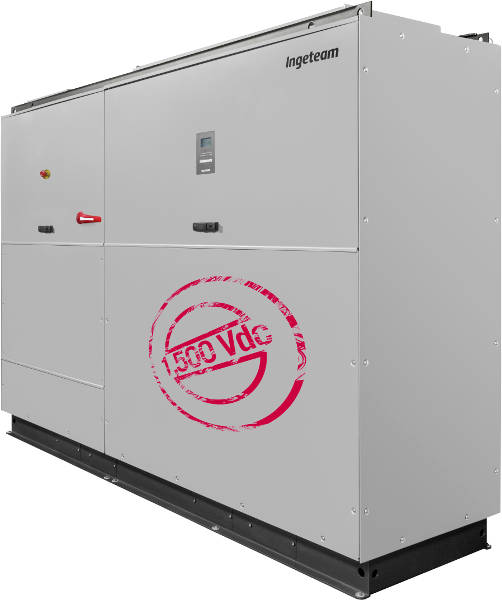
Because in addition to their low starting voltage, the threshold at which their batteries begin to charge is surprisingly low, ensuring a return on investment even under unfavorable conditions, whether through energy storage or direct consumption. The EQUINOX2 HSX units offer up to 6 operating modes: Peak Shaving, hierarchical discrimination of excess discharge behavior, time-of-use discrimination, automatic backup, isolated operation, and operation without batteries.
In Peak Shaving mode, when solar radiation is insufficient to meet a given demand, or when the user has decided to limit grid consumption to a level below the current load demand, the batteries will activate and supplement the necessary power using the energy previously stored in them, without drawing from the grid and at no additional cost. In the characteristic backup mode, the system functions as a UPS capable of supplying 100% of the inverter's nominal power to the loads, with an automatic transfer time of just 15 ms in the event of a grid power outage.
The battery-free operating mode allows for photovoltaic energy generation even if the batteries are faulty, disconnected for replacement, or if the user decides to purchase them later and initially forgo energy storage. Regarding its autonomy, this series is compatible with various battery models on the market, although it is best complemented by the EQUINOX2 BATT batteries, which feature a scalable modular configuration and can be adjusted to meet both the desired autonomy and the user's investment capacity.
Its wide voltage range allows for the connection of up to 10 stackable battery modules in series, providing 25.6 kWh at 512 V. This new hybrid solar inverter, whether in a residential or small business setting, is ideal for ensuring a high degree of independence from the electrical grid. It is also particularly useful when energy consumption is concentrated during off-peak hours and revenue from selling energy back to the grid does not sufficiently offset the cost of energy from the conventional grid.