

 Designers of high-performance automotive matrix lighting applications and adaptive high-beam LEDs are now able to migrate to higher current while reducing solution size and improving flexibility with the MAX20092 12-switch matrix driver from Maxim Integrated Products, Inc.
 Safety and brand differentiation are two of the main factors driving increased adoption of LEDs in automotive front lighting platforms, which are growing at a rate of 30 percent annually, according to Strategy Analytics, Inc. As part of their brand identity differentiation, OEMs are designing with advanced safety features, such as glare-free high beams, as well as LED and matrix lighting. However, LED lighting designers face increasingly complex challenges regarding power, temperature, and design.
The MAX20092 provides flexible current management for matrix and pixel lighting. Twelve integrated switches control LEDs in series up to 56V, saving design time and reducing complexity. Its integrated MOSFET's 70mΩ on-resistance (RDS_ON) is the lowest in the industry and comfortably drives LED currents up to 1.5A. Maxim's 12-switch LED matrix manager is offered in a small 5mm x 5mm TQFN package. Additionally, Maxim has introduced the MAX20096 and MAX20097, dual synchronous buck drivers for high-brightness LEDs, designed to work with the MAX20092. These circuits help designers by improving transient response in LED lighting. Maxim's MAX20096 and MAX20097 offer ultra-fast transient response with near-fixed frequency using Maxim's patented average current mode control scheme, minimizing EMI and enabling a reliable, high-performance design.
Key advantages of the MAX20092
: • Integration: Reduces bill of materials (BOM) design costs while saving space. Manages one to two LEDs per switch with 12-bit pulse-width modulation (PWM) dimming. Provides integrated logarithmic fade-in/logarithmic fade capability, simplifying LED programmability and reducing system bus line overhead.
• High performance and safety: The low RDS_ON of 70 milliohms safely allows LED currents up to 1.5 A. Features advanced fault protection and management for detecting open circuits, short circuits, and open traces on the LEDs.
• Flexibility: Up to 27 MAX20092s can be paralleled without daisy-chaining to manage a high number of LED pixels—up to 324 LEDs. This allows designers to configure 1 string x 12 switches in series, 2 strings x 6 switches in series, and 4 strings x 3 switches in series, with each IC.
• Electromagnetic interference (EMI): Slew-rate control reduces electromagnetic interference (EMI) and noise.
“While LED matrix headlights improve safety, they were initially exclusive to the premium automotive sector due to their complexity and high cost,” says Kevin Mak, senior analyst for the Automotive Practice of Strategy Analytics. “Technological developments that improve LED efficiency and performance will drive their wider adoption in automotive platforms. Maxim’s MAX20092 is one such solution that aligns with the trend of increased LED lighting adoption in automotive applications.”.
“Maxim designed the MAX20092 to help developers who want to use more LED technology in their designs and reduce the cost of the component list and space requirements,” says Yin Wu, Automotive Product Line Manager at Maxim Integrated. “The safety and OEM brand value that LEDs offer are compelling, and they enable wider adoption through increased flexibility and reliability.”.
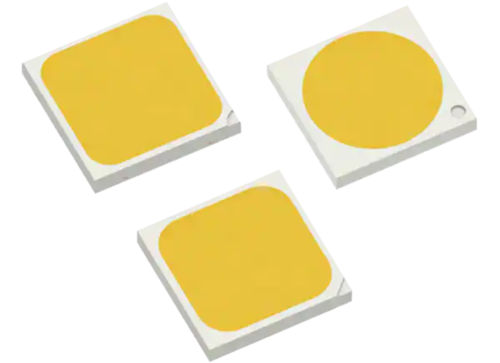
The MAX20092EVSYS evaluation kit includes a graphical user interface, a matrix manager board, and an LED adapter board with Osram Opto Semiconductors' Oslon Compact PL, KW CELNM1.TG LED components, which are suitable for adaptive matrix style headlights.