In general, current DC-DC converters can cope with input voltage drop deviations. However, if a power interruption occurs, all connected devices will immediately shut down.
EN 50155 (Railway applications - Rolling stock - Electronic equipment) describes two conditions: power interruption and switching, in which the input voltage drops to zero for 10-30 ms. An interruption in the power supply input will cause any DC-DC converter to temporarily stop working, even for a brief period of 10-30 ms, and all connected loads will lose their functionality. The equipment will then need to be restarted over several seconds or minutes. This shutdown and restart process can be dangerous for a moving train. Therefore, EN 50155 also clearly states that power interruption and switching of S2, S3, and C1 must comply with criterion A. C2 must meet criterion B. (Criterion A means that while the condition occurs, the device still maintains its function. Criterion B means that temporary performance degradation is permitted.) To prevent problems caused by power interruption and switching, additional capacitors must be installed at the input to provide power during interruptions.
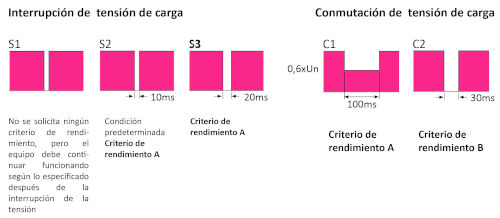 Fig. 1: Supply Interruption and Switching.
We base our calculation of the required hold-up capacitance on the actual output power and conversion efficiency, input voltage, and low-voltage blocking threshold. The capacitance can be increased by a factor of 1.5 or by a suitable margin to prevent hold-up failures due to component tolerances. Aluminum electrolytic capacitors are known to be one of the vulnerable components.
Given the harsh environment of railway applications, it is recommended to use electrolytic capacitors with a 125°C operating temperature rating and long lifespan, and to choose a reputable manufacturer. The large capacitance of the hold-up capacitors will cause a relatively high inrush current when power is applied. Direct connection to the power bus should be avoided. The use of a power resistor and a diode in parallel is recommended to limit and reduce this inrush current.
Another challenge is that the capacitor voltage specification is based on different railway battery systems (24, 36, 48, 72, 96, and 110 VDC), multiplying the voltage coefficient by 1.4 to provide an appropriate margin. Because different countries use different system voltages, different models of DC/DC converters and capacitors are required. Designing various power supply boards and maintaining a large inventory of different models, modules, and DC-DC capacitors is time-consuming.
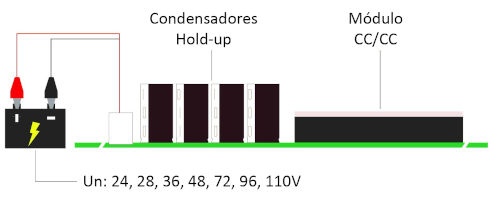 Fig. 2: Ideal solution for railway applications.
Our manufacturer P-DUKE and Electrónica OLFER recently introduced the QAE and HAE series with an ultra-wide input range. These are the QAE40/60/100U and HAE150/200U, which provide output power from 40W to 200W and an input voltage of 14-160VDC (12VDC at 100ms/185VDC at 1s), covering all standard voltages for railway applications.
These series have multiple protections (OCP, SCP, UVP, OVP, OTP, etc.) and are certified to IEC/UL/EN 62368-1, EN50155, and EN45545-2. The enhanced hold-up function of the HAE-U series provides increased load voltage via the BUS pin. This reduces the hold-up capacitance required for input voltages below 80V. The enhanced hold-up function of the QAE-U series is patented and provides a fixed charging voltage, allowing a capacitor with the same capacitance and voltage rating to be used for different supply voltages. These converters offer a unique and complete solution that meets the requirements of any country, saving time and costs during the development phase.
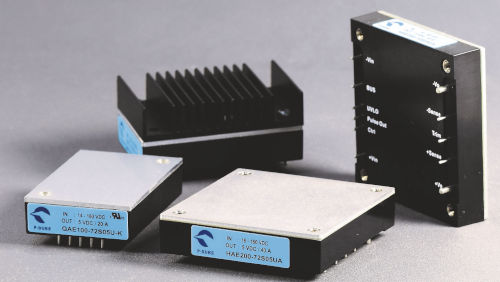 QAE and HAE Series: DC/DC converters with ultra-wide input for railway and industrial applications
Author: Antonio Hsieh, Applications Engineer at P-DUKE.
Translation: Marketing Department of OLFER Electronics.