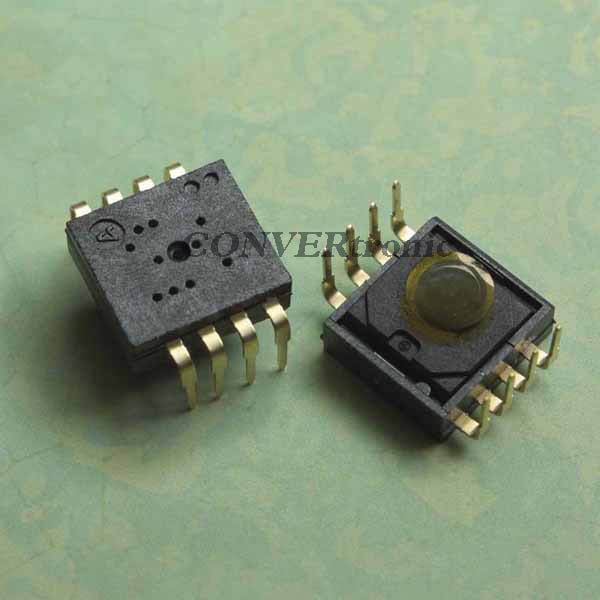
The new Topled D5140 IR photodiode from Osram Opto Semiconductors requires less space than previous models, allowing for the production of more compact sensors ideal for devices such as fitness trackers.
The SFH 2440 and the IR Topled D5140 are especially suitable for optical sensors aimed at monitoring heart rate, such as those found in wrist devices. Chris Goeltner, an infrared product expert at Osram Opto Semiconductors, explains: “This technology works by illuminating the skin's surface with visible light, some of which is absorbed or reflected by the detector. Because arterial blood absorbs more light than the surrounding tissue, the signal strength changes according to the volume of blood the light passes through. The signal's periodicity, therefore, indicates the heart rate. However, infrared light shining on the measurement point from the surrounding environment and scattered throughout the body also reaches the photodiode. In practice, the sensor, consisting of the light source and the detector placed side by side, is positioned directly on the skin, usually on the wrist or fingers. Due to its location, monitoring is performed at different wavelengths—green light has established itself as the best option for the wrist, while red and infrared are most appropriate for the finger.”
The Topled D5140 offers an excellent signal-to-noise ratio because it accurately records reflected light while suppressing infrared light. Thanks to its short switching time, the heart rate-modulated light signal is perfectly resolved in time. The IR Topled D5140 allows customers to design more compact sensors while maintaining the high signal quality offered by the SFH 2440.
Biofy sensors are based on high-efficiency chip technology. Optical sensors have provided more ways to monitor physical activity, offering simple methods for measuring heart rate and blood oxygen levels. The SFH 7050 multi-chip sensor contains three LEDs of different wavelengths, in addition to a photodiode. The sensor works by measuring blood volume using photoplethysmography, a method that involves placing the sensor as close as possible to the skin, shining light into the blood vessel, and then recording the reflected light.