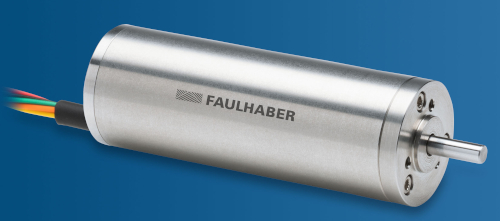
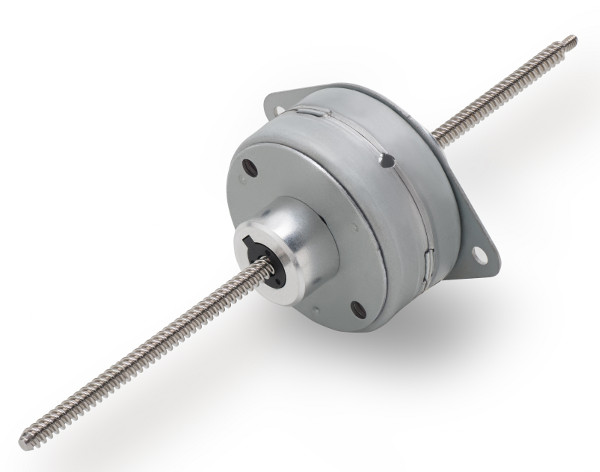
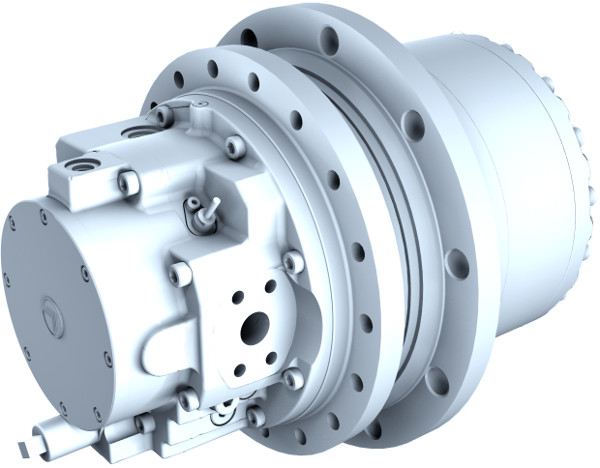
Given that BLDCs constitute a large proportion of total global electricity consumption, ensuring efficient operation is clearly essential. Electronic commutation of BLDCs is enabling considerable energy savings. While sensor-based systems can provide highly effective control of BLDC motors, they are not always suitable. In many cases, severe space limitations or budget constraints preclude this approach. Instead, sensorless control is achieved by measuring the induced electromotive force (EMF).
Field-oriented control (FOC) allows for the creation of a smoothly rotating stator with a magnetic field. This method generally minimizes torque ripple, thus avoiding unwanted mechanical stresses and producing very little audible noise.
There are four basic steps in the FOC. They are as follows:
Measurement of the actual current passing through the stator windings.
Generation of an error signal by comparing the measured current with the desired current.
Amplification of the error signal to create a correction voltage.
Modulation of the correction voltage at the motor terminals.
Thanks to this continuously updated feedback loop, the motor can operate smoothly. However, it should be noted that accurately determining the rotor's position without sensor technology (e.g., Hall effect devices) can be difficult, especially when the rotor is spinning at low speeds.
Operating at these low speeds affects the ability of FOC algorithms to calculate the necessary switching. Techniques that attempt to compensate for this mean that many of the original advantages of using FOC are lost, as the application of high-frequency signals causes torque ripple, generating acoustic noise and vibrations in the system. This results in efficiency losses. Furthermore, the presence of these high-frequency signals can also be problematic from an electromagnetic compatibility (EMC) standpoint.
The introduction of Toshiba's M4K microcontroller unit (MCU) represents a significant step forward in the efficient control of BLDC motors. This device integrates the company's proprietary Advanced Vector Engine Plus (A-VE+) IP technology, which performs all the necessary mathematical calculations for fully efficient sensorless front-of-line control (FOC).
Another innovation is the Advanced Programmable Motor Driver (A-PMD) technology employed. A-PMD means that the motor's PWM outputs can be generated using individual pulse-width modulation (PWM) carriers assigned to each motor phase. Consequently, it is no longer necessary to apply high-frequency signals when the motor is operating at low speeds (thus eliminating the vibration and noise problems already mentioned). The A-VE+-enabled M4K solution also requires very little processing overhead once the initial configuration is complete.
Toshiba has published a technical document detailing this latest FOC approach. It can be downloaded here.