Weak signals are processed and amplified by the integrated electronic system and transmitted via an analog or digital interface. MEMS have enabled many innovative applications in the form of acceleration sensors, gyroscopes, pressure sensors, and microphones with minimal dimensions. The consumer and mobile phone markets, as well as the automotive industry, were the pioneers. They were the first to understand the potential of MEMS sensors, whether for consoles that allow users to win the Olympic Games from their living rooms, for mobile phones that react to movement, for cameras with image stabilization, or for airbag and ESP systems in automobiles.
In this respect, the international MEMS market is constantly growing and currently boasts sales figures of approximately one billion dollars. Bosch, the international leader in the MEMS market, sold one billion units during the thirteen years between 1995 and 2008, and reached two billion in just three years. STMicroelectronics has also experienced unexpected growth: in 2011, the company managed to increase its MEMS sensor sales by 80%, primarily in the consumer and mobile phone markets, thus becoming one of the market leaders in this sector. Now, the company wants to apply the experience gained to other markets. It has ample potential for this: MEMS sensors offer new applications in almost any field and can make existing applications more convenient, safer, and energy-efficient, or help them stand out from the competition by integrating new features. The revolution that has already occurred in the mobile phone market is yet to come here.
Enhanced user comfort.
The human-machine interface (HMI) sector is a very promising field of application. Experience gained from mobile phone applications can be leveraged here, as the tap and double-tap functions can be easily implemented. Voice control can also be used for HMI applications. In this respect, mobile phones again demonstrate the possibilities: iPhone users can add appointments or send emails using Siri. MEMS microphones also enable this type of voice control and detection in other devices, such as navigation systems. This is all thanks to the combination of minimal dimensions with high sound quality and durability. These advantages can also be applied to hands-free devices or conference systems without additional costs. For
example, STMicroelectronics offers MEMS microphones that are more efficient and more robust than conventional electret microphones (ECMs). The currently available MP34DT/DB01 / MP45DT02 models have a signal-to-noise ratio (SNR) of 63 dB with a very flat frequency response (from 20 Hz to 20 kHz).
Enhanced Safety:
Rotation speed sensors contribute to safety in drilling machines. They register the drill's rotation at the moment the drill bit engages the concrete and automatically shut it down. Acceleration sensors enable "freefall detection," currently used primarily in laptop hard drives. If the sensor detects freefall, it will ensure that the read/write head does not collide with the hard drive, but rather retracts in time. This principle can also be applied to a chainsaw or a crane's remote control to ensure the device remains in a safe state by triggering an emergency shutdown in the event of a freefall.
Acceleration sensors also register even the slightest movements and vibrations, making it easy and effective to protect oil and gas pipelines or automated machinery from vandalism and valuables from theft. Recording machine vibrations also allows for verification of their proper functioning.
MEMS barometric pressure sensors are capable of measuring level differences with an accuracy of 25 cm. Compared to satellite location systems, which are ineffective indoors due to poor or no signal, they enable applications such as indoor navigation in department stores or parking garages. This is possible because they measure air pressure, from which they calculate height and assign a floor. They are also used in navigation systems, for example, to locate a vehicle in multi-story buildings. In applications for firefighters and police, MEMS pressure sensors can even save lives by pinpointing the location of people trapped in buildings.
 Greater efficiency:
If a device switches off immediately when it malfunctions, its energy efficiency also increases. This can be further optimized by combining several sensors. For example, in a washing machine, pressure sensors can measure the fill level, while acceleration sensors calculate the load and adjust the wash and dry programs accordingly. Acceleration sensors trigger the automatic switch-off  of devices such as remote controls, lamps, or audio equipment if they don't detect any movement for a specified period.
STMicroelectronics and Bosch Sensortec offer top-of-the-line products for these types of applications: The LIS3DH (STMicroelectronics) and BMA250 (Bosch Sensortec) three-axis MEMS acceleration sensors are particularly well-suited for mobile device applications, as both offer significant energy savings and very compact dimensions. The LIS3DH requires only 2 mA of power in ultra-low consumption mode, and the Bosch model requires less than 5 µA in low consumption mode. Their dimensions of 3 x 3 x 1 mm (LIS3DH) and 2 x 2 x 0.95 mm (BMA250) are ideal for space-constrained applications. Both sensors provide accurate measurement values within programmable measurement ranges of +/-2 g, +/-4 g, +/-8 g, and +/-16 g, with a sensitivity of 1 mg/digit in the LIS3DH and 256 LSB/g in the BMA250 within the 2 g range. Their digital resolution is 12 bits and 10 bits, respectively, and the typical zero-g offset over the entire service life is +/- 40 mg in the ST model and +/- 80 mg in the Bosch model.
For mobile devices, intelligent power management, free-fall detection, and step counting are also noteworthy. For HMI applications, the sensors offer on-screen display adaptation and touch and double-touch control. They are also compatible with gaming and virtual reality functions. Both manufacturers provide software and hardware tools for initial testing with a user-friendly graphical interface. This allows for easy adjustments and testing, followed by seamless integration into the application. Both ST and Bosch offer programmable boards, application programming interfaces (APIs), and low-level controllers.
Greater freedom of movement.
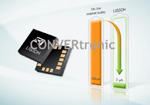
The different types of sensors should not be considered in isolation. Combining them allows for applications with a very high degree of sensitivity, almost comparable to human sensitivity. For example, acceleration sensors combined with a gyroscope are capable of creating complex motion profiles. Both sensors are also available integrated into a single module, such as the LSM330DLC from STMicroelectronics. This module includes the LIS3DH three-axis acceleration sensor and the L3GD20 three-axis gyroscope in a compact size of only 4 x 5 x 1.1 mm. The gyroscope offers a full measurement range of ±250 dps to ±2000 dps and features a programmable switch.
In this respect, these types of MEMS sensors and modules allow for remote monitoring of patients or elderly individuals without restricting their freedom of movement. For example, if a fall occurs, a nurse can be notified immediately, or disoriented individuals who have become lost can be located. Occupational therapy, sports training, and medication administration can also be precisely adapted to individual movement profiles and thus designed more effectively. In blood pressure monitors, the sensor can check arm position, ensuring accurate readings, especially for home use. In the livestock sector, the LSM330DLC sensor module allows for the individual determination of the amount of forage required based on the animal's movements.
 Greater Degrees of Freedom:
Sensor modules that combine a greater number of sensor types offer even more degrees of freedom (DoF). Thanks to their relatively small size, they are particularly well-suited for space-constrained applications. Currently, the most popular combinations include acceleration, gyroscope, and compass sensors. STMicroelectronics recently introduced a multi-sensor module with nine degrees of freedom. The iNEMO M1 integrates a three-axis acceleration sensor, a three-axis magnetic sensor, a three-axis gyroscope, a 32-bit 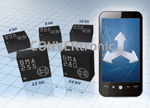 STM32 microcontroller, and specialized software, all within a compact footprint of just 13 x 13 x 2 mm. This allows it to record linear accelerations, angular velocities, and the Earth's magnetic field, enabling precise determination of direction, position, and movement. The sensor fusion software combines the output signals from all sensors, and prediction and filtering algorithms automatically correct distortions and inaccuracies in the measurements. This allows the module to offer a greater degree of realism in applications such as gaming, human-machine interfaces, robotics, wearable navigation devices, and patient monitoring.
A wide range of options.
The examples demonstrate that the application fields and possibilities of MEMS sensors are virtually endless. However, they present a challenge for developers who wish to use them in their applications. Often, at the beginning of development, it is unclear which type of sensor should be chosen to best achieve the desired goal. The wide range of models offered by manufacturers ensures that the vision remains clear at the outset of development. Rutronik boasts by far the most extensive range of sensors and MEMS sensors, featuring innovative products from well-known manufacturers. This broad selection makes it possible to find a suitable solution for every application.
Author:
Author: Martin Grimmer, Senior Marketing Manager Analog & Sensors at Rutronik Elektronische Bauelemente GmbH