Building a Smarter World
: Smart "things" are being woven into the fabric of life. Highly automated manufacturing is key to producing the large numbers of units needed at an affordable price for integration into equipment such as household appliances, buildings, vehicles, and industrial controls.
Minimizing human intervention in the setup and changeover of high-speed assembly lines is crucial to eliminating errors, delays, and unproductive time when machines are stopped. In Europe, where manufacturers typically produce a wide variety of products for industrial, communications, medical, and advanced automotive applications, reducing the workload associated with product changeovers can significantly increase productivity.
Several approaches can be effective, using a combination of production management software to minimize setup adjustments needed during product changeovers, and additional features built into the equipment itself. These can introduce various labor savings, such as eliminating tedious tasks like changing placement heads, automating procedures like adjusting push pins, and innovations that allow routine tasks, such as replenishing component reels, to be performed on the fly without stopping.
Reducing Changeover Workload:
Using software tools to create production schedules and optimize equipment utilization is essential. Tools provided by an equipment supplier can be especially helpful if control of key line machines, such as screen printing, assembly, and inspection equipment, can be consolidated. These tools can take into account overall production requirements and the capabilities of specific lines and individual machines to create feed configurations that accommodate the manufacture of multiple different products. Proper planning can minimize the number of changeovers required in a given shift, thus avoiding downtime and human intervention. Several packages are available, such as the scheduling and planning tools, production assistance, and M2M collaboration included in Yamaha's YSUP smart manufacturing software.
However, manufacturers need additional tools at their disposal if they want to successfully minimize machine downtime and continue increasing productivity. Whenever a new setup requires an assembly machine to be equipped with a different placement head to handle special components, or feeders need to be changed or simply replaced, the affected machine—and often the entire line—may have to be stopped to allow skilled operators to complete the task.
There are several approaches to solving this problem. Multiple assembly lines can be installed, each optimally configured to handle specific component types; a dedicated chip launcher for small, frequently used parts like SMD passives can be installed alongside a flexible assembly line to handle a wider range of components.
When money and square footage are at a premium, manufacturers can benefit from using a single, flexible mounting machine to handle all placement requirements. Yamaha has developed the next-generation YRM20 mounting machine with new features that enhance flexibility and automate processes that have traditionally involved lengthy manual intervention.
This component setter utilizes Yamaha's single-head solution concept, which now enables even greater productivity with the high-speed rotary RM head (Figure 1). This head operates at 115,000 cph and can place components ranging from 0.201 mm SMD chips to components up to 12 mm x 12 mm and 6.5 mm high. This allows for the placement of components such as large LEDs and popular IC types, including chip-scale packages (CSPs), quad flat packages (QFPs), and small line fine packages (TSOPs), at extremely high speeds. New feeders optimized for the RM head also handle the components at high speeds and ensure accurate picking.
 Figure 1. The high-speed rotary RM head expands the single-head concept to provide high-speed placement for a wide range of components.
In addition, Yamaha's Universal HM printhead expands the component range to include larger parts such as electrolytic capacitors, ball matrix integrated circuits (BGAs), and various connector types. A third option, the Ultra Flexible FM printhead, handles an even wider range, including oddly shaped components and components up to 55 mm x 100 mm x 30 mm high. Figure 2 illustrates the typical component types that each printhead can handle.
 Figure 2. The 115,000 cph RM printhead and others cover the range of surface mount component types.
The YRM20 panel mounter is available in single-beam and dual-beam configurations, giving users the flexibility to operate two heads simultaneously. To maximize throughput with a dual-head setup, Yamaha has incorporated the proven Overdrive motion technology from its Sigma family of high-speed panel mounters. This increases productivity by ensuring the two heads can work together with minimal interference (Figure 3). Also developed from Sigma technology, the YRM20's dual-stage conveyor improves PCB support and handles panels up to 510 mm wide at high speed to significantly reduce changeover time.
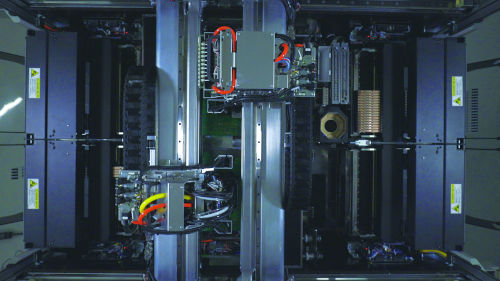 Figure 3. Yamaha's Overdrive drive, from the Sigma family, ensures that two placement heads can operate independently and interact effectively.
Automating Changeovers
: Automating various aspects of the product changeover sequence is also effective in reducing human intervention, saving time, and eliminating errors. Automatic program changeover prevents operators from having to search for the correct program to load and instead retrieves the correct program from the placement machine by scanning the barcode of the next board to be produced. When used with a powered tool set, linking automatic program changeover with automatic push-pin exchange—which raises the pins needed to support the printed circuit board during component placement—eliminates another laborious manual task from the changeover sequence.
In addition, automatic load feeders are available. These allow operators to quickly change component reels as they are emptied, ensuring that the new carrier tape is inserted correctly without stopping the machine. With Yamaha's ALF automatic load feeders, a new tape can be inserted on the fly in as little as five seconds.
With the YRM20, Yamaha has extended this non-stop changeover concept to handle components typically supplied on trays, such as larger integrated circuits and connectors. The eATS30 non-stop tray feeder continuously supplies these components and features a streamlined refilling process. A single pallet of tray components, or an entire magazine containing 10 pallets, can be inserted without stopping the machine, significantly increasing productivity.
Conclusion:
By reducing time-consuming equipment setup adjustments, such as changing placement heads, and expanding non-stop component replenishment to include tray and reel components, human intervention in routine activities can be greatly reduced. Benefits include fewer errors and increased equipment uptime, which contributes to higher productivity.
Relieving experienced operators of these mundane tasks allows them to focus on functions that rely heavily on human skills and judgment, such as quickly diagnosing—and resolving—the causes of any unexpected downtime that might occur at any time. To this end, additional tools exist, such as Yamaha's QA Option software, which combines the advantages of human expertise with advanced automation toward the ultimate goal: continuously increasing productivity.