It is driving the emergence of new tools that can improve high-level planning, as well as maintenance and optimization in the production plant.
Standards Improve Connectivity:
The IIoT incorporates powerful, standardized machine-to-machine communication protocols. In surface-mount electronics manufacturing, these protocols now provide a foundation for meaningful communication between automated in-line equipment and enterprise-level software, such as manufacturing execution systems (MES) and enterprise resource planning (ERP). This is a welcome improvement because, historically, the lack of standards and the expense and effort of software development required to maintain compatibility have hampered the prospects for sophisticated communication between different types of equipment and systems.
Another improvement is that changes in how machines share data now also allow SMT equipment suppliers to enhance the software tools available to production teams working on the factory floor. Despite the general trend toward greater automation and longer periods of unattended production, the complexity of SMT processes and equipment—which require frequent attention for maintenance and optimization—means that empowering this equipment remains important.
Connecting OT and IT:
As one of the defining principles of Industry 4.0, connecting an organization's OT equipment with its IT systems aims to create a seamless link between factory equipment and the applications that drive the business. This allows enterprise software like MES to automate the control of manufacturing activities, while data from factory equipment also powers analytical applications that inform business planning and provide the insights needed for continuous improvement.
IIoT technologies now incorporate standardized protocols and APIs, such as JSON (JavaScript Object Notation) and REST (Representational State Transfer), which enable communication between factory equipment and IT applications. Without these standardized platforms, compatibility between equipment and applications is far from "plug-and-play," requiring costly and laborious collaboration between software development teams from different parties.
Thanks to these protocols, equipment and applications can share data through a relatively simple communication interface. The equipment manufacturer can create and maintain this interface without needing to customize it to enable communication with specific individual software applications. One example is YSUP-LINK, which is part of Yamaha's YSUP production support system. It uses REST to allow surface mount equipment, such as a YSP10 automated printer and the latest YRM20 assembly machines on a production line, to connect to various third-party MES or other Industry 4.0 applications. It also monitors and collects information from the production line equipment and connects to intelligent component storage, in addition to supporting future integration with third-party equipment and software.
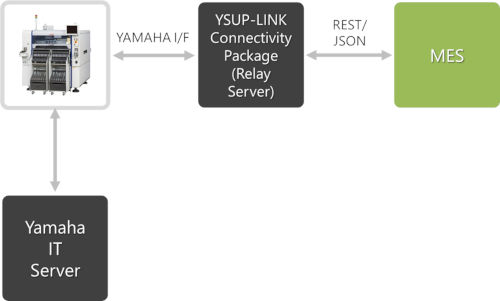 Figure 1. YSUP-LINK leverages industry-standard protocols to connect factory automation with enterprise software.
Indeed, it provides a connectivity package that allows factory equipment to send status information to the MES, enabling the MES to automatically monitor and manage manufacturing activities (Figure 2).
Figure 2. YSUP-LINK provides the necessary connectivity for an MES to automatically manage manufacturing.
Multiple instances of machines like the YRM20 can connect simultaneously to this environment, allowing YSUP-LINK to send reports to the MES, such as live status updates on the materials being used on each machine, or replenishment reports when coils are changed.
It also supports the legacy SECS/GEM interface, facilitating communication between the new software and equipment such as the semiconductor back-end processing environment, which uses established protocols.
On the other hand, looking to the future, it is prepared for the upcoming IPC-CFX connected factory exchange protocol (IPC-2591), which aims to establish a single standard for all aspects of data management and communications in digital factories.
Enhancing OT Communications:
Yamaha's production support system also includes a Materials Information System (MIS), which centralizes the management of materials information and makes it available to factory software tools for activities such as line monitoring and configuration verification/navigation. This offers advantages to production teams, such as faster response times to operator requests for coil information, and also enables quicker data backups.
Management is centralized through real-time synchronization between the MIS and the company's IT systems.
On the factory floor, it is crucial to ensure that operations teams are kept informed about equipment and production status and are empowered to take corrective action when necessary.
Leveraging the transmission server, an operator working on one machine can send an instruction to all other machines on the line simultaneously. All machines can share basic operations such as run control and program changes, while the latest generations of YRM equipment enable sharing of features such as board loading, screen display, and machine and board status.
Furthermore, the YSUP software provides a live dashboard offering enhanced analytics to support real-time optimization and troubleshooting. This tool includes analytical functions such as print output analysis, placement alignment analysis, vision process support, incorporation of waste costs, and enhanced report generation that supports maintenance activities and helps improve productivity. It
also features component collection analysis, which helps identify and remedy the root causes of common assembly defects. This system has already delivered remarkable results for some customers. By simultaneously displaying pick-up error rates by feeder and by printhead, the dashboard helps the team pinpoint a pick-up problem to a splicing tape failure that might have taken about 6 hours to identify using traditional tools. Figure 3 compares the diagnostic processes of both approaches and shows how the dashboard reduced the problem resolution time to about 40 minutes.
 Figure 3. Problem solving based on traditional error logs (left) and the new Dashboard analysis (right).
Similarly, another customer has leveraged dashboard information to reduce monthly picking errors by more than 100,000, representing a potential savings of between $12,000 and $120,000 per year in component losses.
Conclusion:
IIoT technologies are enabling sophisticated plug-and-play communication between surface mount equipment, factory software tools, and enterprise-level IT. On the one hand, this provides the long-awaited bridge between enterprise IT and OT domains to automate production management and increase efficiency. On the other hand, it lays the foundation for enhanced factory software tools that increase visibility for equipment operators and accelerate troubleshooting and process optimization to maximize productivity.