

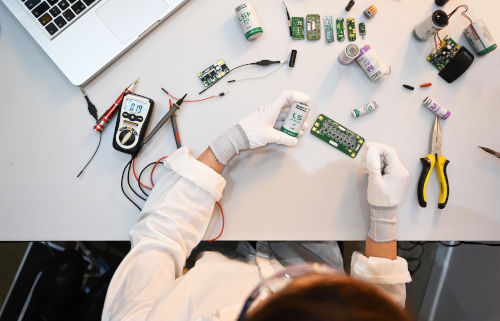
Wisebatt's platform provides engineers with an estimate of their device's battery life. It's based on a library that includes tens of thousands of electronic component models. Thanks to Wisebatt's visual development interface, engineers can model the operation and use cases of their devices and obtain simulation results in just a few seconds.
Tom Willis, Saft's marketing director for the Connected Energy division, states: “Wisebatt customers have reported that the tool helps avoid design errors that can cost up to €200,000, as well as saving up to three months of development per year invested. By offering the Wisebatt platform free of charge, we are giving engineers the ability to experiment with virtual prototypes and evaluate the performance of Saft's latest generation of lithium primary batteries.”.
Battery life is a crucial factor to consider when defining the lifespan of IoT devices, especially for devices placed in hard-to-reach locations where battery replacement is impractical. While engineers can estimate battery life by dividing battery capacity by average current, this isn't always accurate as it doesn't account for real-world power consumption and environmental conditions.
Saft's free version of the tool offers the same features as the original paid version of Wisebatt. It focuses on Saft batteries, specifically the two main lithium-ion battery chemistries used in IoT devices: lithium-manganese dioxide (Li-MnO2 ranges - LM and M) and lithium-thionyl chloride (Li-SOCl2 ranges - LS, LSH, and LSP).
Saft's Wisebatt tool is available at saft.wisebatt.com