
Inside, the revolution is evident in improvements such as customizable ambient lighting, which allows occupants to determine the atmosphere they want.
The transition to LED lighting is also driving changes in the manufacturing processes used to build these "light engines." Large numbers of emitters can be arranged in grids or strips, and an associated power supply and electronic control circuitry are also required. The components are mounted on a printed circuit board (PCB) or a flexible printed circuit board (FPC) using surface-mount technology (SMT). This represents a significant leap forward from traditional techniques, transforming lamp production into a high-precision sequence that can only be achieved through specialized automation.
Yamaha Robotics SMT Section is a leading supplier of surface-mount technology (SMT) equipment, chosen by well-known brands and manufacturing services companies (EMS) to build LED automotive lighting assemblies. Their customers range from top-tier multinationals to disruptive companies entering the market with innovative concepts.
Working directly with customers in this industry, and through its network of sales agents and distributors across Europe, Yamaha has supplied complete SMT surface mount production lines for lighting, as well as general automotive electronic assemblies. These include electronic control units, power modules, sensor modules, and chargers and inverters for hybrid and electric vehicles.
All automotive assemblies must be manufactured according to very strict standards. Automakers typically apply their own special quality specifications to evaluate the components and subsystems they receive from their suppliers. To succeed in this market, one must commit to supplying large volumes and meeting the tight deadlines necessary to keep vehicle assembly lines running smoothly.
Many of the companies now facing the challenges associated with manufacturing LED assemblies have a long history in the automotive sector and have been producing conventional lighting products for many years. Some have their own optical, molding, mechanical, and electrical/electronic design facilities and are improving and expanding these capabilities with new tools, such as computer-aided lighting software, modeling and simulation, including thermal performance and color analysis.
On the other hand, many are taking their first steps into SMT electronic assembly manufacturing. “Customers are looking for automated in-line equipment capable of placing components quickly and completely, with rapid product changeovers, minimal line downtime, and traceability compatibility, which is essential for the automotive industry,” says Shuichi Imai, General Manager of SMT Sales at Yamaha Robotics.

1 STOP SMART SOLUTION
The Yamaha 1 STOP SMART SOLUTION brings together all these qualities in a portfolio of interconnected and communicating screen printing, SMT component assembly, and automated optical inspection (AOI) platforms to maintain uninterrupted production with comprehensive diagnostics and reporting. This keeps operators continuously informed in real time about the current status and progress toward production targets. Any of these machines can be supplied individually to upgrade slower or less automated equipment from other manufacturers. The YRi-V 3D AOI can even be used as a standalone system with automatic program generation via Yamaha's YSUP software to accelerate new product introductions.
“Sometimes a team comes to us with a clear idea of the production capabilities, speed, and equipment features they’re looking for, while others need more guidance,” explains Shuichi Imai. “Of course, we have extensive experience in general SMT assembly, specific LED knowledge, and the demands of the automotive industry to offer the right advice.”
Among the equipment offered by 1 STOP SMART SOLUTION, the YRP10 screen printer is designed for repeatability and ease of use. Its features include a standard cycle time of just five seconds and a 3S swing single soldering head that automatically optimizes as the solder paste roll dries. Automated loading and screen setup reduce changeover time to zero, allowing the next job to begin instantly.
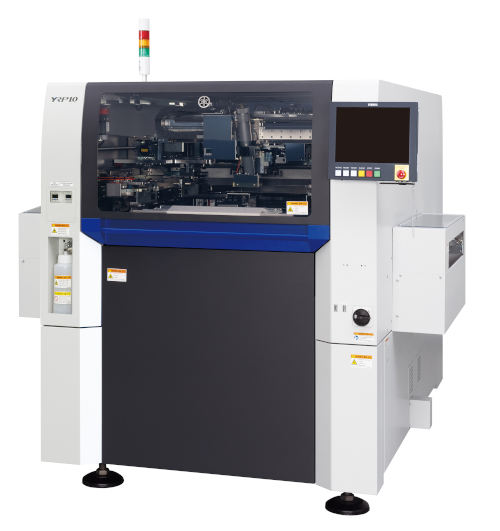
Yamaha YRP10
The YRM20 SMT machine can place components at speeds up to 115,000 cph and handle a wide range of components from 0-201 mm with multi-function head options that ensure high speed, versatility, and minimal changeovers. Side-view component detection instantly detects the pick status, and the assembler automatically creates recognition data for custom or unique components.
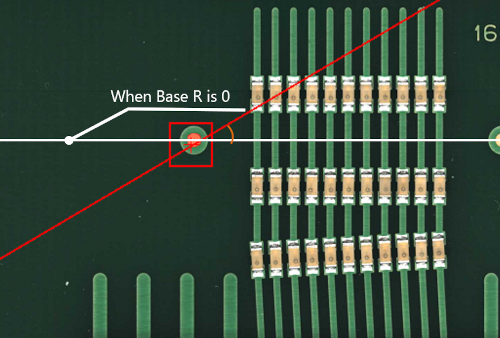
The YRi-V AOI system combines high-performance optics and machine vision, including high-resolution camera, multi-angle and multi-wavelength illumination, and laser height measurement to verify correct component placement and the integrity of soldered joints. The YRi-V delivers reliable results with a fast cycle time, enabling consistent high-quality control even at peak production. In early 2024, Yamaha introduced a new multi-component alignment check feature for the YRi-V, ideal for LED assembly work. It significantly reduces the time and complexity involved in programming the machine to verify that large arrays of LED emitters are correctly positioned.
Checking the alignment of multiple components ensures accuracy in LED assembly.
All machines are designed for quick product changeovers, allowing lighting manufacturers to create a wide variety of products and increase their customer base among automakers seeking best-in-class capabilities to manufacture advanced lighting for their new vehicle models.
Shuichi Imai concludes: “Our 1 STOP SMART SOLUTION meets all the requirements for surface mounting and component inspection, yet it is flexible and can be configured to meet the exact needs of a wide range of customers. In collaboration with our business partners, we can design customized solutions that help companies successfully enter the world of high-performance, high-speed automated assembly of electronic components.”