
Today, artificial intelligence (AI) encompasses everything from edge and cloud AI to AI-driven quality control in manufacturing and robotics, and even smart mobility. AI has long been a strategic competitive advantage, helping companies make their processes faster, more accurate, and more cost-effective. At the same time, however, demands are increasing regarding data quality, cybersecurity, and integration into processes and products. The electronics industry is systematically driving transformation through AI and, as a result, strengthening its international competitiveness. “This transformation is visible at electronica, which brings together key decision-makers and developers from around the world and showcases the entire electronics value chain,” explains Caroline Pannier, director of the electronica trade fair.
The semiconductor industry is benefiting from the rise of AI.
Recent studies confirm the trend that AI is becoming the main driver of growth and innovation in the sector. "The Semiconductor Industry in the Age of AI," for example, shows that the widespread adoption of AI and generative AI is driving demand for semiconductors. At the same time, related industries expect chip demand to increase by 29% by the end of 2026. A McKinsey also shows that semiconductor segments producing components for AI applications grew by 21% annually between 2019 and 2023, while the industry as a whole achieved growth of only 6%.
Edge AI and AIoT are becoming key drivers in the electronics industry.
The hot topics of edge AI and AIoT—the use of artificial intelligence directly in connected devices and systems—are currently of particular relevance to the electronics industry. Both approaches enable real-time data processing at the source, such as in sensors, controllers, or embedded systems. This reduces latency, alleviates the burden on the cloud, and improves data privacy, energy efficiency, and reliability.
At the same time, AI and robotics are gaining increasing importance in industrial automation, especially in the area of AI-based quality control. Automatic detection of even the smallest deviations and defects in components, printed circuit boards, or production processes helps reduce waste, streamlines inspection processes, and ensures more stable operation of production lines. Another area of interest is AI in microcontrollers: advances in TinyML and optimized embedded AI models make it possible to deliver intelligent AI functions even on resource-constrained hardware.
Bridging Hardware and Software Through AI:
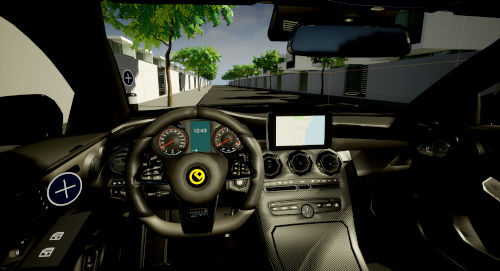
At electronica 2026, Infineon, STMicroelectronics, and NXP Semiconductors are among the leading exhibitors in the AI sector. Infineon is primarily driving the development of edge AI and IoT solutions for smart, energy-efficient devices. STMicroelectronics combines embedded processing, edge AI, and mobility-related applications. NXP Semiconductors is showcasing how solutions for the automotive, industrial, IoT, and communications infrastructure sectors can be integrated into embedded systems, microcontrollers, and microprocessors. In the automotive sector in particular, the focus is shifting toward the AI-defined vehicle (AIDV): a vehicle in which AI not only optimizes individual functions but also increasingly shapes perception, assistance, interaction, and driving behavior. Together, these companies demonstrate that AI is becoming increasingly integrated directly into sensors, embedded systems, and industrial applications.
This semiconductor environment is complemented by traditional embedded systems providers like Advantech and Kontron, which are driving the practical application of AI. Advantech explicitly describes its portfolio as the foundation for AIoT solutions, from sensor nodes to embedded PCs, gateways, and cloud-based IoT platforms. With its broad portfolio of IoT and industrial control and communication solutions, Kontron covers the entire spectrum, from modules to complete systems, including software. Both companies are thus creating the necessary infrastructural conditions to operate AI-based solutions in industrial environments in a reliable, connected, and scalable way.
One platform that brings together embedded computing, edge technologies, and IoT—as well as developers, decision-makers, and systems architects—is edge lab LIVE, making its debut at electronica this year. It combines the latest embedded technologies with practical applications and allows visitors to interactively experience edge environments.
Knowledge Transfer and Networking:
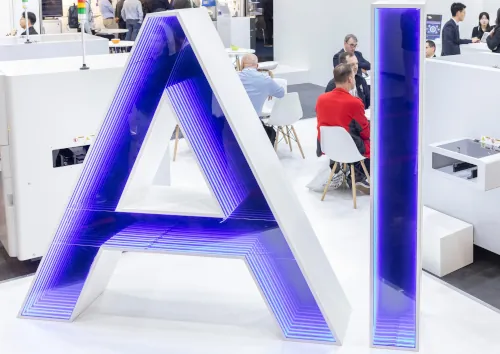
At electronica 2026, some 3,500 exhibitors from around 60 countries will showcase their cutting-edge applications and solutions that are paving the way for the All-Electric Society. Visitors will be able to experience firsthand all aspects of edge AI, AIoT, and related topics across the 18 halls of the Munich Trade Fair Center. Furthermore, a top-tier program of complementary activities, including an executive event with a CEO roundtable, expert lectures, and networking events, will contribute to knowledge transfer. Numerous forums, such as the IIoT Forum and the Circular Economy Forum, will also foster open discussion. SEMICON Europe, held concurrently in two and a half halls, will provide insights into the entire semiconductor industry value chain.