
One of the most prominent trends has been the consolidation of edge AI. In contrast to traditional cloud-based models, many solutions presented focus on running inferences directly on embedded devices, reducing latency, bandwidth consumption, and connectivity dependencies. This translates into a significant boost for industrial applications, robotics, and autonomous systems.
In this context, embedded computer vision has emerged as a key capability. Numerous demonstrations showcased systems capable of analyzing images in real time for inspection, monitoring, or automation tasks, demonstrating that this technology is transitioning from experimental to standard across multiple sectors.
Another relevant trend is the development of specialized AI hardware, including dedicated accelerators and optimized low-power platforms. Manufacturers are prioritizing architectures capable of running complex models on compact devices, driving the design of more energy-efficient chips tailored to specific workloads. Simultaneously, there is increasing collaboration between hardware and software vendors to facilitate the integration of AI models into embedded systems.
The trade show also reflected the expansion of IoT and advanced connectivity, along with the growing importance of embedded security and real-time systems—aspects that are increasingly critical in industrial environments and mission-critical applications. Emphasis was also placed on development tools, modular platforms, and open ecosystems that accelerate innovation.
Finally, the focus on practical applications and real-world deployments was noteworthy. Beyond prototypes, many companies showcased production-ready solutions in areas such as Industry 4.0, healthcare, and logistics, confirming the sector's maturity and its focus on solving specific problems.
Overall, Embedded World 2026 demonstrates a clear transition toward smarter, more autonomous, and more efficient embedded systems, where edge AI and specialized hardware will be the main drivers of innovation in the coming years.
Below, we highlight some of the most relevant developments from this edition.
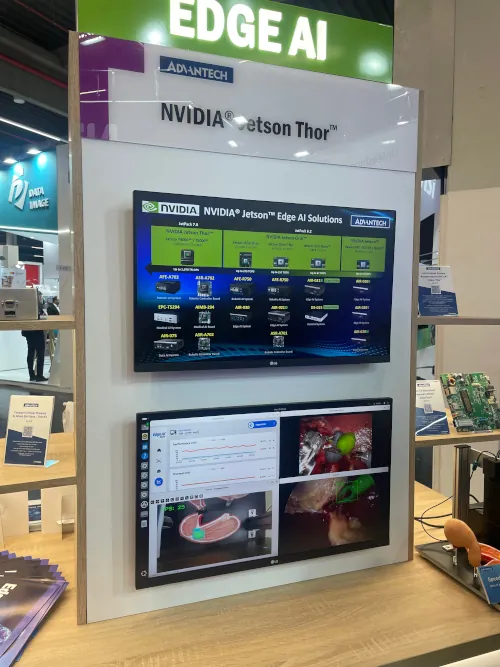
Advantech presented its latest innovations focused on distributed artificial intelligence applications and industrial cybersecurity. The company highlighted two key areas: strategic collaboration with Qualcomm for Edge AI platforms and security certifications for its ARM-based systems.
Edge AI Platform with Qualcomm: Dragonwing IQ10.
Advantech announced the expansion of its strategic collaboration with Qualcomm, focused on Edge AI solutions and advanced robotics. The new Dragonwing IQ10 platform incorporates high-performance Qualcomm processors, integrated AI accelerators, and full support for machine learning model inference containers.
Key technical features: • Low-power, multi-core ARM architecture with integrated AI accelerators. • Container support and a development ecosystem for machine vision and deep learning frameworks. • Integration of sensors and controllers for collaborative robots and AMRs (Autonomous Mobile Robots). • Compatibility with real-time monitoring tools and secure industrial deployment. This platform was demonstrated live at Embedded World 2026, showcasing edge processing of vision and natural language workloads without cloud dependencies, optimizing latency and energy efficiency. Advantech also introduced the RSB 3810 SBC, an ARM-based system designed for demanding industrial environments, which recently achieved IEC 62443 4 2 certification for cybersecurity. Key engineering points: • Support for standard industrial communication protocols with secure isolation. • Remote device management and security patching capabilities with minimal disruption. • Optimization for industrial IoT applications with embedded Edge AI. • Robust design for operation in environments with extreme temperatures and vibrations. ------------------------------ Solid Sands Unveils New Capabilities for Continuous Qualification of Toolchains in Critical Systems Solid Sands, a company specializing in verification and qualification technologies for C and C++ compilers and libraries, unveiled new capabilities at Embedded World 2026 aimed at strengthening the continuous qualification of toolchains used in software development for critical systems. During the event, held from March 10-12 in Nuremberg and attended by tens of thousands of embedded professionals, the company highlighted how new regulatory requirements are driving a shift in software security assurance, moving from one-off certifications to continuous verification models throughout the entire development lifecycle. The company's main innovation is its Continuous Qualification approach, a methodology that automatically assesses whether a toolchain maintains its qualified status after changes to the development environment, compiler, or libraries. This approach allows users to: • Compare each new build to a previously qualified baseline. • Automatically determine whether the change requires full or partial requalification. • Alert development teams when manual intervention is required. According to the company, this model responds to the growing need to demonstrate continuous control over the tools used in software development for sectors such as automotive, robotics, industrial automation, and autonomous systems. At its booth, the company also showcased its main solutions: • SuperTest: a testing and validation suite to verify the conformity of C and C++ compilers with language specifications. • SuperGuard : a requirements-based standard library qualification suite designed to ensure their safe use in critical applications. These tools provide traceability between test results and language specification requirements, facilitating compliance with functional safety standards used in regulated sectors.

The Apollo TMS Pro (often referred to as "Apollo TMS Therapy") is an advanced transcranial magnetic stimulation (TMS) system developed by MAG & More GmbH (a Neurocare Group company) and manufactured in collaboration with electronics specialist HEITEC.
It is designed for the non-invasive treatment of psychiatric and neurological disorders, primarily major depressive disorder (MDD), in adult patients who have not achieved satisfactory improvement with previous medication.
Key features and technology
: • Magnetic resonance therapy (MRT) / TMS: The device uses high-intensity magnetic pulses to stimulate specific regions of the cerebral cortex—typically the left dorsolateral prefrontal cortex (DLPFC)—in order to modulate brain activity (increase neuronal activity).
• "pCool" and "aCool" coils: Apollo uses specialized, high-performance, fan-cooled coils that enable high-frequency protocols (up to 100 Hz Theta Burst) without overheating.
• HANS Positioning System: The patented Head-And-Neck-Support (HANS) system ensures that the stimulation coil remains precisely in the correct position relative to the patient's head, even if the patient moves slightly.
• Automatic Motor Threshold (MT) Determination: The system includes software that simplifies the determination of the patient's individual motor threshold.
• Intuitive Design: It features a touchscreen interface with preset protocols designed for clinical workflows.
Clinical Utility and Efficacy
• Indications: Primarily FDA-cleared and used for medication-resistant depression (major depressive disorder).
• Treatment Protocols: Supports standard rTMS (repetitive TMS) and accelerated protocols such as Theta Burst (iTBS).
• Efficiency: The system allows for high-frequency stimulation (e.g., 10 Hz) and rapid treatment sessions (e.g., protocols of approximately 19 minutes).
• Patient comfort: The system is designed to be quiet, and the treatment is non-invasive, allowing patients to resume their normal activities immediately.
HEITEC, an electronics engineering company based in Germany, is involved in the manufacturing and development of the Apollo TMS Pro device and showcases it at international events such as Embedded World to demonstrate its high-end medical device engineering.
Summary of advantages
: Non-invasive: No surgery or anesthesia required.
No consumables: The system does not require expensive, single-use, disposable coil components.
High performance: Advanced coils with active cooling allow for continuous operation without waiting for them to cool down.

NeoCortec, a company specializing in ultra-low-power wireless mesh networking technologies, presented significant updates to its NeoMesh ecosystem at Embedded World 2026, including a new network management tool and advancements in the use of LoRa modulation for IoT mesh networks.
During the event, the company showcased a new web-based NeoMesh network management tool designed to simplify the administration of wireless mesh networks. This application allows administrators to monitor, configure, and manage both individual networks and entire fleets of devices from a centralized interface, facilitating the deployment and maintenance of large-scale IoT infrastructures.
The new solution is complemented by the latest version of NeoGW, NeoCortec's open-source, cross-platform gateway software. This update incorporates advanced MQTT integration, enabling seamless connection of NeoMesh networks to cloud platforms and higher-level applications.
Furthermore, NeoCortec offers an update on the development of NeoMesh using LoRa modulation, a technological evolution that combines NeoMesh's decentralized mesh architecture with the extended range and robustness of the LoRa physical layer. This combination enables the creation of scalable, low-power IoT networks capable of operating in complex or high-coverage environments, expanding the possibilities for applications such as smart buildings, industrial monitoring, smart agriculture, and critical infrastructure.
NeoMesh is designed as a wireless mesh network protocol optimized for battery-powered devices, where each node can act as a router within the network. Thanks to its decentralized architecture, the networks can self-organize, dynamically adapt, and redirect traffic in the event of a node failure, ensuring robust and reliable communication even in large networks.

MIKROE announced a multi-year strategic agreement with semiconductor manufacturer Renesas Electronics Corporation to expand development tool support for microcontrollers (MCUs) and facilitate engineers' access to new embedded design platforms. The announcement was made during Embedded World 2026, a leading international event for the embedded systems industry.
The agreement stipulates that MIKROE will provide development tool support for more than 500 Renesas microcontrollers, as well as future device families as they are released. These tools will allow developers to begin working with new MCUs on the day of their launch, reducing adoption times and accelerating the development of embedded applications.
As part of this collaboration, the two companies have also launched Planet Debug, an innovative remote hardware access platform that allows engineers to program and debug code on physical boards remotely, without the need to purchase physical equipment. The infrastructure is based on remote board farms that can be reserved for developing and testing applications in real time from anywhere in the world.
Support for Renesas devices will be integrated into the NECTO Studio development environment, MIKROE's multi-architecture IDE, along with the well-known Click board™ modular boards, which enable rapid prototyping and concept validation in embedded electronics projects. These boards are compatible with the open mikroBUS™ standard and utilize the mikroSDK libraries, facilitating the evaluation and customization of solutions.
According to both companies, the goal of the agreement is to accelerate the time-to-market for new microcontroller-based products by providing the developer community with immediate access to tools, code samples, and development resources. Furthermore, the remote hardware access model removes barriers to entry for engineers and companies wishing to experiment with new semiconductor platforms.

Red Pitaya announced a significant expansion of its multi-channel synchronization and high-speed streaming capabilities on its STEMlab 125-14 Gen 2 platform. These new features were showcased live at Embedded World 2026 in Nuremberg.
Following the introduction of the STEMlab PRO Gen 2 series at last year's event, this year's demonstration focused on system-level performance. Engineers can now combine multiple STEMlab boards into fully synchronized and configurable configurations, significantly expanding the number of available inputs and outputs while maintaining precise clock and trigger alignment across the entire system.
By using Red Pitaya Click Shields and shared clock distribution, users can synchronize combinations of STEMlab 125-14 PRO Gen 2, STEMlab 125-14 PRO Z7020 Gen 2, STEMlab 125-14 4-Input, and SDRlab 122-16 boards into a single coherent measurement system. For example, combining a STEMlab 125-14 PRO Gen 2 board with a STEMlab 125-14 4-Input results in a synchronized system with six inputs and two outputs, while larger configurations can be built to meet specific application requirements.
This increased flexibility builds upon the clock selection architecture initially introduced with the STEMlab 125-14 4-Input, which allowed switching between the internal 125 MHz oscillator and an external reference. With this functionality now available across the entire Gen 2 125-14 family, synchronization possibilities are significantly expanded. The Click Shield architecture manages clock and trigger distribution using the ZL40213 LVDS clock distribution buffer, providing deterministic alignment and precise control of signal edges across all boards in the configuration.
Along with synchronization improvements, Red Pitaya has significantly optimized the data streaming architecture of its Gen 2 boards. Thanks to software enhancements, transfer performance between the board and the host computer has increased from 20 MB/s to 62.5 MB/s per board, enabling much higher sustained data rates in both signal acquisition and generation streams.
The updated Deep Memory mode now supports both acquisition and generation, allowing signals to be captured directly into memory or data to be played back to the outputs at the full system clock speed. The improved streaming application handles both short, high-speed bursts and long-duration continuous streams of up to 62.5 MB/s. All these modes can operate in synchronized multi-board configurations, facilitating the construction of high-performance distributed systems from standard modular components.
“These updates directly address what our users have been asking for: the ability to scale their systems without sacrificing accuracy or speed,” said Mateja Lampe Rupnik, CEO of Red Pitaya. “With expanded multi-channel synchronization and an improved streaming architecture, engineers can build custom instrumentation with a large number of channels using our standard boards, drastically reducing the cost and complexity of solutions that previously required custom-designed hardware.
”
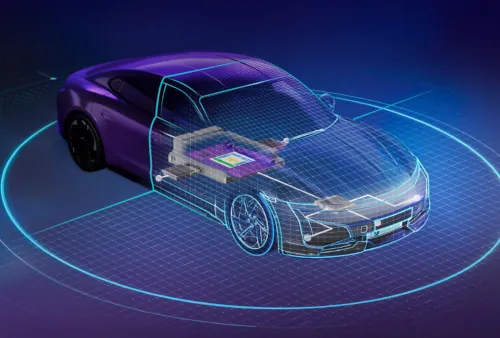
Synopsys announced the launch of the Synopsys Electronics Digital Twin (eDT) platform, a pioneering open solution designed to accelerate the creation, management, deployment, and use of electronic digital twins (eDTs), which are fundamental to the development of software-defined products that enable physical AI systems.
Initially focused on high-value use cases in the automotive sector, the platform allows OEMs to achieve up to 90% software validation before the hardware is available, shifting system development and integration to earlier stages, thus reducing costs and accelerating time-to-market.
“Volvo Cars is rapidly adopting end-to-end, whole-vehicle validation, incorporating that rigor from the earliest design and development phases,” said Johannes Foufas. “At the heart of this transformation is our pioneering use of electronic digital twins with Synopsys. With virtualized ECUs, we can test and validate before the hardware exists, reducing costs, improving software quality, and accelerating innovation.”
According to Ravi Subramanian, “automotive engineering teams are stretched to their limits with over 600 million lines of code, multiple vendors, and ever-shorter development cycles.” The new eDT platform enables a completely new approach that connects chip design with software behavior and full system validation from the earliest stages.
The platform also introduces eDT Labs in the cloud, configurable environments with pre-integrated tools, models, and software for use cases such as:
Early chip evaluation (SoCs and microcontrollers),
early software development,
collaborative development between teams and vendors
continuous system validation.
Furthermore, it facilitates the creation and management of these environments through:
Virtualization technologies and advanced testing tools,
integration with the open ecosystem (such as SIL Kit),
and a broad catalog of technology partners.
Deployment options include SaaS or BYOC, with flexible cloud infrastructure such as Amazon Web Services (AWS) and advanced processors.
-------------------
TrustInSoft announced the latest version of its flagship product, TrustInSoft Analyzer (TISA), which incorporates significant enhancements that increase ease of use through AI-driven stub and driver generation, simplified deployment across multiple platforms, and improved MC/DC coverage analysis using formal methods.
What you can expect in the April 2026 release:
AI-powered test driver and stub generation.
Start with one-click setup to instantly generate context-aware test drivers and stubs using AI. This functionality will dramatically reduce analysis effort while maintaining the consistency and accuracy required for compliance on mission-critical systems.
Graphical interface for Rust support.
Move toward production-ready Rust analysis by integrating all workflows—from setup to root cause investigation and reporting—into an enhanced graphical interface.
MC/DC coverage analysis using formal methods.
Achieve MC/DC coverage compliance through input generalization based on formal methods, significantly reducing verification effort for standards such as ISO 26262.

Vecow TGS-2000: The award-winning stackable AI PC that revolutionizes Edge Computing
Vecow Co., Ltd. announced that its TGS-2000 Stackable AI PC series was awarded the Best in Show award from Embedded Computing Design (ECD). This prestigious recognition, judged by a distinguished editorial team, celebrates excellence in design, performance, and market impact within the global embedded systems industry.
“The TGS-2000 is a testament to Vecow’s R&D leadership and outstanding execution efficiency,” said Eric Yu, president of Vecow. “I am immensely proud of our engineering team’s ability to master the next-generation Intel platform ahead of the competition. By delivering this advanced technology with unmatched time to market, we are enabling our global partners to capitalize on early opportunities in generative AI and agentive intelligence. This award validates our position as leaders in the modular edge computing market.”
“These are the best embedded systems and products on the market right now,” added Ken Briodagh, editor-in-chief of Embedded Computing Design. “The nominations for our Best in Show awards grow every year, and being selected is a great achievement.”
The Vecow TGS-2000 is the market's first stackable AI PC powered by Intel® Core™ Ultra 3 Series (Panther Lake) processors. It delivers impressive on-platform performance of up to 100 TOPS, enabling local AI inference in a compact, NUC-like form factor.
The series breaks the performance limitations of traditional systems by integrating an innovative tool-less modular design. This "building block" approach allows for seamless expansion via high-performance MXM GPUs, scaling from a compact edge controller to a high-density compute node.
Engineered for maximum reliability, the TGS-2000 supports a wide power range (DC 12V to 24V) and operating temperatures between -25°C and 55°C. It is the ideal solution for demanding AI applications where space, ruggedness, and next-generation performance are critical.