Solid-state batteries (SSBs) have been of strategic importance in numerous countries and regions. For example, Germany has allocated €1 billion to support a consortium aiming to produce battery cells for electric vehicles and plans to fund a research center to develop next-generation solid-state batteries. In the UK, a 30-month collaborative project, "PowerDrive Line," is developing a lithium-based solid-state battery for electric vehicles (EVs) and plug-in hybrid electric vehicles (PHEVs) and establishing a pre-pilot line for this SSB cell technology. The Japanese government has created the Consortium for Lithium-Ion Battery Technology and Evaluation Center (Libtec) to boost research on solid-state batteries. In South Korea, the three largest battery manufacturers—SK Innovation, LG Chem, and Samsung SDI—are promoting joint research in the field of next-generation batteries, including solid-state batteries. US SSB companies have attracted investment from global battery suppliers, automakers, and venture capital firms, with continuous progress.
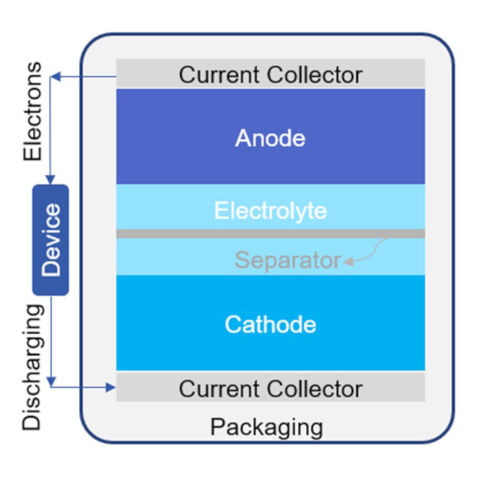
By replacing the flammable organic liquid electrolyte with a solid-state electrolyte (SSE), SSBs offer improved safety and abuse tolerance. Furthermore, the SSE can be combined with a lithium metal anode and a high-voltage cathode, which can increase energy density. The special characteristics of SSBs allow them to be connected in series and in parallel within a cell, resulting in flexible packaging designs. In addition, the innovative package design enables greater assembly efficiency, further contributing to increased energy density and reduced system costs.
These unique value propositions have attracted the interest of academic researchers, battery developers, automotive original equipment manufacturers, investors, and suppliers of materials and components to ULS. Furthermore, conventional lithium-ion battery manufacturing has traditionally been dominated by East Asian countries, with notable contributions from Japan, China, and South Korea. However, a significant shift is underway, as the United States and several European nations are now competing, effectively refocusing value creation away from East Asia, with a strategic emphasis on establishing battery manufacturing facilities closer to application markets.
This evolving landscape is marked by the exploration of new materials and components, and the re-evaluation of manufacturing processes. All of this offers the possibility of reorganizing the battery supply chain. From both a technological and business perspective, the development of single-shot batteries (SSBs) has emerged as part of the next-generation battery strategy. It has become a global endeavor characterized by regional interests and significant government support. Opportunities will arise with new materials, components, systems, manufacturing methods, and technical expertise.

Major global players in solid-state batteries. Source: IDTechEx
Marketing of SSBs
Polymer-based SSBs are already available on the market, as in the case of the Daimler eCitaro. Semi-hybrid/semi-hybrid SSBs are in the testing phase, with ongoing trials of samples for original equipment manufacturers (OEMs). Meanwhile, ceramic solid-state batteries (ASSBs) are still under development. Most commercially available ASSBs, and those soon to be released, are hybrid semi-solid batteries, meaning they may contain small amounts of liquid or gel. Strictly speaking, not all of them are true solid-state batteries (ASSBs). From the end-user's perspective, the specific technology used is irrelevant as long as the batteries deliver the required performance. Therefore, semi-solid technologies can serve as a good transition between the already commercially available polymer-based SSB technology and the future sulfide-based SSB technology. As these technologies mature, we will be able to transition seamlessly to SSBs.

SSB battery technology development roadmap. Source: IDTechEx
As the largest potential market, the automotive industry is the target for almost all SSB suppliers. Meanwhile, specialized applications that require greater abuse tolerance and are less price-sensitive may be the most promising areas for SSBs.

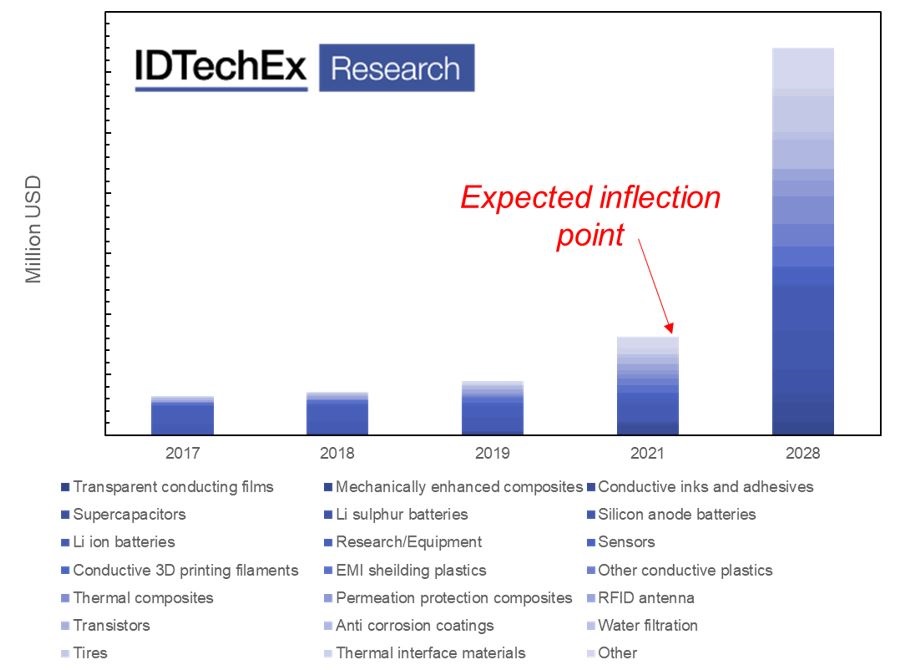
Potential market size for solid-state batteries. Source: IDTechEx
New efforts to commercialize SSB.
Toyota's announcement again underscored the importance of continuous materials development. Therefore, it is necessary to continue exploring materials, optimizing devices, and studying battery degradation mechanisms. Meanwhile, development must also focus on cell validation and system design. Examples include cell-pack systems (CTPs), thermal management systems, and mechanical designs.
The CTP (Combined Power Transport) concept is not new and can be found in lithium-ion battery-based designs such as BYD's blade battery and CATL's CTP designs. The CTP concept will gain more importance due to the increased safety and bipolar stacking capabilities of SSB (Single-Steer Battery) cells. This enhanced battery safety translates into more flexible pack designs and fewer electronic components used in battery modules/packs. For example, the bipolar design allows for tighter stacking and higher energy density, leading to potentially greater energy density and comparable system-level costs.
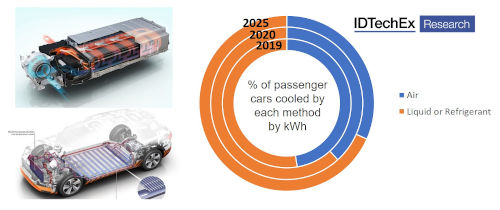
The thermal management system cannot be eliminated in the case of SSBs, but it can operate in a way that targets different safe operating zones. Therefore, the ideal temperature required for SSBs may differ from that of lithium-ion batteries.
In addition, more effort needs to be put into equipment utilization, factory footprint, supply chain establishment, and improving manufacturing performance.
Author: Dr. Xiaoxi He, Research Director at IDTechEx