





This fundamental shift—the decentralization of electricity generation—is altering the operation of national electricity grids and the relationship between households, businesses, and electricity providers. While this transition is already underway, the International Energy Agency (IEA) estimates that more than 100 million homes will have solar photovoltaic roofs by 2030, a significant increase from the current 25 million.[1]
Therefore, the decentralization of electricity is only just beginning, and electrical engineers face a landscape of new challenges and opportunities. In this article, we will explore the changing landscape of national electricity grids and analyze its technical and social implications.
Factors Driving the Evolution of Electricity Grids:
Several factors have driven the increasing decentralization of electricity grids. These are primarily focused on the inherent limitations of centralized electricity grids and the unique advantages of decentralized electricity.
A key driver of decentralized electricity has been the development of smaller-scale renewable electricity sources. Achieving electricity independence before the rise in popularity of solar panels and small wind turbines meant implementing some form of dynamo-powered electric generator, such as a gas, coal, or water turbine. These turbines require significant physical resources and can introduce substantial safety, technical, and social challenges.
Another key driver of decentralized electricity generation is the growing need for more electricity. Meeting this increasing demand with large, centralized power plants requires extensive planning, significant resources, and considerable time, with nuclear power plants taking six to eight years to build and commission.[2]
Smaller-scale, decentralized energy resources can be deployed much more quickly: large-scale solar farms typically take one to three years to supply electricity to the grid,[3] and smaller-scale residential and industrial solar installations (Figure 1) take an average of six to 18 weeks.[4] In many cases, it is simpler and more cost-effective to meet growing energy needs with numerous smaller-scale, distributed sources than with a single centralized source.
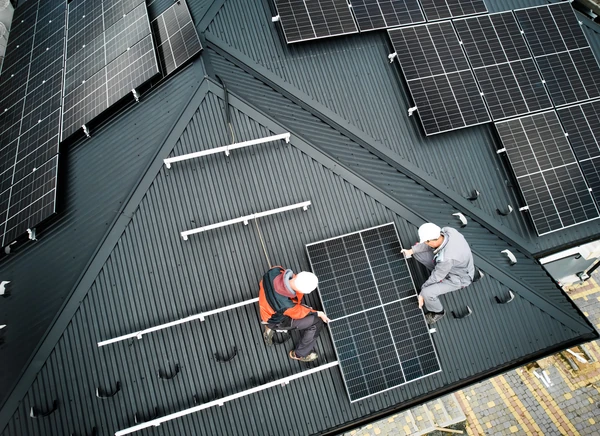
Image 1: Small-scale commercial solar installations, like the one shown, can be installed in just a few days. (Source: anatoliy_gleb/stock.adobe.com)
The decrease in costs and the increase in the efficiency of renewable technologies, combined with rising electricity prices, have also made solar photovoltaic and wind power increasingly accessible. Advances in energy storage and management technologies are also increasing the viability of distributed renewable energy.
The Rise of Decentralized Electricity:
The growing demand for decentralized electricity stems from large-scale trends and advancements in the fields of renewable energy, power electronics, and battery energy storage systems (BESS). Innovation in electronics is helping to create new opportunities for decentralized energy resources by increasing system efficiency, intelligence, and security, as well as reducing costs and packaging issues.
Development of Photovoltaic Solar Panels and Wind Turbines
In the early 2000s, typical residential and commercial photovoltaic solar panels had an efficiency of approximately 15%.[5] Since then, developments in photovoltaic cell design and essential changes in material composition have helped to increase this value, and today panels typically offer around 20% efficiency.[6]
Oxford PV, a subsidiary of Oxford University, recently set a world record with its commercial-size perovskite-silicon tandem solar cell by achieving an efficiency of 28.6%, a significant step that suggests even greater efficiency increases are possible.[7] Increased panel efficiency can help boost the adoption of decentralized energy resources by reducing the area required for a viable solar installation (if panel costs remain constant).
Wind turbines are also undergoing significant development, and new bladeless turbines (Figure 2) can overcome several challenges that have been a constant until now. The absence of traditional rotating blades simplifies system integration into buildings and increases operational safety, in addition to reducing maintenance costs and mitigating bird strikes. These advantages can help companies install wind turbines in new areas, including closer to solar panels or in smaller residential settings, where planning restrictions typically prevent the installation of turbines with rotating blades.
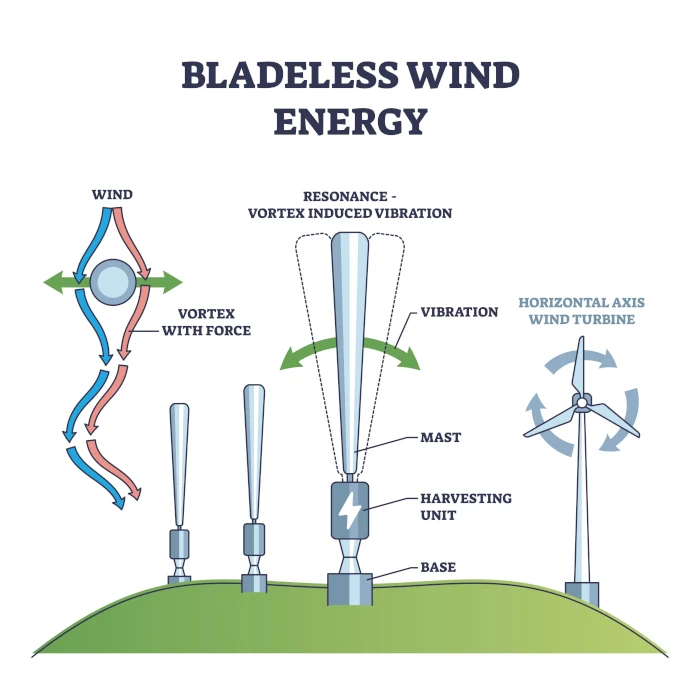
Image 2: Bladeless wind energy uses wind oscillations and alternators to generate electricity without blades. (Source: VectorMine/stock.adobe.com)
The BMW Mini plant in Oxford has just installed the world's first stationary energy system, from Aeromine Technologies, as a complement to its solar installations.[8] By modifying the airflow with its aerodynamic profiles, the turbine creates a low-pressure zone behind the unit, which propels air via its internal pump, converting wind energy into electricity.[9]
Vortex Bladeless, a Spanish startup, is developing a turbine-less system for generating electricity from wind energy. This system harnesses vortex shedding (the creation of vortices by wind flowing around a cylinder) to induce oscillation that is converted into electricity by an internal electromagnetic alternator.[10]
Advances in Inverter Technology:
Advances in power electronics, especially the adoption of silicon carbide (SiC) semiconductors, are increasing inverter efficiency by reducing both power losses and thermal management requirements. Compared to traditional silicon devices, wide-bandgap SiC semiconductors have lower switching losses and higher thermal conductivity and energy density.
While the latest silicon inverters can achieve 98% efficiency, SiC inverters can achieve around 99% efficiency over a wide power range, resulting in a 50% reduction in power loss.[11] A theoretical 1% increase applied to the European Union's total solar capacity of 259.99 GW would add approximately 2.6 GW to total output: the equivalent of 6.5 million 400 W solar panels.[12]
The improved thermal performance of SiC reduces cooling requirements, enabling manufacturers to design smaller, lighter, and more reliable inverters. This size reduction allows for the installation of decentralized energy resources in residential and commercial environments with less space. These characteristics, combined with the increased economies of scale in SiC manufacturing, which lower costs, are helping to drive the development of smaller, more efficient solar inverters, potentially sparking a new wave of solar energy adoption.
The evolution of BESS
In battery energy storage systems (BESS), the switch to lithium iron phosphate (LFP) has increased thermal stability and lifespan compared to traditional lithium-ion batteries. Furthermore, new modular designs, such as rack-mounted batteries, enable more cost-effective and scalable installations, giving residential and commercial users the ability to optimize system capacity according to their energy needs.
Battery management systems are also beginning to incorporate artificial intelligence (AI) and machine learning, which can further enhance the reliability and efficiency of BESS. AI-powered features can improve battery degradation prediction, optimize charge cycles based on environmental conditions, and dynamically manage energy flow to maximize both battery lifespan and performance.
In conclusion
, decentralized energy resources offer businesses and households alike the opportunity to achieve energy independence while improving their sustainability. However, as energy needs increase and national electricity grids become more complex, the market must provide efficient and reliable solar and wind energy solutions that integrate seamlessly into homes, businesses, and the electricity grid.
Sources
[1]https://www.iea.org/reports/approximately-100-million-households-rely-on-rooftop-solar-pv-by-2030
[2]https://www.sustainabilitybynumbers.com/p/nuclear-construction-time
[3]https://www.theecoexperts.co.uk/solar-panels/complete-guide-solar-farms
[4]https://www.susenergy.co.uk/how-long-does-it-take-to-install-solar-panels.html
[5]https://www.forbes.com/sites/peterdetwiler/2013/07/16/as-solar-panel-efficiencies-keep-improving-its-time-to-adopt-some-new-metrics/
[6]https://corporate.enelx.com/en/question-and-answers/are-solar-panels-energy-efficient
[7]https://www.oxfordpv.com/news/oxford-pv-sets-new-solar-panel-efficiency-world-record-0
[8]https://www.bbc.co.uk/news/articles/c07ngp4yz7jo
[9]https://aerominetechnologies.com/
[10]https://vortexbladeless.com/technology/
[11]https://www.energy.gov/eere/solar/silicon-carbide-solar-energy
[12]https://energy.ec.europa.eu/topics/renewable-energy/solar-energy_en
About the author:
Mark, who is part of Mouser's EMEA team in Europe, joined Mouser Electronics in July 2014 after holding senior marketing positions at RS Components. Prior to RS, Mark spent eight years at Texas Instruments in application support and technical sales roles. He graduated with honors in Electrical Engineering from Coventry University.













