




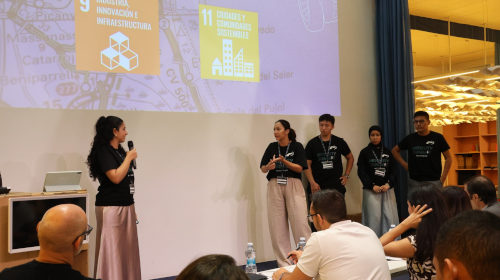
The Green Walk team, composed of Sergio Álvarez, Germán Pinilla, Pablo Daza, and Alejandro Cordero, has been recognized as the Best Project for its innovative sustainable energy solution based on the use of piezoelectric panels capable of transforming every step pedestrians take into clean, renewable energy. Each footfall on the panels, whether through pressure or vibration, generates an electrical charge on the surface.
The project proposes a pilot installation in a metro station with an estimated capacity to generate up to 4 kWh per day, reducing CO₂ emissions by 97.2% compared to natural gas. In addition to supplying energy to the station itself, the initiative aims to raise public awareness about the potential of the energy generated with each movement. Its business model envisions national and international scalability, supported by European funding and technological innovation programs.
The award for Best Environmental Impact went to the Apyca project, which focuses on solving one of the biggest challenges facing cities: the lack of parking spaces and the associated congestion. The app offers a smart, real-time parking search system, combining sensors, advance bookings, and gamification to reward sustainable mobility habits.
The proposal also involves integrating data with public administrations, offering metrics on usage, avoided emissions, and mobility patterns to facilitate urban planning. Its roadmap envisions expansion phases, from pilot tests to metropolitan consolidation, with the ambition of positioning Valencia as a leader in sustainable mobility.
The Apyca team consists of César Rojas, Assia Tahir, Daniela Parada, Rabab Tebbouche, and Felipe Murcia.
Finally, Clara Solaz was recognized with the Best Talent award. The projects were presented yesterday, Sunday, to a specialized jury that will evaluate criteria such as sustainability, real-world applicability, use of digital technologies, and contribution to the Sustainable Development Goals (SDGs 7, 11, and 13).
The event, Mobility Summit & Hackathon 2025, organized by Movea Consulting and Onklub, with the collaboration of the Valencia City Council and the support of Power Electronics, also brought together more than 20 experts, managers and institutional representatives at Las Naves in the capital of the Turia to analyze the challenges and opportunities that cities face in terms of mobility: electrification of transport, universal accessibility, active and shared mobility, as well as the technological innovation that will mark the next decade.













