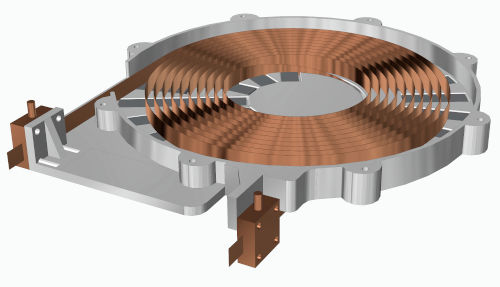


This is a 7.5 kW solution designed for home use charging light electric vehicles, and a 22 kW semi-fast charging solution suitable for industrial applications such as heavy electric vehicles, shopping centers, or offices. Both chargers transfer the energy they draw from the electrical grid to the vehicle using two antennas separated by 20 cm (one on the ground and the other mounted on the vehicle). These antennas generate an electromagnetic field that charges the vehicle wirelessly, without affecting grid quality, and meeting the high quality standards required by the energy sector.
This functional and convenient charging solution allows users to charge without leaving their vehicles. Furthermore, it offers greater robustness and reliability by eliminating moving parts and exposed connectors, minimizing wear and tear caused by weather conditions.
One of its main features is its high efficiency: the prototypes achieve a performance of 92 to 95%, surpassing current wireless chargers on the market, which average between 85 and 90%. Furthermore, they incorporate a unique technology: bidirectional charging, which allows them not only to power the vehicle but also to return energy from the battery to the grid or other devices. “They could support the domestic electrical grid in the event of a power outage, for example,” explains Fernando González, an IKERLAN researcher involved in the project, referring to the widespread power cut on April 28th.
González also highlights the technology center's expertise and experience in developing contactless energy transfer systems: “We have been creating wireless electric charging solutions applicable to the transportation sector for many years, anticipating future developments in this field and offering our clients advanced and sustainable technology for the electric mobility systems of the future, always aiming to minimize the impact on energy generation.”
Furthermore, the potential of the technology developed by IKERLAN extends beyond the automotive sector. “This type of solution can be adapted for charging devices in other sectors: from robots in automated warehouses to drones or trains,” González points out.
From FLOOX, Managing Director Martí Salvador affirms that “the development of these wireless chargers positions us at the forefront of innovation, opening up new business opportunities in sectors seeking more convenient and automated solutions. Furthermore, it allows us to differentiate ourselves in a competitive market and attract the interest of fleets, individual customers, and advanced urban projects.”
These developments fall within the SMARTGREENERGY project, funded by the CDTI and launched in 2023. This project between FLOOX and IKERLAN builds upon the successful collaboration with Premium PSU, which in that same year enabled the development of an auxiliary converter to harness energy from overhead lines and power the air conditioning system of the Turin tram.