




Funded with €2.6 million, this project will focus on scaling up the technology developed in the H2020 AMADEUS project to manufacture a first functional prototype that can be used in a real-world application. These two projects aim to store energy during the solid-to-liquid phase transition of silicon, thus harnessing its high latent heat of phase change, which is ten times greater than the storage capacity of molten salts. To achieve this, they are creating a long-duration (10 to 100 hours) long-term photovoltaic (LHTPV) battery that enables on-demand heat and electricity generation (cogeneration).
The goal of THERMOBAT is to demonstrate the functionality of the system's basic unit. To this end, the consortium will manufacture a prototype with a 100 kWh storage capacity, approximately 100 times greater than the one developed in the previous project. The system will store surplus electricity from a photovoltaic installation and supply electricity and heat on demand. To reach this point, the project includes a technological development phase in which the various system components will be manufactured, from the photovoltaic generators (PVGs) to the silicon alloys and their containers, as well as the thermal insulation and electric heating system, and the management and control system. Finally, all the components will be integrated, tested in a controlled laboratory environment, and then installed in a real-world application environment where its operation will be monitored for several months. The prototype is expected to be ready by the end of 2024, with testing taking place throughout 2025.
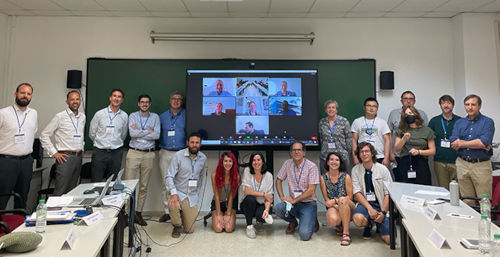
To manufacture the prototype, the project partners with experts in metallurgy (NTNU in Norway and Ferroglobe in Spain), refractory containers (Vesuvius-Foseco, Netherlands), electric furnaces (Entech, Sweden), and POS generators (IES-UPM, Spain). The project also has the necessary partners to bring this technology to market: Thermophoton, a startup recently created by researchers at IES-UPM, will be responsible for marketing the systems, while Serveo will provide one of its buildings to install the system, becoming the first company to test this technology in a real-world environment and eventually becoming one of the first customers of this innovative technology.
This last point is especially relevant since one of the characteristics of this grant is that the project must include a business model and plan so that the developed technology can reach the market, whether for a specific application or for a set of applications that address the objectives of the challenge.
By combining the technological capabilities of industrial partners and research institutes with the market knowledge of the startup and its potential end customer, the project will try to take the first steps to transfer the developed technology to the market, which is high technological risk but has great potential.
If successful, the system will allow for the accumulation of large amounts of surplus renewable energy expected to be produced in the coming years. In this way, the technology will contribute to enabling a massive deployment of green energy and thereby reduce our dependence on fossil fuels.
Thermophoton, the spin-off to bring this battery to market
Thermophoton is a spin-off company from the Polytechnic University of Madrid (UPM), created in 2021 within the Institute of Solar Energy by a multidisciplinary group of engineers, scientists, and entrepreneurs with extensive experience in the energy sector. The company aims to bring to market the technological developments resulting from this new European project.
European Innovation Council (EIC) - Transition to Innovation
Within the framework of the Horizon Europe Framework Programme, the EICTransition to Innovation call aims to finance the advancement of innovative technologies in intermediate stages of development until their market launch.
These technologies, which must start from the laboratory proof of concept, must use the results of projects previously funded in the European Research Council's (ERC) Proof of Concept calls, the European Innovation Council's Pathfinder, or the now defunct FET (Future Emerging Technologies)













