




Currently, most displays are either the main feature of a device, such as televisions or smartphones, or a prominent element in a high-value product (e.g., car interiors). Therefore, most displays are high-value components requiring relatively high resolutions and a lifespan of at least a few years. However, as a greater proportion of devices become functional, the opportunities for low-cost displays with different key performance indicators are likely to increase dramatically.
Application Opportunities:
Smart packaging is undoubtedly the application of low-cost displays with the greatest growth potential. Displays can be integrated into packaging at both the shelf and item levels, with shelf-level displays likely to emerge first, as lower volumes allow for a higher cost per unit. Currently, electroluminescent displays are sometimes incorporated in limited runs for marketing purposes, but they are not considered an effective long-term solution due to their high energy requirements.
Another application of low-cost displays is in small consumer goods. This has long been the case for some premium items, such as electric razors, with small displays showing the remaining charge, for example. However, as displays become cheaper and electronic functions and wireless capabilities are integrated into more devices, this could expand to an ever-increasing range of gadgets and devices. In fact, it may not be long before bank and travel cards incorporate a low-cost display to show the balance and/or recent transactions.
Wearable technology is another promising application for low-cost displays. While OLED displays are widely used in smartwatches, they are currently too expensive to incorporate into clothing and skin patches for medical, fitness, or therapeutic applications. Key attributes of displays in clothing and skin patches are durability, flexibility, and low power consumption. This example demonstrates that, for many emerging display applications, traditional key performance indicators such as resolution, color gamut, and refresh rate are no longer particularly important.
Electrophoretic Displays:
The most promising low-power display technologies are those that use a bistable material that only requires energy to change color rather than maintain it. The best-known example is electrophoretic displays (EPDs), which have long been used in e-readers. However, they are falling out of favor for this application, as consumers prefer the full-color images available on a tablet.
However, EPDs remain promising for applications where a direct non-emissive display is perfectly adequate and low power consumption is a priority. The most notable technological advancement in this area is the recent launch of full-color electrophoretic displays from Plastic Logic. This flexible, active-matrix display has 240 x 146 pixels, is capable of displaying four colors plus black and white, and is intended for smart cards, wearable technology such as electronic textiles, and shelf labels.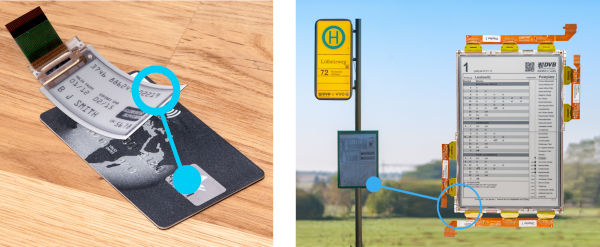 Figure 1: New applications of electrophoretic displays. Photo courtesy of Plastic Logic
Electrochromic Displays
Another simpler, low-power, and low-cost technology is electrochromic displays. By applying a small voltage across the active material, its oxidation state, and therefore its color, changes. This process is also bistable, meaning that a continuous power supply is not required. However, the color gradually fades as the system returns to thermodynamic equilibrium, requiring a brief application of voltage to return to the desired color. Ynvisible is the leading company in the electrochromic display sector; its focus is on smart packaging and medical applications, such as skin patches with indicators. IDTechEx predicts that electrochromic displays will experience the most growth, but that electrophoretic displays will continue to dominate the market.
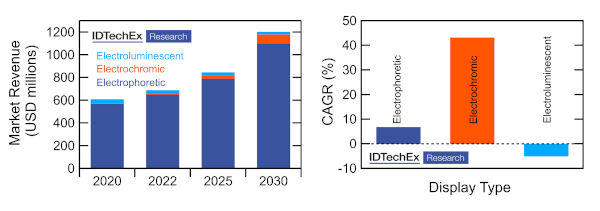 Figure 2: Market forecasts for electroluminescent, electrochromic, and electrophoretic displays. Source: IDTechEx report "Flexible, Printed OLED Displays 2020-2030: Forecasts, Markets, Technologies"
Alternative Approaches
: For applications requiring low-cost emissive displays, neither electrophoretic nor electrochromic displays are suitable. An emerging approach in this case is mounting conventional (or mini) inorganic LEDs on flexible substrates with conductive traces applied by conductive ink printing or etching/ablation. While these methods cannot compete in resolution with conventional OLED or LCD displays, their low cost per surface area and flexibility make them suitable for large-area displays, such as those used in marketing, lighting, and architectural visualization.
A related low-cost display technology is printable LEDs, in which inorganic mini-LEDs are suspended in liquid and can be printed using conventional graphic printers. The LEDs themselves are sandwiched between two layers of conductive ink with an intermediate dielectric layer and can be addressed in segments if needed. Here too, they are primarily intended for smart packaging and wearable medical/therapeutic applications.
A Global Perspective
: Overall, IDTechEx believes the low-cost display market will grow significantly over the next decade as an increasing number of devices incorporate electronic functionality. The diverse requirements of these applications, particularly low power consumption and flexibility, will drive greater adoption of alternatives to conventional LCD and OLED displays.
To learn more about all types of flexible displays, including the much broader market for flexible OLEDs, see IDTechEx's report "Flexible, Printed OLED Displays 2020-2030: Forecasts, Markets, Technologies".













