




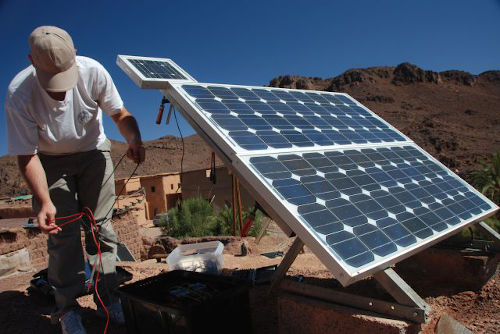
 The trajectory of the Photovoltaic Systems Group (GSF) at the Institute of Solar Energy (IES) of the Polytechnic University of Madrid (UPM) in rural photovoltaic electrification has been marked by the pursuit of high-quality solar systems. This principle is even more relevant when considering applications in decentralized areas, where infrastructure scarcity, isolation, and difficult accessibility, coupled with low population density and limited economic resources, make it impossible to provide the operation and maintenance necessary to ensure a reasonable lifespan for these systems. For four decades, the IES has been a pioneer in developing quality control standards and protocols for numerous rural electrification programs implemented in both Latin America and Africa.
Since 2010, the GSF's rural electrification research has focused on two strategic areas: quality in large-scale decentralized rural electrification programs and the reliability of photovoltaic pumping systems.
Large-Scale Decentralized Rural Electrification Programs:
Regarding the quality of large-scale decentralized rural electrification programs, studies conducted by the Photovoltaic Systems Group (GSF) have highlighted the fragility of these programs implemented worldwide up to the first decade of the 21st century. This fragility stems from high operating and maintenance costs, leading to serious insolvency situations for the companies involved.
Adding to the inherent difficulties of decentralization is the fact that, generally, when undertaking a program of this nature, the starting point is a lack of knowledge regarding the actual reliability data of the system components (charge controllers, inverters, lighting fixtures, and, primarily, batteries). Understanding equipment failure rates, mean time to failure, and lifespan in decentralized environments should be the fundamental tool for designing efficient and cost-effective maintenance structures.
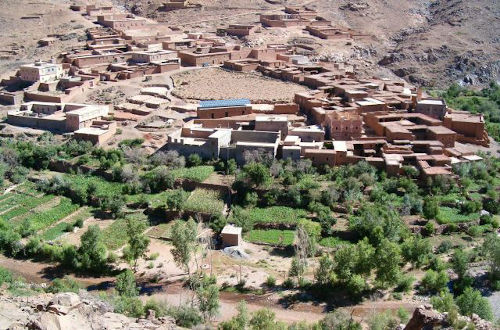
The results obtained from the study of Morocco's Global Rural Electrification Program (2005-2010), which included more than 13,000 residential solar systems, showed that the average battery lifespan was less than a year and that the program underestimated operation and maintenance costs by 20% (thus requiring a much larger maintenance structure than anticipated), leading the winning bidder to abandon the project.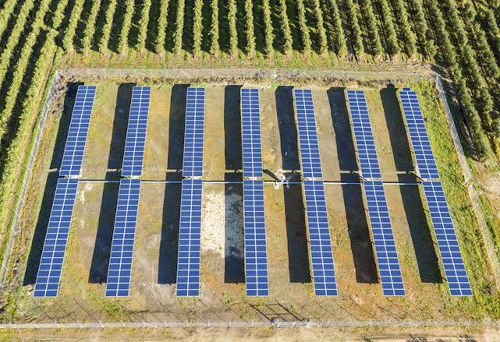
Using mathematical optimization models, it is possible to design maintenance structures capable of ensuring the systems' lifespan. These modeling tools help determine, among other things, the locations of maintenance centers based on the geographical distribution of the systems and their access points, the number of technicians and vehicles required, and the forecasts of spare parts needed according to the devices' reliability data. “At GSF, we developed a tool capable of designing maintenance structures and applied it to the Moroccan program, optimizing these structures to such an extent that we were able to reverse the program's lack of profitability by 20% in some areas,” says Luis Miguel Carrasco, who leads the research line on rural photovoltaic electrification at the Photovoltaic Systems Group (GSF).
The last decade has been characterized by a paradigm shift, abandoning traditional rural photovoltaic electrification models, such as fee-for-service, and generally opting for two new models. One involves the direct sale of residential solar systems and what are known as pico-systems (small, compact, plug-and-play systems of less than 10Wp with LED lights and USB mobile phone chargers). The other model consists of developing minigrids in sufficiently densely populated areas with Power Purchase Agreements (PPAs) for selling energy to users.
In this new scenario, the GSF is participating in West Africa with the ECOWAS Centre for Renewable Energy and Energy Efficiency (ECREEE) in the development of a new standard for residential solar systems for West Africa (ECOWAS - Economic Community of West African States). The goal is to ensure that systems on the market are certified to guarantee their quality. “In previous work, and in line with this research, the IES had already published the technical specifications and quality control procedures for LED luminaires for residential photovoltaic systems in anticipation of their large-scale application,” explains Luis Narvarte, principal investigator of the Photovoltaic Systems Group (GSF).
Reliability of Photovoltaic Pumping Systems
. In 2013, the Photovoltaic Systems Group (GSF) launched a new line of research focused on high-power photovoltaic pumping for agricultural applications. This research materialized in the MASLOWATEN project, funded by the European Commission's Horizon 2020 (H2020) program. This project has successfully increased the power output of photovoltaic irrigation systems to meet the needs of irrigators, resolved the problems associated with power intermittency without the use of batteries, and integrated the solar system into the existing irrigation system through innovative designs, thus maximizing photovoltaic energy utilization.
Prior to this, a pilot project was conducted in Morocco, funded by the Polytechnic University of Madrid (UPM) and the Spanish Agency for International Development Cooperation (AECID). This project involved a decentralized photovoltaic irrigation system, which developed the necessary control algorithms to facilitate this technological leap. The photovoltaic generator was powered by an autonomous North-South horizontal axis tracker. This project was key in the development of photovoltaic irrigation technology for its subsequent market introduction thanks to MASLOWATEN.
With the technology of high-power photovoltaic irrigation systems now consolidated, in 2020 the GSF coordinated the SOLAQUA project, also part of the H2020 program, whose objective is to expand the solar irrigation market by combining photovoltaic and hydraulic technology with high-efficiency irrigation.
In parallel with these European projects, the GSF is opening a new line of work that seeks to integrate high-power photovoltaic irrigation systems into decentralized environments, through the development of highly reliable irrigation systems, minimizing failure rates and enabling remote system control. To this end, several key aspects are being addressed: the development of photovoltaic generators adapted to agricultural irrigation (using bifacial solar modules on fixed structures that generate constant power profiles); The development of universal control systems (capable of working with different models and brands of frequency converters) and the use of robust and economical remote control systems.
“With these improvements, we aim to increase the reliability of systems intended for agricultural irrigation in decentralized rural environments, with the goal of introducing this technology to the markets of developing countries,” the researchers conclude.
LM Carrasco, L. Narvarte, E. Lorenzo, Operational costs of A 13,000 solar home systems rural electrification programme, Renewable and Sustainable Energy Reviews, Volume 20, 2013, Pages 1-7, ISSN 1364-0321
L.M. Carrasco, L. Narvarte, E. Lorenzo, Operational costs of A 13,000 solar home systems rural electrification programme, Renewable and Sustainable Energy Reviews, Volume 20, 2013, Pages 1-7, ISSN 1364-0321
Alfonso Gago Calderón, Luis Narvarte Fernández, Luis Miguel Carrasco Moreno, Javier Serón Barba, LED bulbs technical specification and testing procedure for solar home systems, Renewable and Sustainable Energy Reviews, Volume 41, 2015, Pages 506-520, ISSN 1364-0321
L.M. Carrasco, FJ Martín-Campo, L. Narvarte, MT Ortuño, B. Vitoriano, Design of maintenance structures for rural electrification with solar home systems. The case of the Moroccan program, Energy, Volume 117, Part 1, 2016, Pages 47-57, ISSN 0360-5442
L. Narvarte, J. Fernández-Ramos, F. Martínez-Moreno, LM Carrasco, RH Almeida, IB Carrêlo, Solutions for adapting photovoltaics to large power irrigation systems for agriculture, Sustainable Energy Technologies and Assessments, Volume 29, 2018, Pages 119-130, ISSN 2213-1388
C. Lorenzo, RH Almeida, M. Martínez-Núñez, L. Narvarte, LM Carrasco, Economic assessment of large power photovoltaic irrigation systems in the ECOWAS region, Energy, Vol. 155, 2018, Pages 992- 1003, ISSN 0360-5442













