





Specifically, new thermoplastic composites have been developed by integrating microwave and laser bonding technologies. In this regard, it has been demonstrated that the use of microwave technology optimizes the composite curing process using RTM and pultrusion, reducing energy consumption and manufacturing time while also achieving higher quality parts. It has also been shown that laser technology enables a stable bond between the composite and the metal, eliminating the need for riveted joints that increase the structure's weight. Finally, the recyclability of the thermoplastic composite used to manufacture a new part has been studied.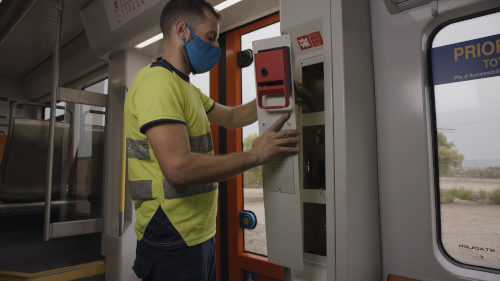
These results have been validated by manufacturing three full-scale demonstrators, plus a fourth product resulting from the recycling process. These include a truck cab rear suspension manufactured by microwave RTM integration using a thermoplastic composite, fiberglass, and thermoplastic acrylic resin, with a composite-to-metal bond achieved through laser welding. Additionally, a car door was manufactured using microwave integration and c-RTM with a thermoplastic composite and carbon fiber reinforced with thermoplastic acrylic resin. For the railway sector, an interior panel was manufactured by microwave integration-pultrusion using a fiberglass composite reinforced with thermoplastic acrylic resin, with the composite-to-metal bond achieved through laser welding.
Furthermore, the recyclability of the materials has been validated by manufacturing a fourth demonstrator consisting of a car door handle with a 50% recycled material content.
The RECOTRANS project, which began in October 2017 and is now ending, is funded by the European Union under the H2020 program and involves, along with AIMPLAS, a total of 12 partners from seven different countries: Stadler, Gestamp, Mercedes Benz Türk, Arkema, INEA, Tecnoclad, Synthesites, Far-UK, CTAG, ITU, Fraunhofer and Polymec. The developments carried out in this project will have applications in other sectors.













