




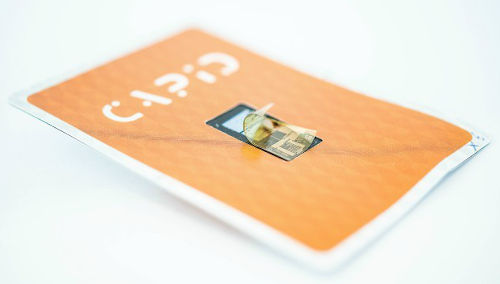
Capacitive tokens interact with readers and touchscreen devices. The objects—in this case, the capacitive tokens—are thin, flexible metal oxide labels that can be embedded in paper and plastic products such as banknotes, certificates, and payment cards. “The potential of this technology is extraordinary,” observes Marco Dehouwer, project manager at Cartamundi, a Belgian manufacturer of card and board games that coordinates the EU-funded CAPID project. Capacitive tokens can interact with more than 4.5 billion mobile phones in use worldwide, as well as with the vast number of touchscreens now integrated into cars, coffee makers, vending machines, and other everyday objects.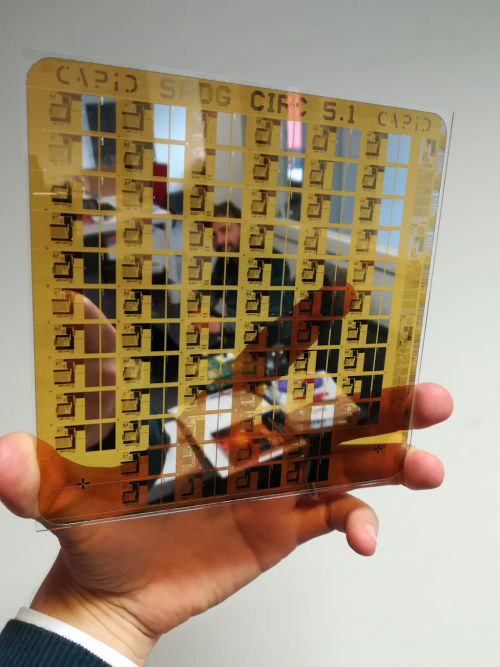
A Unique and Secure Communication Method:
The CAPID team developed a system in which a small, flexible tag is embedded in an object. This object, which can be as small as a card or label, can be identified when placed on a touchscreen. The tags send a dynamic signal to the reading devices, enabling the identification and tracking of low-cost, high-volume products. An internet connection is established simply by placing the tagged object on the touchscreen. Each capacitive token tag has its own unique identifier. A potentially large number of tags, all identifiable, will allow for the creation of unique codes for any product. The small capacitive antennas are manufactured directly onto chips as part of the chip manufacturing process. The result is a simple and very low-cost tag, as no external antenna or assembly procedure is required.
The new tag is based on thin-film transistor technology and is powered by a thin-film battery or a thin-film photovoltaic cell that converts the light from the touchscreen. The 12-bit thin-film capacitive identification tag achieves data transfer rates of up to 36 bps at a 0.6 V supply voltage, making it compatible with commercially available touchscreen devices without modification. The flexible thin-film integrated circuit features a 0.8 cm² monolithic on-chip antenna and consumes only 38 nW of power at a 600 mV supply voltage. The project team developed new processes to better align chip manufacturing and integration with paper products. This will reduce the cost of connected paper products. With a projected ultra-low cost of less than 1 cent, the tags offer a solution for labeling trillions of everyday objects. The readers will be existing touchscreen devices, so there are no additional hardware requirements, major reconfigurations, or extra costs for users.
Game changer for paper products with embedded electronics
. “Our tag is paving the way for many new applications compared to standard radio frequency identification or near-field communication solutions, as it leverages the widespread availability of touchscreen readers versus the limited number of near-field communication readers,” explains Kris Myny, Chief Scientist and R&D Team Leader at project partner imec, a world-leading R&D and innovation center for nanoelectronics and digital technologies. According to Myny, they are testing the tag system and communication method using different touchscreens from various brands, including Apple, Samsung, and Huawei. “Thanks to the unique CAPID functionality, we can create the cards of the future, blurring the lines between digital and physical, and enabling new gaming experiences for future generations,” concludes Dehouwer.













