




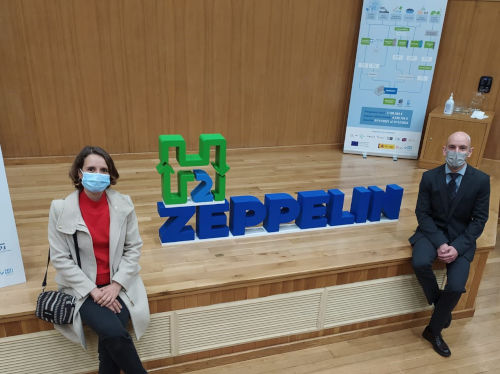
This amount would be sufficient to exceed the target set for 2030 by Spain's Hydrogen Roadmap and to meet the energy needs of the entire Spanish rail network. Furthermore, it will contribute to progress in the circular economy by adding value to more than 99 million tons of waste and 50 million tons of municipal wastewater.
Norvento Enerxía will investigate dark fermentation technologies – obtaining biohydrogen from organic waste in the absence of light and by the action of anaerobic bacteria – and hydrogen purification processes, and will make its knowledge in the field of hydrogen and waste valorization for energy production available to the consortium.
In the words of Javier Taibo, Head of Biogas Business at Norvento Enerxía, “We are delighted to participate in such an ambitious and necessary project to transform our economy and move towards a climate-neutral production model. At Norvento Enerxía, we are pleased to contribute our knowledge and technology to an innovative project that focuses on reusing organic waste to generate energy and, therefore, will foster new economic opportunities in rural areas.”
The ZEPPELIN project has been funded by the Centre for the Development of Industrial Technology (CDTI) under the 2021 call for proposals of the MISIONES SCIENCE AND INNOVATION Program (Recovery, Transformation and Resilience Plan) and has the support of the Ministry of Science and Innovation. The funding for the project is provided by the European Union through the NextGenerationEU Fund.













