Charging is a process that delivers a controlled current within a controlled voltage range from the charging device to the battery. Depending on the battery cell configuration, the charging current and voltage may vary. Furthermore, depending on the chemical and electrical characteristics of the battery, the charging process can be carried out in two or three stages.
 Table 1. Typical loading stages
A two-stage charging process begins with a constant-current charging phase followed by a constant-voltage charging phase. A three-stage charging profile extends the constant-voltage charging phase by including a float charging voltage to fully charge lead-acid batteries. Table 1 and Figure 1 illustrate these commonly used charging control methods.
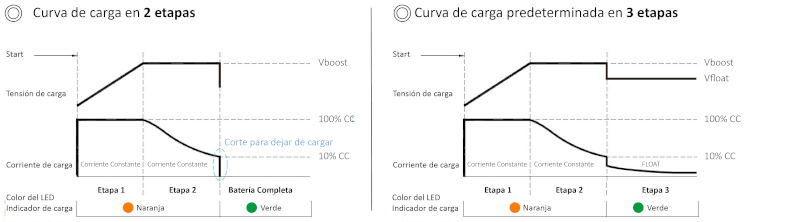 Figure 1. Two- and Three-Stage Charging Curves
To perform the charging processes, as mentioned previously, the control system must be implemented either within the charger itself or in an external battery management system (BMS). This can be done by pre-installing the selected charging profile in a smart charger like the NPB series, so that when the charger detects a battery, it will automatically initiate the charging process according to the pre-programmed profile. Alternatively, the control system can be run via an external BMS using a digital control interface.
on the OLFER Electronics website . This device, with a power output ranging from 450W to 1700W, provides a user-friendly, programmable interface, as well as a CANBus communication protocol for advanced control via an external BMS. It offers flexible configuration options to meet the requirements of your system or application.
Author: Hank Lan / MEAN WELL Technical Service Center