
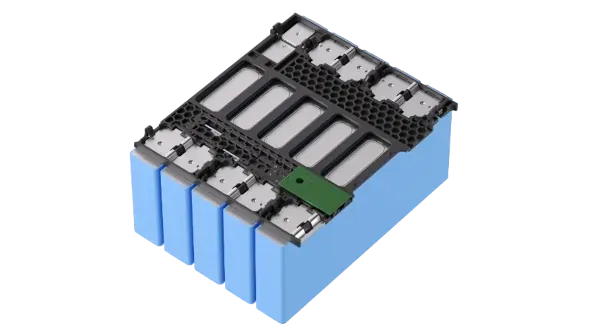
The solution is designed to reduce the complexity of battery systems, minimize wiring, and optimize the use of available space—aspects that are increasingly critical in applications for electromobility, industrial storage, and residential energy systems.
Greater integration for more efficient batteries.
Swoboda's CCS connects battery cells in both series and parallel, forming the basic infrastructure of high-voltage battery packs. In addition to current distribution, the platform incorporates advanced monitoring and management functions that traditionally required additional components.
Key integrated features include:
Individual cell voltage measurement,
temperature monitoring,
passive cell balancing, and
isolated daisy-chain communication with the battery management system (BMS).
According to the company, this integration reduces the number of connections and auxiliary components, improving both system efficiency and its diagnostic and monitoring capabilities.
Compatible with multiple battery formats,
the solution has been developed to work with prismatic and cylindrical cells, allowing it to adapt to different module and battery pack architectures. Thanks to its modular design, the system can be configured according to the specific requirements of each manufacturer and the characteristics of each application.
Christian Göser, Chief Sales Officer of Swoboda, highlighted that the integration of cell contact, sensors and communications into a single solution helps simplify the design of energy storage systems, while improving space efficiency and diagnostic capabilities.
Designed for electric mobility and energy storage,
the new CCS is geared towards both electric vehicles and stationary energy storage systems. The company believes that these types of solutions will be fundamental to addressing the challenges associated with the energy transition, where cost reduction, scalability, and reliability are key factors.